Introduction
expert biomedical engineers equipment performance Modern healthcare depends on advanced medical equipment to deliver accurate diagnosis, safe treatment, and efficient patient care. From CT scanners and PET/CT systems to DR, C-ARM, and nuclear medicine equipment, every device must function safely and consistently. Behind this reliability are expert biomedical engineers, whose skills and discipline ensure equipment performance never compromises patient safety or clinical outcomes.
Understanding how expert biomedical engineers ensure safe and reliable equipment performance helps hospitals recognize the value of professional engineering support. At Avoor Meddplus, expert biomedical engineers play a critical role in maintaining precision, compliance, and uptime across all imaging modalities.
1. The Role of Expert Biomedical Engineers in Healthcare Technology
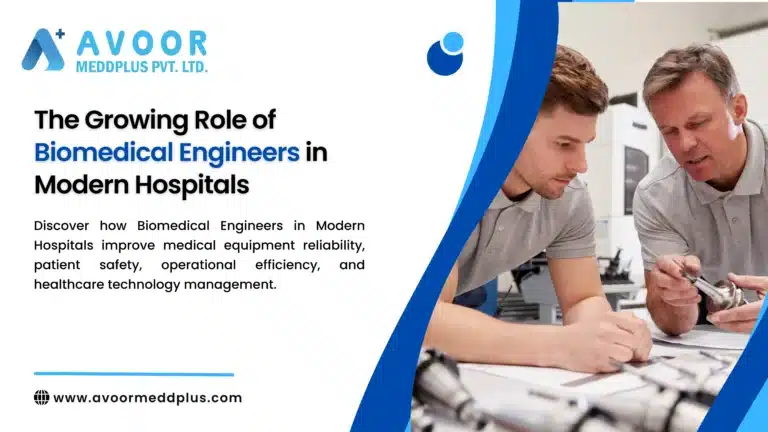
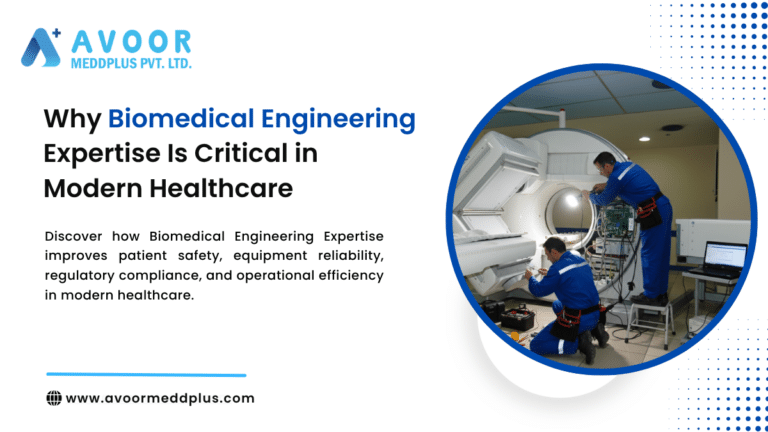
Biomedical engineers bridge the gap between clinical requirements and complex medical technology. Their expertise combines engineering principles, medical knowledge, and regulatory awareness.
Expert biomedical engineers are responsible for:
- Ensuring equipment safety
- Maintaining diagnostic accuracy
- Preventing unexpected failures
- Supporting clinicians with reliable systems
- Keeping hospitals audit-ready
Without expert engineering oversight, even advanced equipment can become unsafe or unreliable over time.
2. Safe Equipment Performance Starts with Preventive Maintenance
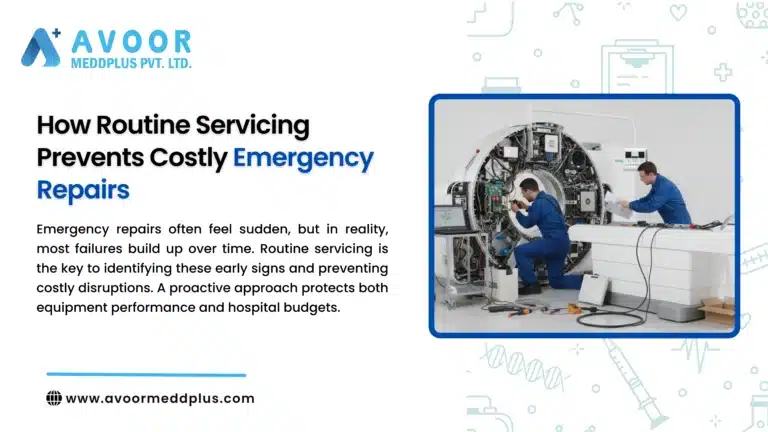
One of the most important ways expert biomedical engineers ensure safe and reliable equipment performance is through structured preventive maintenance.
Preventive maintenance includes:
- Routine inspection of critical components
- Early identification of wear and degradation
- Verification of electrical and mechanical safety
- Calibration checks to prevent performance drift
By addressing issues before they escalate, biomedical engineers significantly reduce safety risks and unplanned downtime.
3. 5 Key Ways Expert Biomedical Engineers Ensure Safety and Reliability
1️⃣ OEM-Grade Calibration and Performance Validation
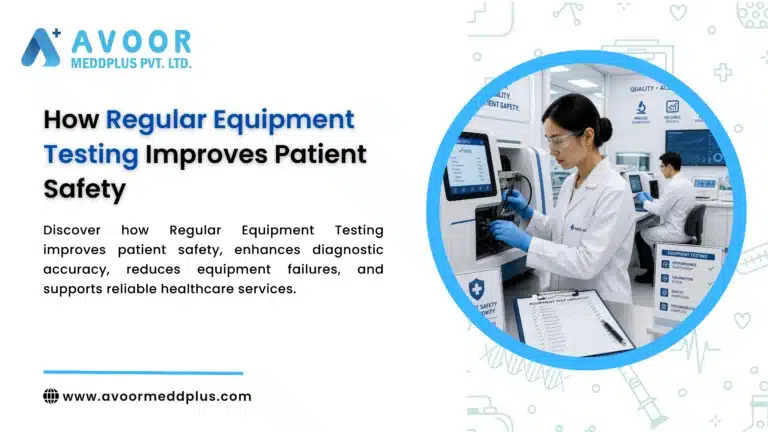
Calibration is essential for accurate diagnostics and patient safety. Expert biomedical engineers follow OEM-recommended calibration procedures to ensure:
- Correct radiation output
- Accurate detector response
- Proper system alignment
- Reliable image reconstruction
OEM-grade calibration ensures imaging results remain clinically dependable over time.
2️⃣ Electrical and Radiation Safety Testing
Medical equipment must operate within strict safety limits. Expert biomedical engineers routinely perform:
- Electrical leakage and grounding tests
- Radiation dose verification
- KV/mA accuracy checks
- Shielding and exposure assessments
These safety tests protect patients, clinicians, and technical staff from unnecessary risk.
3️⃣ Early Fault Detection and Predictive Analysis
Expert engineers do not wait for breakdowns. They analyze system logs, error trends, and performance data to detect early signs of failure.
Common early indicators include:
- Temperature fluctuations
- Minor image artifacts
- Intermittent system warnings
- Power instability
Early intervention prevents major failures and extends equipment life.
4️⃣ PCB-Level Diagnostics and Repair
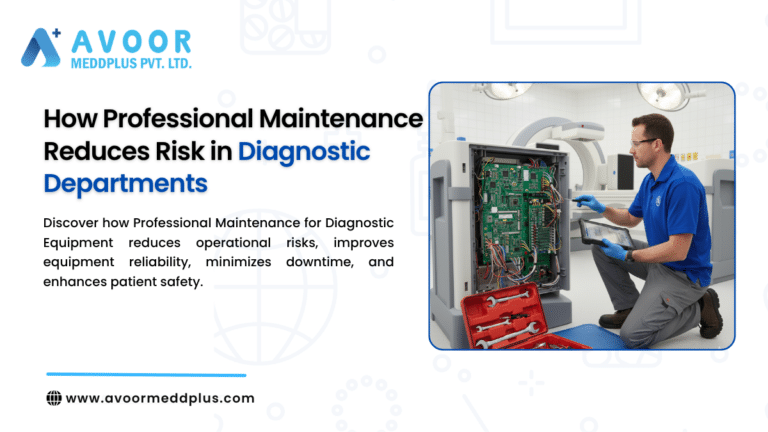
Modern medical equipment relies heavily on electronic control boards. Expert biomedical engineers trained in PCB-level diagnostics can:
- Identify faulty components
- Repair boards instead of replacing entire assemblies
- Restore stable signal and power flow
PCB-level expertise improves reliability while controlling maintenance costs.
5️⃣ Accurate Documentation and Compliance Support
Safe equipment performance is not complete without proper documentation. Expert biomedical engineers maintain:
- Preventive maintenance records
- Calibration certificates
- Safety test reports
- Service and repair history
These records are essential for NABH and AERB audits and demonstrate accountability and compliance.
4. Ensuring Reliability Across Imaging Modalities
Expert biomedical engineers apply specialized knowledge to different imaging systems:
CT & PET/CT Systems
- Gantry alignment and detector calibration
- Tube and cooling system checks
- Dose accuracy verification
DR & CR Systems
- Flat-panel detector uniformity
- Exposure linearity testing
- Image consistency validation
C-ARM Systems
- Fluoroscopy brightness and contrast control
- Mechanical stability
- Radiation dose monitoring
SPECT/CT & Nuclear Medicine
- Energy peaking
- Uniformity correction
- Fusion alignment accuracy
Each modality demands precise engineering to ensure safe and reliable performance.
5. Why Reliability Matters to Clinical Teams
Clinicians depend on imaging systems to make fast and accurate decisions. Unreliable equipment can lead to:
- Repeat scans
- Delayed diagnosis
- Reduced clinician confidence
- Increased patient risk
Expert biomedical engineers ensure reliability so clinicians can focus on patient care rather than equipment concerns.
6. Consequences of Inadequate Engineering Support
When equipment is serviced without expert oversight, hospitals may face:
- Frequent breakdowns
- Inconsistent image quality
- Safety compliance issues
- Higher long-term maintenance costs
- Loss of trust from clinicians and patients
This highlights why expert biomedical engineering is essential, not optional.
7. How Avoor Meddplus Delivers Expert Biomedical Engineering Support
At Avoor Meddplus, expert biomedical engineers provide:
- Preventive maintenance for all imaging modalities
- OEM-grade calibration and validation
- PCB-level repair expertise
- Fast response during breakdowns
- Compliance-ready documentation
- Nationwide service coverage
By combining technical excellence with clinical awareness, Avoor Meddplus ensures safe and reliable equipment performance for hospitals and diagnostic centers across India.
Conclusion
Safe and reliable equipment performance is the foundation of quality healthcare. How expert biomedical engineers ensure safe and reliable equipment performance comes down to preventive maintenance, precise calibration, early fault detection, safety testing, and disciplined documentation.
With expert biomedical engineers and structured service processes, hospitals can protect patient safety, maintain diagnostic accuracy, and extend equipment lifespan. Through trusted engineering support from Avoor Meddplus, medical equipment remains dependable, compliant, and ready to support high-quality patient care every day.