
Introduction
Hospitals operate in an environment where time, accuracy, and coordination are critical. Every department from radiology and surgery to emergency and diagnostics depends on medical equipment functioning without interruption. Even a short delay caused by equipment failure can ripple across multiple workflows, affecting patient care and hospital efficiency. Skilled Service Support Workflow Disruptions Hospitals 6 Critical Ways Downtime Is Reduced.
This is why skilled service support minimizes workflow disruptions in hospitals far more effectively than reactive or uncoordinated maintenance. Skilled service support combines technical expertise, fast response, and structured processes to keep hospital operations running smoothly. At Avoor Meddplus, service support is designed not just to fix equipment, but to protect clinical workflows and operational continuity.
1. Understanding Skilled Service Support Workflow Disruptions in Hospitals
Workflow disruption occurs when equipment failure or poor service response interrupts normal hospital operations. Common examples include:
- Imaging system downtime delaying diagnostics
- C-ARM failure during OT scheduling
- Skilled Service Support Workflow Disruptions Hospitals Critical Ways Downtime Is Reduced
- DR system issues slowing patient throughput
- Repeated equipment errors causing rescheduling
These disruptions lead to:
- Longer patient waiting times
- Increased pressure on clinical staff
- Inefficient use of hospital resources
- Loss of revenue and patient trust
Minimizing these disruptions requires more than basic repair, it requires skilled, proactive service support.
2. Why Unskilled or Delayed Support Causes Operational Stress
When service support lacks expertise or coordination, hospitals often experience:
- Repeated breakdowns due to incorrect diagnosis
- Long equipment downtime waiting for parts or engineers
- Poor communication with clinical teams
- Incomplete testing before equipment is returned to use
Such issues force clinicians to adjust workflows constantly, reducing efficiency and increasing frustration. Skilled service support prevents these problems by resolving issues correctly the first time.
3. How Skilled Service Support Minimizes Workflow Disruptions
1️⃣ Fast and Accurate Fault Diagnosis
Skilled service engineers quickly identify the root cause of a problem instead of treating symptoms. Accurate diagnosis means:
- Faster repairs
- Fewer repeat failures
- Minimal trial-and-error downtime
Correct diagnosis is the first step in protecting hospital workflows.Skilled Service Support Workflow Disruptions Hospitals Critical Ways Downtime Is Reduced.
2️⃣ Rapid Response During Critical Failures
In hospitals, response time matters. Skilled service support includes:
- Immediate remote troubleshooting where possible
- Quick on-site engineer deployment
- Priority handling of critical equipment
Fast response ensures disruptions are contained before they escalate into full operational delays.
3️⃣ Preventive Maintenance That Reduces Emergencies
One of the most effective ways skilled service support minimizes workflow disruptions in hospitals is through preventive maintenance.
Preventive maintenance helps:
- Identify early warning signs
- Schedule service during low-usage hours
- Avoid sudden equipment failures
- By reducing emergency breakdowns, hospitals maintain predictable workflows.
4️⃣ Coordination with Clinical Schedules
Skilled service teams understand hospital operations and plan maintenance accordingly. This includes:
- Coordinating with radiology and OT schedules
- Avoiding peak diagnostic hours
- Minimizing impact on patient appointments
This coordination ensures maintenance does not interrupt critical clinical activities.
5️⃣ Complete Testing Before Equipment Handover
Returning equipment to service without proper testing often causes repeat disruptions. Skilled Service Support Workflow Disruptions Hospitals 6 Critical Ways Downtime Is Reduced includes:
- Calibration and performance validation
- Safety checks
- Image quality verification
Thorough testing ensures equipment performs reliably once it is back in clinical use.
4. Impact of Skilled Support on Hospital Efficiency
Hospitals that rely on skilled service support experience:
- Higher equipment uptime
- Smooth patient flow
- Reduced backlog in diagnostics
- Better utilization of staff and infrastructure
When equipment is reliable, clinical teams can focus on patient care rather than troubleshooting.
5. Skilled Service Support Across Key Imaging Modalities
CT & PET/CT Systems
- Rapid resolution of gantry, detector, and cooling issues
- Calibration to maintain diagnostic accuracy
- Reduced scan delays
DR & CR Systems
- Quick restoration of flat-panel detectors
- Consistent image quality
- Faster patient throughput
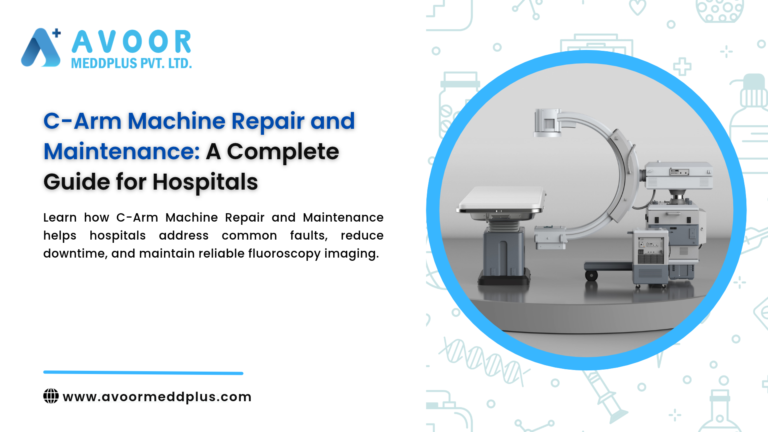
C-ARM Systems
- Immediate support during OT-related failures
- Stable fluoroscopy performance
- Minimal surgical schedule disruption
SPECT/CT & Nuclear Medicine
- Accurate energy peaking and calibration
- Reliable fusion imaging
- Smooth diagnostic workflows
Each modality benefits significantly from skilled, responsive service support.
6. Role of Skilled Biomedical Engineers in Workflow Stability
Certified and experienced biomedical engineers play a key role in minimizing disruptions. Their expertise allows them to:
- Anticipate potential failures
- Perform precise calibration and safety checks
- Communicate clearly with hospital teams
- Maintain accurate service documentation
Skilled engineers act as partners to hospital staff, not just service providers.
7. Consequences of Poor Service Support on Hospital Workflows
When service support is inconsistent or unskilled, hospitals face:
- Frequent equipment downtime
- Repeated rescheduling of patients
- Increased stress on clinicians
- Reduced diagnostic confidence
- Loss of patient trust
These consequences highlight why hospitals increasingly prioritize skilled service support over low-cost or ad-hoc service options.
8. How Avoor Meddplus Minimizes Workflow Disruptions
Avoor Meddplus delivers skilled service support that protects hospital workflows through:
- Certified biomedical engineers
- Fast response and escalation protocols
- Preventive maintenance programs
- OEM-grade calibration and validation
- PCB-level repair expertise
- Transparent communication and reporting
- Nationwide service coverage
By focusing on reliability and coordination, Avoor Meddplus ensures equipment issues do not become workflow crises.
Conclusion
Hospital workflows depend on reliable equipment and responsive service. Skilled service support minimizes workflow disruptions in hospitals by combining technical expertise, fast response, preventive care, and clinical coordination.Skilled Service Support Workflow Disruptions Hospitals 6 Critical Ways Downtime Is Reduced.
When service support is proactive and professional, equipment downtime is reduced, patient flow remains smooth, and clinical teams operate with confidence. With experienced partners like Avoor Meddplus, hospitals can protect both their technology and their workflows ensuring uninterrupted, high-quality patient care every day.