Introduction
Imaging equipment such as CT, PET/CT, DR, C-ARM, and nuclear medicine systems plays a critical role in modern healthcare. These systems must operate with precision, stability, and consistency to ensure accurate diagnosis and uninterrupted patient care. However, due to complex electronics, software integration, and high operational load, imaging systems are vulnerable to technical failures.
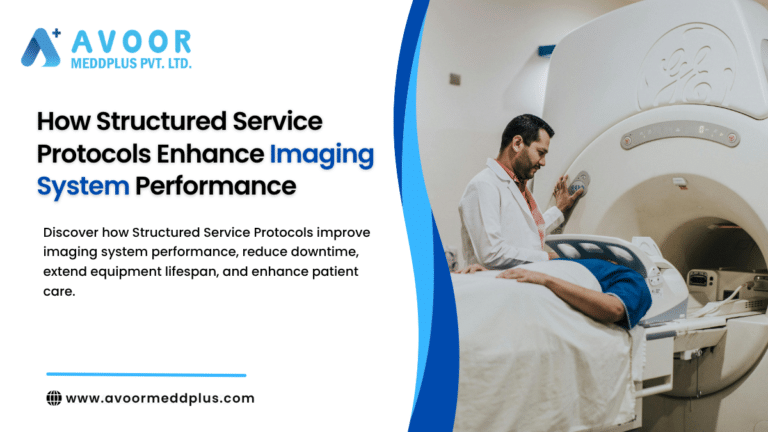
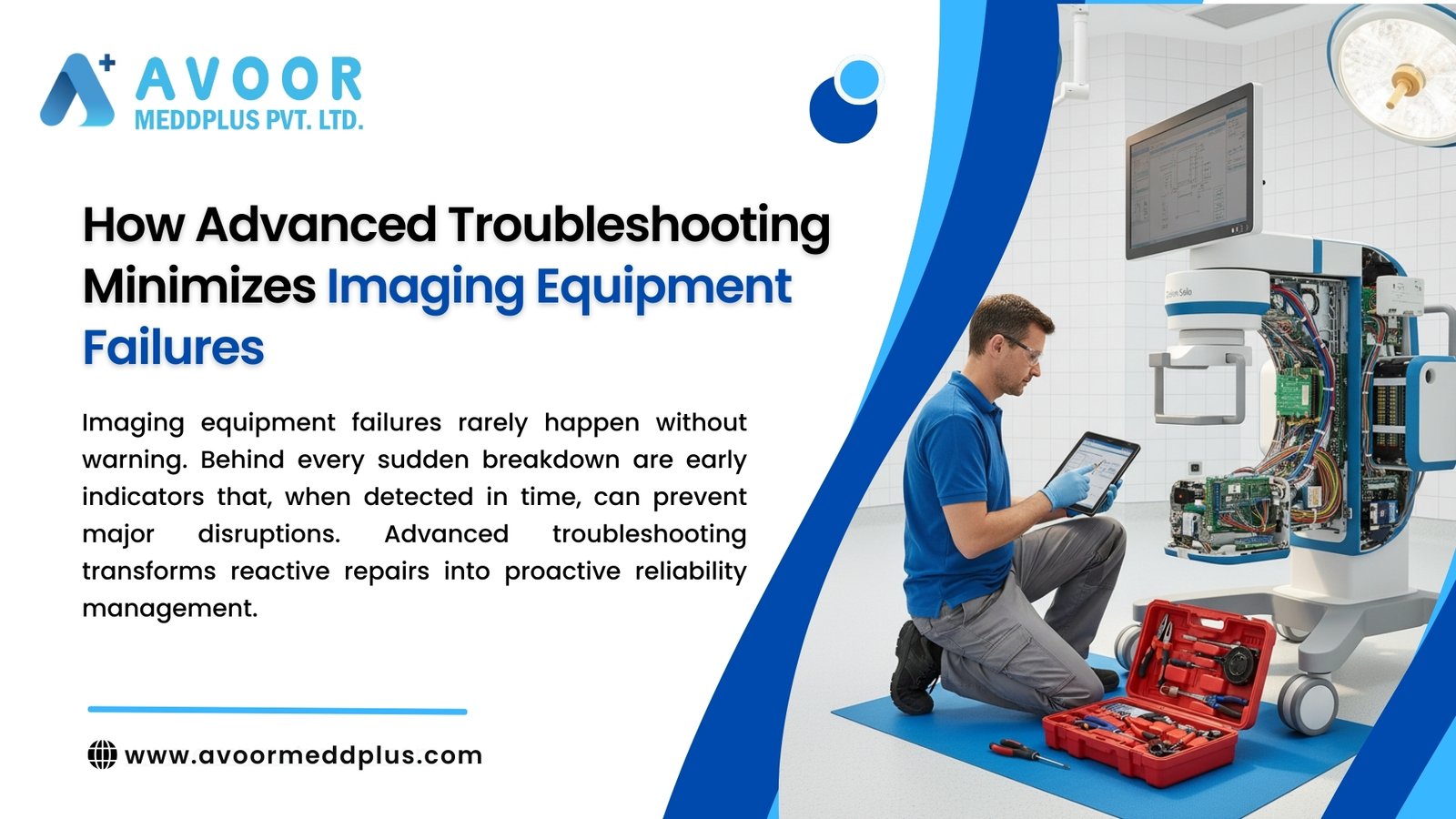
This is where advanced troubleshooting becomes essential. Advanced troubleshooting minimizes imaging equipment failures by identifying root causes, preventing recurring faults, and stabilizing long-term performance. Instead of temporary fixes, advanced troubleshooting applies systematic diagnostics and engineering expertise to eliminate failure risks. At Avoor Meddplus Pvt Ltd, advanced troubleshooting techniques are integrated into service protocols to protect uptime and clinical accuracy.
1. What Is Advanced Troubleshooting in Imaging Equipment?
Advanced troubleshooting goes beyond basic fault correction. It involves:
- Root-cause analysis
- Circuit-level diagnostics
- Software and firmware validation
- Performance trend analysis
- Thermal and electrical testing
- Predictive fault detection
Rather than simply replacing components, advanced troubleshooting identifies why a failure occurred and prevents it from recurring.
2. Why Imaging Equipment Failures Occur
Imaging systems are complex and operate under demanding conditions. Failures may result from:
- Component wear and overheating
- Power instability
- Calibration drift
- Software glitches
- Improper maintenance
- Environmental factors
Without structured diagnostics, these issues may reappear even after repairs. Advanced troubleshooting minimizes imaging equipment failures by addressing the true source of problems.
3. 7 Proven Ways Advanced Troubleshooting Prevents Failures
1️⃣ Root-Cause Identification
Basic repairs may treat symptoms, but advanced troubleshooting identifies the underlying cause. Whether it is a PCB defect, voltage fluctuation, or firmware mismatch, addressing the root cause prevents repeat breakdowns.
2️⃣ Early Detection of Hidden Faults
Imaging systems may show subtle warning signs before major failure. Advanced diagnostics can detect:
- Minor image artifacts
- Intermittent signal loss
- Temperature irregularities
- Voltage fluctuations
Detecting these early prevents catastrophic equipment shutdown.
3️⃣ Circuit-Level (PCB) Repair Expertise
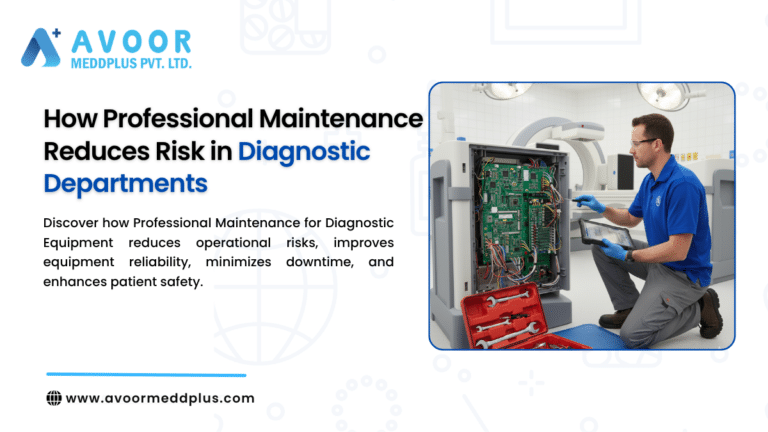
High-value imaging systems often fail due to board-level issues. Instead of replacing entire modules, advanced troubleshooting includes:
- PCB-level fault isolation
- Component testing and replacement
- Signal integrity verification
This reduces repair costs and extends system lifespan.
4️⃣ Software and Firmware Optimization
Modern imaging equipment integrates hardware with advanced software. Troubleshooting includes:
- Firmware updates
- Configuration validation
- System log analysis
- Integration testing
Optimized software performance reduces operational instability.
5️⃣ Calibration and Performance Validation
Failures often result from performance drift. Advanced troubleshooting includes:
- Radiation output verification
- Detector alignment checks
- Image quality validation
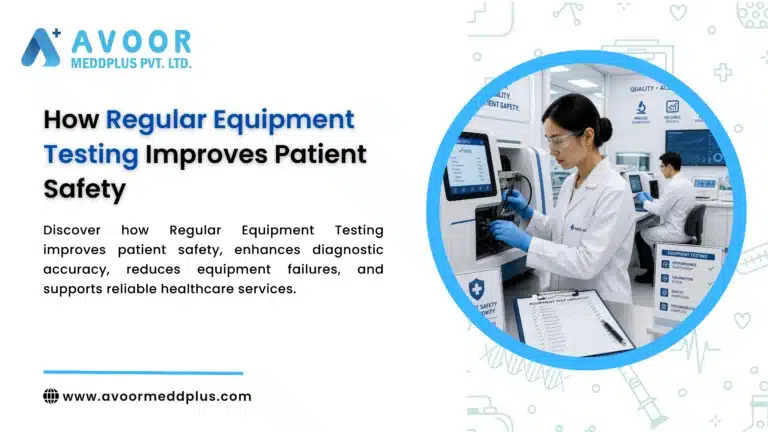
Ensuring compliance with safety standards reduces both technical and regulatory risks.
6️⃣ Predictive Maintenance Integration
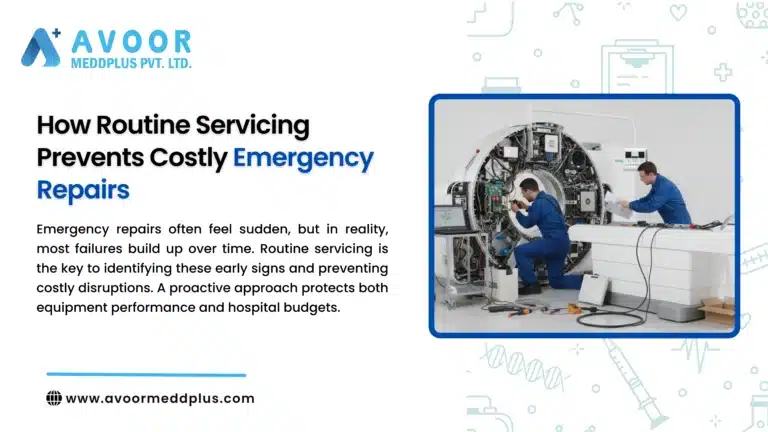
Advanced troubleshooting works alongside preventive maintenance. By analyzing performance trends, engineers can predict potential failures and replace vulnerable components proactively.
Predictive strategies significantly reduce emergency downtime.
7️⃣ Comprehensive Post-Repair Testing
After troubleshooting and repair, systems undergo structured validation:
- Safety checks
- Calibration confirmation
- Workflow simulation
- Image consistency verification
Thorough validation ensures equipment returns to clinical use with full reliability.
4. Impact on Hospital Workflow and Revenue
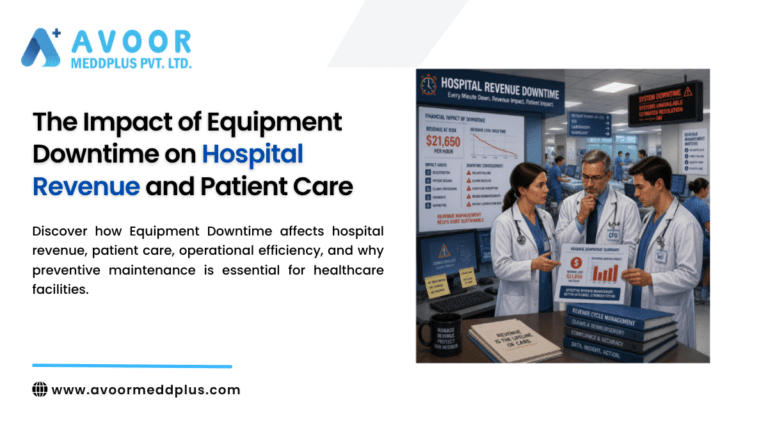
When advanced troubleshooting minimizes imaging equipment failures, hospitals benefit from:
- Reduced downtime
- Fewer emergency repairs
- Stable imaging schedules
- Lower maintenance variability
- Improved patient satisfaction
Consistent equipment performance supports both clinical operations and financial stability.
5. Application Across Imaging Modalities
CT & PET/CT Systems
- Gantry and detector diagnostics
- Tube performance monitoring
- Cooling and power system analysis
DR & CR Systems
- Flat-panel detector fault isolation
- Exposure consistency checks
- Signal integrity testing
C-ARM Systems
- Fluoroscopy output stability
- Radiation monitoring
- Mechanical and electrical troubleshooting
SPECT/CT & Nuclear Medicine
- Energy peaking validation
- Uniformity correction
- Fusion alignment accuracy
Each modality requires specialized troubleshooting expertise tailored to system complexity.
6. Role of Skilled Biomedical Engineers
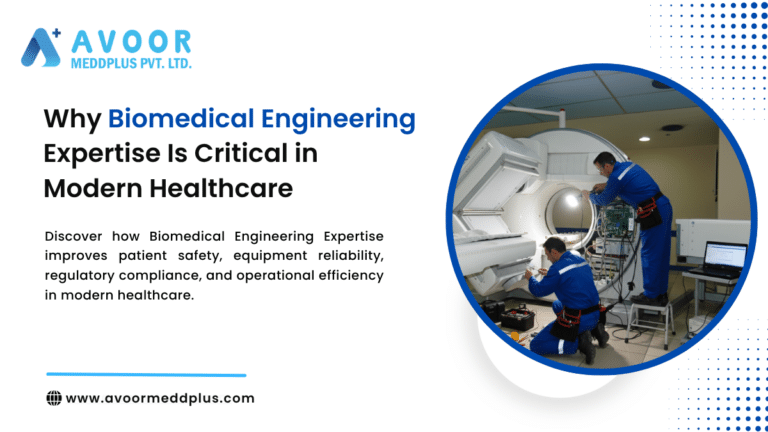
Advanced troubleshooting is highly technical and requires certified biomedical engineers. Their expertise enables them to:
- Interpret complex system logs
- Perform detailed diagnostics
- Analyze electrical and mechanical performance
- Apply structured repair protocols
- Maintain compliance documentation
Skilled engineers transform troubleshooting into long-term failure prevention.
7. Preventing Recurring Failures
Recurring failures are costly and disruptive. Advanced troubleshooting minimizes imaging equipment failures by:
- Eliminating temporary fixes
- Addressing environmental causes
- Stabilizing power supply systems
- Verifying cooling and ventilation performance
This holistic approach ensures reliability beyond immediate repairs.
8. How Avoor Meddplus Pvt Ltd Minimizes Equipment Failures
Avoor Meddplus Pvt Ltd strengthens imaging system reliability through:
- Structured advanced troubleshooting frameworks
- PCB-level repair expertise
- OEM-grade calibration and validation
- Root-cause analysis methodology
- Predictive maintenance integration
- Fast-response technical support
- Nationwide service presence
By combining engineering precision with systematic protocols, Avoor Meddplus Pvt Ltd ensures imaging equipment operates safely, accurately, and consistently.
Conclusion
Imaging equipment failures disrupt workflows, impact revenue, and compromise patient care. Reactive repairs alone cannot guarantee long-term stability. Advanced troubleshooting minimizes imaging equipment failures by identifying root causes, applying predictive strategies, and ensuring comprehensive validation.
Hospitals that invest in advanced troubleshooting expertise gain higher uptime, better diagnostic accuracy, and improved operational confidence. With experienced partners like Avoor Meddplus Pvt Ltd, imaging systems become reliable assets supporting uninterrupted, high-quality healthcare delivery.