
Introduction
Ultrasound machines play an important role in modern diagnostic imaging. Hospitals, clinics and diagnostic centres depend on these systems for examinations across several medical specialties. Equipment faults, poor image quality, probe damage and software errors can interrupt daily operations and affect appointment schedules.
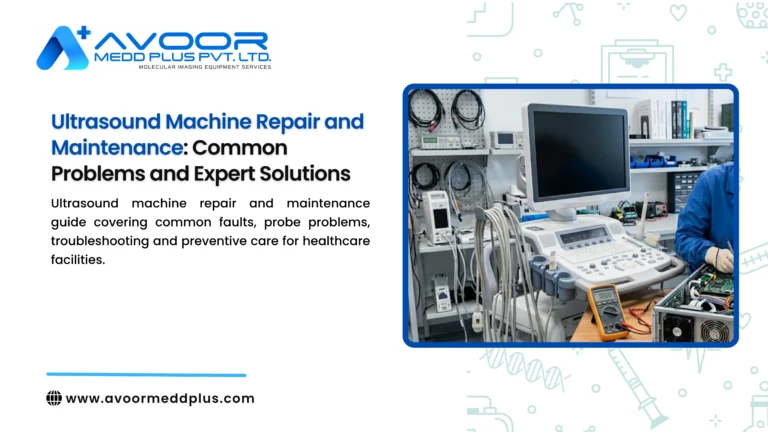
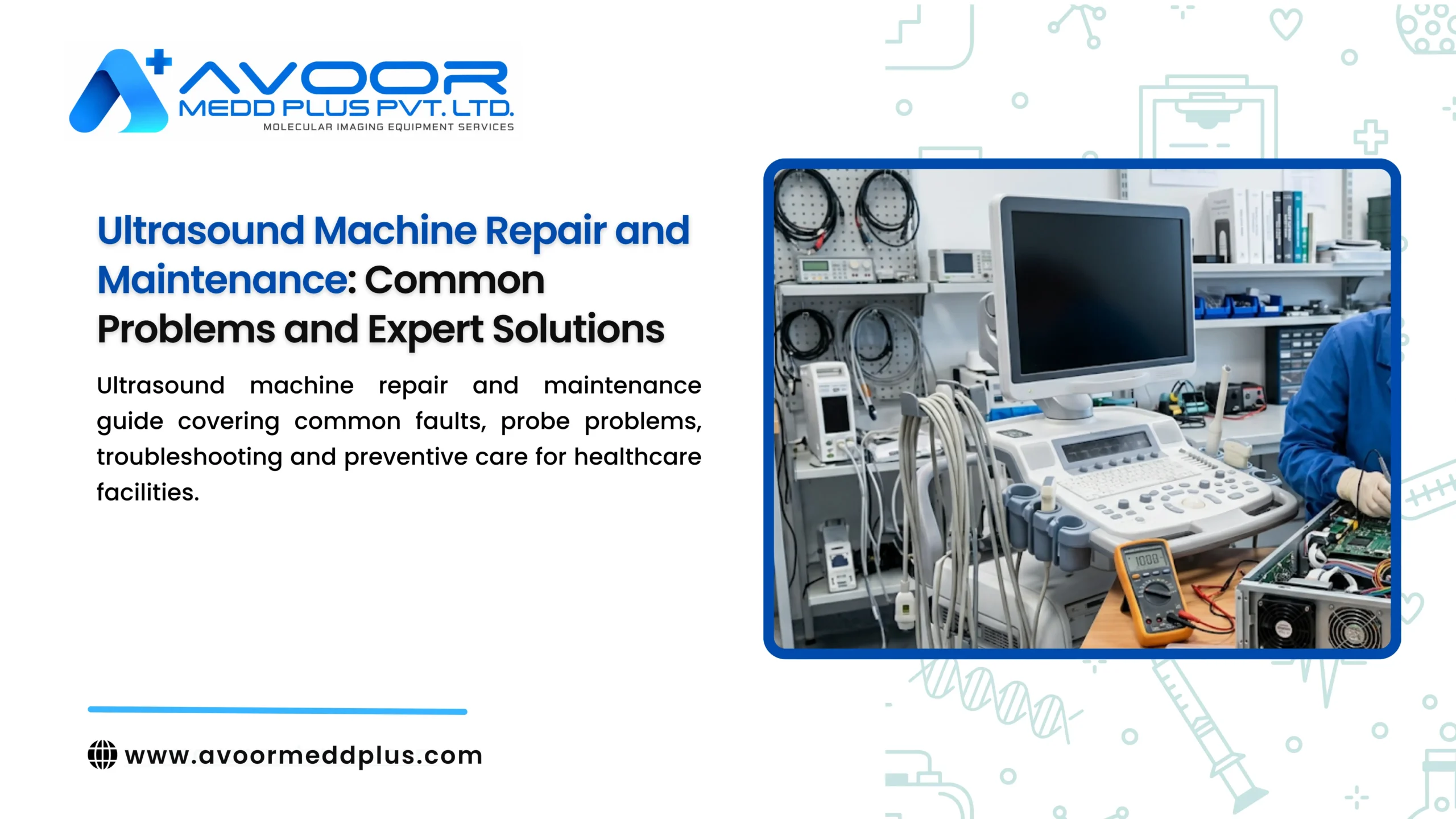
A structured approach to Ultrasound Machine Repair and Maintenance helps healthcare facilities identify equipment problems, arrange appropriate technical support and maintain reliable system performance.
From transducer issues and display problems to system errors and preventive inspections, understanding common ultrasound machine faults can help healthcare teams respond more effectively.
This guide explains common ultrasound equipment problems, possible causes, repair considerations and practical maintenance recommendations for healthcare facilities.
Table of Contents
- What Is Ultrasound Machine Repair and Maintenance?
- Common Ultrasound Machine Problems
- Ultrasound Probe and Transducer Problems
- Expert Solutions for Common Ultrasound Faults
- Preventive Maintenance for Ultrasound Machines
- Ultrasound Machine Repair Checklist
- When Should You Contact a Service Engineer?
- How to Choose an Ultrasound Equipment Repair Service Provider
- Frequently Asked Questions
- Ultrasound Equipment Service Support from Avoor Meddplus Pvt Ltd
- Conclusion
1. What Is Ultrasound Machine Repair and Maintenance?
Ultrasound machine repair and maintenance involves inspecting, troubleshooting, servicing and restoring diagnostic ultrasound equipment when technical problems occur.
An ultrasound system contains several interconnected components that contribute to image acquisition and display.
These may include:
- Ultrasound main system unit
- Transducers or probes
- Monitor and display assembly
- Control panel and keyboard
- Power supply components
- Internal electronic boards
- Cooling and ventilation components
- Imaging software and system storage
- Connectivity and peripheral interfaces
Maintenance requirements depend on the equipment manufacturer, model, configuration and usage conditions.
A planned service approach helps facilities identify developing problems and maintain a documented equipment history.
2. Common Ultrasound Machine Problems
Ultrasound equipment can develop different types of faults over time. Some problems are related to accessories, while others may involve internal electronics, software or system configuration.
2.1 Poor Image Quality
Poor image quality is one of the common concerns reported by ultrasound operators.
Possible symptoms include:
- Unclear or blurred images
- Unusual lines or artefacts
- Reduced image uniformity
- Missing image information
- Unexpected changes in image appearance
Possible areas for investigation include the transducer, probe cable, system settings, connectors and internal signal-processing components.
The cause should be assessed through appropriate equipment checks rather than assuming that the probe is defective.
2.2 Ultrasound Probe or Transducer Failure
The ultrasound probe is an essential component responsible for transmitting and receiving ultrasound signals.
Common warning signs include:
- Cracked or damaged probe housing
- Visible cable damage
- Intermittent probe detection
- Unusual image artefacts
- Connector damage
- Reduced performance during scanning
Physical damage or internal transducer faults may require professional inspection and repair or replacement assessment.
Avoid using a probe with visible damage until it has been evaluated according to the facility’s safety procedures.
2.3 System Not Powering On
An ultrasound machine that fails to start can interrupt diagnostic operations.
Possible causes include:
- External power supply issues
- Damaged power cables
- Internal power supply faults
- Electronic component failure
- System protection or hardware errors
The facility should check the external power connection and follow the manufacturer’s operating instructions. Internal electrical components should be assessed by appropriately qualified personnel.
2.4 Monitor or Display Problems
Display-related problems can affect the operator’s ability to review images and system information.
Common symptoms include:
- Flickering display
- Blank monitor
- Incorrect brightness
- Distorted images
- Intermittent display output
Potential causes may include display connections, monitor hardware, internal graphics components or system configuration.
2.5 Software and System Errors
Ultrasound systems rely on software for image processing, measurement tools, examination workflows and data management.
Possible issues include:
- System startup errors
- Application freezing
- Unexpected shutdowns
- Missing examination information
- Connectivity problems
- Software configuration errors
Before attempting software recovery or configuration changes, preserve relevant error information and follow the manufacturer’s approved procedures.
2.6 Keyboard and Control Panel Malfunctions
The control panel provides access to imaging settings and examination functions.
Fault symptoms may include:
- Unresponsive keys
- Trackball problems
- Intermittent button operation
- Control panel communication errors
- Damaged switches or controls
The issue may involve the control assembly, connections or internal electronic components.
2.7 Overheating and Cooling Problems
Ultrasound machines generate heat during operation. Cooling and ventilation components help maintain suitable operating conditions.
Warning signs may include:
- Cooling-related alerts
- Unusual fan noise
- Unexpected system shutdown
- Excessive heat around ventilation areas
- Repeated temperature warnings
Keep ventilation areas clear and follow the manufacturer’s environmental requirements. Persistent cooling alerts require technical assessment.
3. Ultrasound Probe and Transducer Problems
Probe-related issues deserve particular attention because transducers are essential to ultrasound image acquisition.
Different probe types are designed for different examinations and applications.
Common examples include:
- Linear probes
- Convex probes
- Phased-array probes
- Endocavity probes
- Specialty probes
Common Causes of Probe Problems
Physical damage: Dropping a probe or improper handling can damage its housing or internal components.
Cable deterioration: Repeated bending, twisting or pulling can damage internal cable connections.
Connector problems: Damaged or contaminated connectors may affect probe recognition or system communication.
Element-related faults: Problems within the transducer may contribute to image artefacts or reduced performance.
Improper cleaning and disinfection: Using unsuitable chemicals or procedures can damage probe materials and affect equipment safety.
Probe Maintenance Recommendations
- Inspect the probe housing before use.
- Check the cable for visible damage.
- Examine connectors for contamination or physical damage.
- Follow the manufacturer’s cleaning and disinfection instructions.
- Avoid excessive cable bending.
- Store probes in suitable holders.
- Report unusual image artefacts or intermittent detection.
Probe repair should be evaluated according to the probe model, damage and manufacturer’s instructions.
4. Expert Solutions for Common Ultrasound Faults
The correct repair approach depends on the equipment model and the actual cause of the problem.
| Problem | Possible area of investigation | Recommended response |
|---|---|---|
| Poor image quality | Probe, connectors, settings or signal processing | Technical evaluation and relevant performance checks |
| Probe not detected | Probe connector, cable or transducer | Inspect and assess probe compatibility and condition |
| Machine not starting | Power supply or internal electronics | Check external power and arrange qualified inspection |
| Monitor not displaying | Monitor, connections or graphics components | Inspect display system |
| Software errors | Application, configuration or storage | Review error information and approved recovery procedures |
| Control panel malfunction | Switches, controls or electronic assembly | Inspect the affected control components |
| Overheating | Ventilation or cooling system | Check ventilation and arrange service assessment |
Important Repair Considerations
A technician should first identify the fault and its possible source.
Repair or replacement decisions should consider:
- Equipment manufacturer and model
- Component part number
- Component compatibility
- Physical condition
- Availability of suitable replacement parts
- Manufacturer service guidance
- Safety and performance requirements
- Cost and expected repair scope
Replacing a component without identifying the underlying problem may not resolve the fault.
5. Preventive Maintenance for Ultrasound Machines
Preventive maintenance helps healthcare facilities identify potential problems before they become major equipment interruptions.
A structured maintenance programme should follow the manufacturer’s recommendations and the facility’s equipment-management procedures.
Daily Maintenance
- Inspect the equipment exterior.
- Check probes and cables for visible damage.
- Ensure ventilation areas are unobstructed.
- Check for unusual error messages.
- Clean equipment according to manufacturer instructions.
- Report abnormal operation.
Periodic Maintenance
Depending on manufacturer recommendations and equipment usage:
- Review equipment service history.
- Inspect connectors and external accessories.
- Assess cooling and ventilation condition.
- Review recurring system alerts.
- Check control panel operation.
- Review relevant system performance.
- Arrange professional inspection where required.
Professional Technical Maintenance
Qualified service personnel may perform model-specific activities such as:
- Technical fault assessment
- Internal component inspection
- Cooling-system evaluation
- Hardware diagnostics
- Approved software-related service
- Component repair or replacement
- Required post-service verification
The exact maintenance scope should be agreed upon for the particular equipment model.
6. Ultrasound Machine Repair Checklist
Healthcare facilities can use the following checklist to support equipment monitoring.
| Inspection area | What to check |
|---|---|
| Main system | Physical condition and operating alerts |
| Probe | Housing, cable and connector condition |
| Monitor | Display quality and normal operation |
| Control panel | Button, trackball and control response |
| Power supply | External cable and power connection condition |
| Cooling | Ventilation and cooling warnings |
| Software | Startup and application errors |
| Accessories | Condition and compatibility |
| Service records | Previous faults and maintenance history |
| Post-service checks | Required operational and performance verification |
This checklist is a general reference, not a substitute for the manufacturer’s maintenance procedure or a formal quality-control programme.
7. When Should You Contact a Service Engineer?
Not every equipment issue requires the same level of intervention. However, certain warning signs should be escalated promptly.
Contact qualified service support when:
- The machine repeatedly fails to start.
- A probe shows physical damage.
- Image quality changes unexpectedly.
- The system displays persistent hardware errors.
- The equipment shuts down unexpectedly.
- Cooling alerts continue to appear.
- Internal electronic faults are suspected.
- A repair or component replacement is required.
If an issue could affect patient safety or image reliability, follow the facility’s procedure for taking the equipment out of clinical use.
After repair, complete the required operational and quality-control checks before authorizing clinical use.
8. How to Choose an Ultrasound Equipment Repair Service Provider
Selecting a suitable service provider is important for managing equipment faults and maintenance requirements.
Healthcare facilities should evaluate the following factors.
Experience with Medical Imaging Equipment
Ask about the provider’s experience with the relevant ultrasound equipment type, manufacturer and model.
Technical Assessment
A suitable provider should assess the reported problem and explain the proposed repair scope.
Spare Parts Compatibility
Verify component part numbers and compatibility before approving replacement parts.
Transparent Service Documentation
Request a report containing the fault description, inspection findings, work performed, parts used and relevant test results.
Safety and Quality Procedures
Confirm that the work is performed by appropriately qualified personnel using suitable technical procedures.
Clear Commercial Terms
Understand the service charges, parts costs, expected service arrangements and warranty conditions, if applicable.
9. Frequently Asked Questions
1. What are the most common ultrasound machine problems?
Common problems include poor image quality, probe faults, display issues, power failures, software errors, control panel malfunctions and cooling-related warnings.
2. Why does an ultrasound machine produce unclear images?
Possible causes include probe damage, cable issues, incorrect system settings, connector problems or internal signal-processing faults. A technical assessment is required to identify the actual cause.
3. Can an ultrasound probe be repaired?
Some probe faults may be repairable, depending on the model, damage and component availability. Other cases may require replacement. The decision should follow appropriate technical and manufacturer guidance.
4. How often should an ultrasound machine undergo preventive maintenance?
Maintenance frequency should follow the manufacturer’s recommendations and the facility’s equipment-management requirements. Usage conditions and service history may also influence the maintenance plan.
5. What should I do if my ultrasound machine does not power on?
Follow the manufacturer’s operating instructions and check the external power connection. If the problem continues, arrange qualified technical inspection rather than opening the equipment or attempting internal electrical repairs.
6. How can I extend the service life of an ultrasound machine?
Follow manufacturer cleaning and maintenance instructions, handle probes carefully, protect cables from damage, maintain suitable environmental conditions and arrange professional servicing when required.
7. Is preventive maintenance necessary for ultrasound equipment?
Yes. Preventive maintenance supports early identification of developing faults, equipment management and maintenance documentation. It does not eliminate the possibility of unexpected breakdowns.
8. What checks are required after ultrasound machine repair?
The checks depend on the repair and equipment model. They may include operational checks, relevant performance verification and safety checks specified by the manufacturer and facility procedures.
10. Ultrasound Equipment Service Support from Avoor Meddplus Pvt Ltd
Avoor Meddplus Pvt Ltd provides medical imaging equipment repair, installation, maintenance and spare-parts support for healthcare facilities.
Our medical imaging service scope includes ultrasound equipment and related medical imaging systems, subject to the equipment model, fault, parts availability and agreed service requirements.
Healthcare facilities can contact Avoor Meddplus Pvt Ltd to discuss:
- Ultrasound machine repair requirements
- Probe and transducer fault assessment
- Equipment troubleshooting
- Preventive maintenance planning
- Medical imaging spare-parts requirements
- Technical service support
With its Bengaluru base and PAN-India service coverage, Avoor Meddplus Pvt Ltd supports healthcare facilities in managing medical imaging equipment service requirements.
11. Conclusion
Ultrasound machines are important diagnostic tools, and their performance depends on the condition of the main system, probes, display, electronics and supporting components.
A planned approach to Ultrasound Machine Repair and Maintenance helps healthcare facilities recognize common faults, arrange suitable technical support and maintain equipment service records.
Regular inspections, proper probe handling, manufacturer-recommended maintenance and appropriate post-repair checks all contribute to responsible equipment management.
For ultrasound equipment repair, maintenance and medical imaging service enquiries, healthcare facilities can connect with Avoor Meddplus Pvt Ltd.