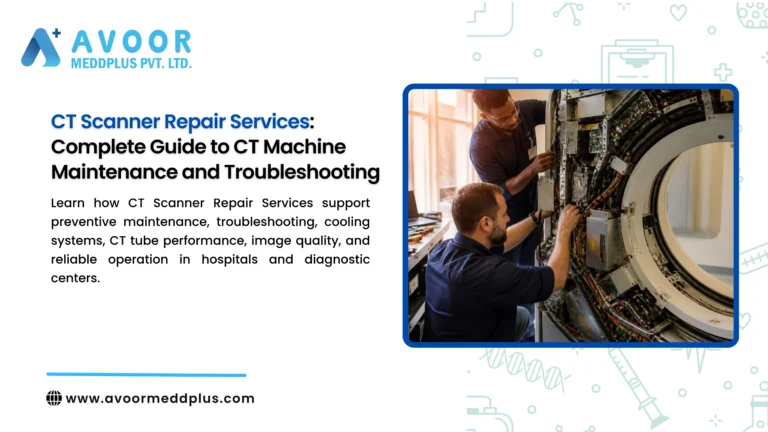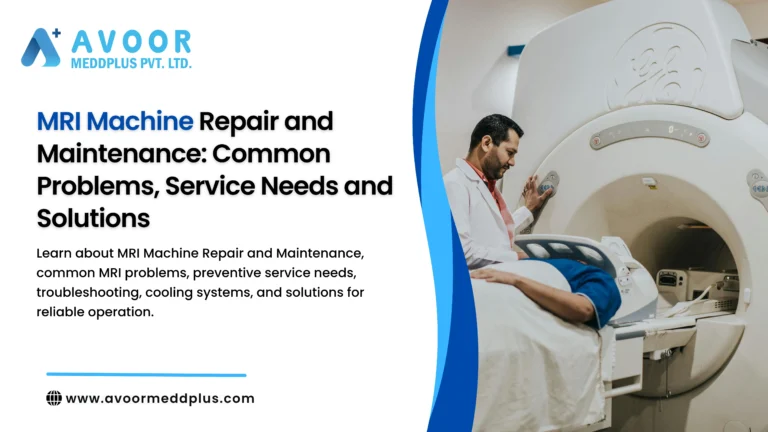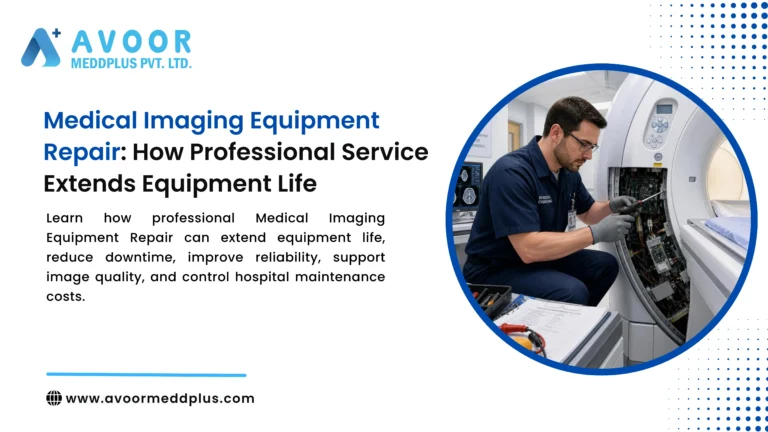

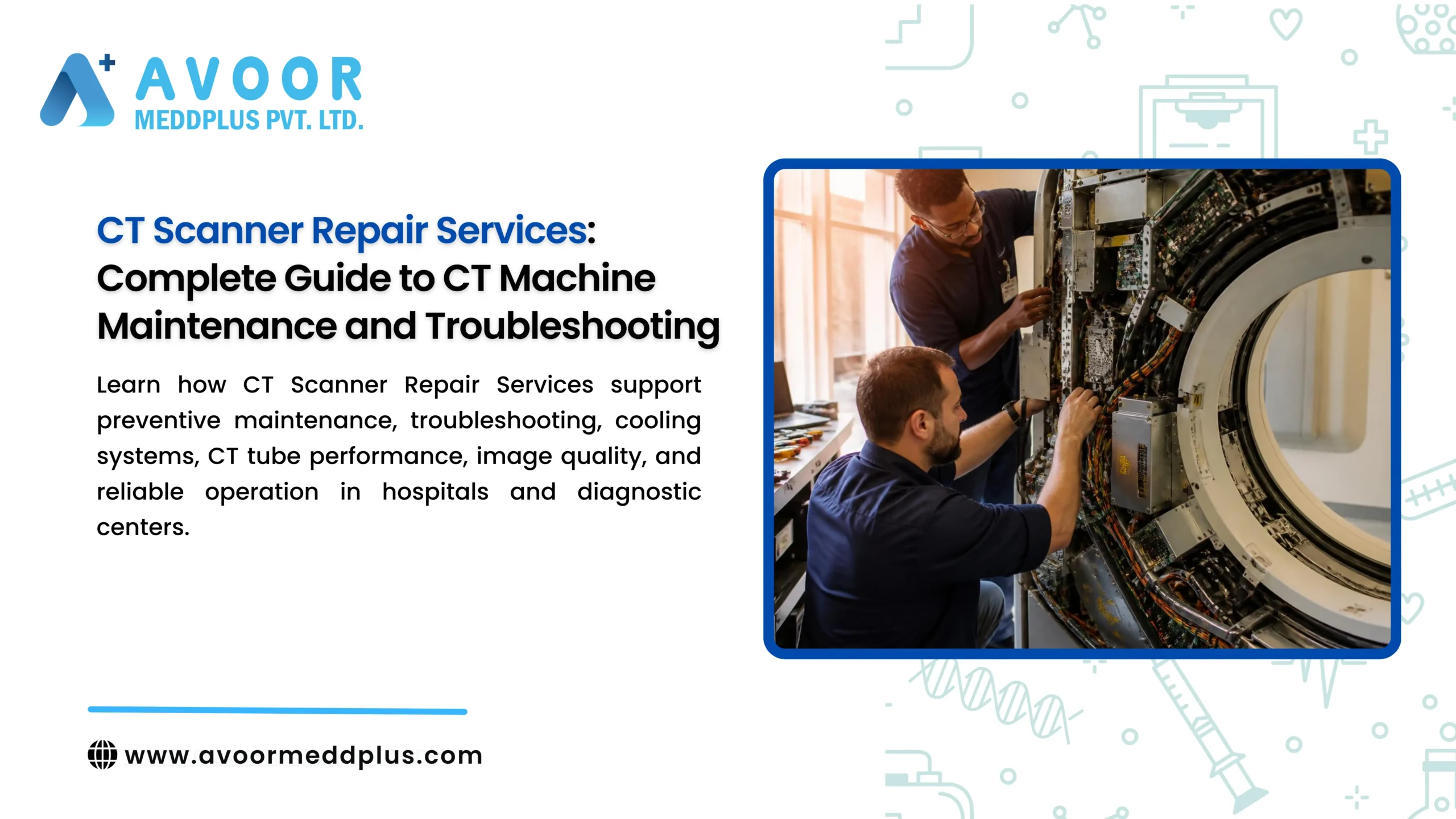
CT Scanner Repair Services are essential for hospitals and diagnostic centers that depend on computed tomography systems for fast and accurate medical imaging.
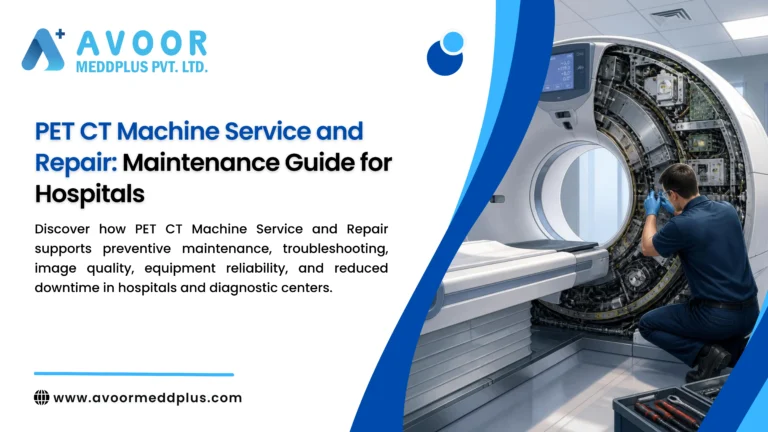
A CT scanner is a sophisticated system that combines an X-ray tube, detector array, gantry, high-voltage electronics, data-acquisition systems, cooling infrastructure, patient table, computers, software, and image-reconstruction technology.
Because these components operate together, even a relatively small fault can interrupt scanning operations.
Unexpected CT downtime can result in:
- Cancelled examinations
- Patient delays
- Increased operational costs
- Emergency repair expenses
- Reduced departmental productivity
- Pressure on alternative imaging systems
Professional CT Scanner Repair Services can help healthcare facilities diagnose equipment problems, perform preventive maintenance, address recurring faults, and maintain supported systems appropriately.
This guide explains common CT scanner problems, maintenance requirements, troubleshooting practices, and how hospitals can choose the right CT service provider.
Table of Contents
- What Are CT Scanner Repair Services?
- Why CT Scanner Maintenance Is Important
- 10 Common CT Scanner Problems
- CT Scanner Troubleshooting Guide
- CT Tube Problems and Maintenance
- CT Cooling System Maintenance
- CT Gantry and Mechanical Problems
- CT Detector and Image-Quality Problems
- CT Electrical and Electronic Problems
- CT Preventive Maintenance Checklist
- CT AMC and CAMC Services
- When to Call a CT Scanner Repair Expert
- How to Choose a CT Service Provider
- Why Choose Avoor Meddplus Pvt Ltd?
- Frequently Asked Questions
- Conclusion
What Are CT Scanner Repair Services?
Understanding CT Scanner Repair Services
CT Scanner Repair Services involve the professional diagnosis, maintenance, troubleshooting, and repair of computed tomography equipment.
Depending on the CT system and manufacturer, service may include:
- Preventive maintenance
- Breakdown troubleshooting
- Error-code analysis
- CT tube diagnostics
- Gantry inspection
- Detector-system troubleshooting
- Cooling-system inspection
- High-voltage system diagnosis
- Electronic and PCB repair
- Patient-table service
- Software troubleshooting
- Image-quality investigation
- Calibration support
- Performance testing
CT systems are complex medical devices. Internal technical work should be performed by appropriately trained personnel using suitable procedures and safety precautions.
Why CT Scanner Maintenance Is Important
A CT scanner may perform hundreds or thousands of examinations depending on the facility.
Continuous operation places demands on mechanical, electronic, thermal, and imaging components.
A structured maintenance program can help healthcare facilities:
Reduce Avoidable Downtime
Regular inspections may identify developing problems before they result in major interruptions.
Support Image Quality
Image-quality changes can sometimes indicate equipment-related problems.
Protect Expensive Components
Components such as CT tubes and detector systems can be costly.
Improve Maintenance Planning
Service history can reveal recurring failures and equipment trends.
Support Patient Safety
Maintenance and performance testing should be performed according to applicable manufacturer and facility requirements.
10 Common CT Scanner Problems
1. CT Tube Overheating
CT tubes generate significant heat during scanning.
High workloads, cooling problems, environmental conditions, or equipment faults can contribute to temperature-related warnings.
Possible symptoms include:
- Tube temperature warnings
- Scan interruptions
- System alarms
- Reduced scanning availability
- Repeated tube-related errors
Solution
CT tube temperature and cooling performance should be monitored according to manufacturer specifications.
If overheating occurs repeatedly, the underlying cause should be professionally investigated rather than simply resetting the system.
2. CT Tube Failure
The X-ray tube is one of the most critical components of a CT scanner.
Possible warning signs include:
- Exposure errors
- Tube-related error codes
- Abnormal noise
- Reduced scanning availability
- Repeated system faults
Solution
A qualified service engineer should evaluate tube performance, associated high-voltage systems, cooling conditions, and relevant system diagnostics.
Because CT tubes are high-value components, appropriate maintenance and operating practices are important.
3. Gantry Rotation Problems
The gantry contains multiple components that rotate around the patient.
Mechanical or electrical problems can cause:
- Rotation errors
- Unusual noise
- Vibration
- Positioning problems
- Scan interruption
Solution
Professional service may involve inspection of applicable motors, bearings, drive systems, cables, sensors, and control electronics.
Operators should not attempt unauthorized mechanical adjustments.
4. Detector Problems
The detector array receives X-rays after they pass through the patient.
Detector problems can potentially produce:
- Image artifacts
- Reduced image quality
- Calibration errors
- Detector-related warnings
- Non-uniformity
Solution
Detector problems require specialized diagnostic procedures.
If image artifacts consistently appear in the same region, technical evaluation may be appropriate.
5. Cooling System Problems
Cooling is essential for CT systems because several components generate substantial heat.
Potential problems include:
- Cooling-unit failure
- Fan problems
- Pump problems
- Restricted airflow
- Temperature sensor faults
- Environmental temperature issues
Solution
Cooling-system performance should be checked during preventive maintenance.
The CT room should also maintain environmental conditions within the manufacturer’s specified operating range.
6. Patient Table Problems
The patient table must position the patient accurately and reliably.
Possible symptoms include:
- Table movement failure
- Slow movement
- Positioning errors
- Unusual mechanical noise
- Intermittent operation
Solution
The table should be inspected for mechanical, electrical, and control-system problems.
Accurate patient positioning is important for proper scanning and workflow.
7. High-Voltage System Problems
CT systems use high-voltage electrical systems to operate the X-ray tube.
Problems can cause:
- Exposure failures
- Error codes
- System shutdown
- Tube-related faults
High-voltage systems can present serious electrical hazards.
Solution
Only appropriately trained technical personnel should diagnose or service high-voltage components.
8. Image-Quality Problems
Image-quality changes should be investigated promptly.
Possible symptoms include:
- Increased noise
- Ring artifacts
- Streak artifacts
- Non-uniformity
- Reduced contrast
- Unexpected image distortion
Potential causes can include:
- Detector problems
- Tube issues
- Calibration problems
- Electronics
- Patient movement
- Reconstruction software
- Environmental factors
A professional diagnosis can help distinguish equipment-related problems from scanning or patient-related factors.
9. Software and Computer Errors
Modern CT scanners rely heavily on computers and software.
Possible symptoms include:
- System freezes
- Reconstruction failures
- Communication errors
- Slow processing
- Unexpected restarts
- Scan failures
Solution
The service team should determine whether the problem originates in:
- Scanner hardware
- Reconstruction computer
- Software
- Network
- Storage
- Communication systems
Exact error messages should be documented whenever possible.
10. Electrical and Power Problems
Unstable electrical conditions can affect sensitive CT electronics.
Possible symptoms include:
- Unexpected shutdowns
- System restarts
- Communication errors
- Electronic faults
Hospitals should ensure that the CT installation has appropriate electrical infrastructure according to the manufacturer’s specifications and facility requirements.
CT Scanner Troubleshooting Guide
When a CT scanner develops a problem, operators should follow a structured approach.
Step 1: Record the Error
Write down the exact:
- Error code
- Warning message
- Date and time
- Scan protocol
- Equipment condition
Step 2: Identify When the Problem Occurs
Determine whether the problem occurs:
- During startup
- During gantry rotation
- During exposure
- During reconstruction
- During image transfer
- During shutdown
Step 3: Check for Recurring Patterns
Does the same error appear repeatedly?
Recurring errors may provide valuable information to service engineers.
Step 4: Follow Approved Operator Procedures
Use the manufacturer’s approved operator instructions.
Avoid repeatedly resetting the system without investigating a recurring fault.
Step 5: Contact Technical Support
If the problem persists or affects normal operation, contact an appropriately qualified CT service professional.
CT Tube Maintenance
Why CT Tube Maintenance Matters
The CT tube is subject to substantial thermal and mechanical demands.
Proper operation can help manage tube stress.
Facilities should follow manufacturer guidance regarding:
- Tube warm-up
- Scanning workload
- Cooling intervals
- Temperature warnings
- Preventive maintenance
Never bypass a tube-temperature warning or other protective system.
Warning Signs of CT Tube Problems
Potential warning signs include:
- Repeated tube errors
- Exposure failures
- Temperature warnings
- Abnormal tube-related noise
- Scan interruptions
Professional diagnosis is recommended when these symptoms recur.
CT Cooling System Maintenance
Why Cooling Is Critical
Heat is generated by several CT components.
Effective cooling helps maintain operating conditions for:
- X-ray tube
- Generator
- Electronics
- Gantry components
- Other heat-generating systems
Cooling-system maintenance may include inspection of applicable:
- Fans
- Pumps
- Filters
- Heat exchangers
- Temperature sensors
- Cooling units
- Airflow
The CT room’s temperature and humidity should also remain within the equipment manufacturer’s specified limits.
CT Gantry and Mechanical Maintenance
The gantry contains sophisticated mechanical systems.
Maintenance may include inspection of:
- Rotation mechanisms
- Bearings
- Motors
- Drive systems
- Position sensors
- Cables
- Mechanical assemblies
Unusual noise or vibration should not be ignored.
Early investigation may help prevent a relatively small mechanical issue from developing into a larger service problem.
CT Detector and Image-Quality Maintenance
Image quality is a key part of CT system performance.
Quality-control procedures may evaluate characteristics such as:
- Uniformity
- Noise
- Contrast
- Spatial resolution
- Artifacts
- Geometric accuracy
The exact tests and acceptance criteria depend on the equipment, manufacturer requirements, applicable regulations, and facility quality-control program.
If image quality changes unexpectedly, technical service and appropriate quality-control procedures should be considered.
CT Preventive Maintenance Checklist
A structured CT preventive-maintenance program can include:
Gantry
- Inspect gantry operation
- Check rotation
- Check unusual noise
- Inspect mechanical components
- Review error logs
X-Ray Tube
- Review tube performance
- Check temperature warnings
- Inspect applicable cooling
- Review tube-related errors
Detector
- Check detector performance
- Review calibration
- Investigate image artifacts
Cooling
- Check cooling system
- Inspect airflow
- Review temperature
- Check applicable fans/pumps
Patient Table
- Check table movement
- Verify positioning
- Inspect mechanical condition
Electronics
- Review system errors
- Check power-related issues
- Inspect applicable electronics
Software
- Review error messages
- Check reconstruction
- Verify communication
- Review system logs
Documentation
- Record maintenance
- Record repairs
- Document replaced components
- Record downtime
- Schedule next service
CT AMC and CAMC Services
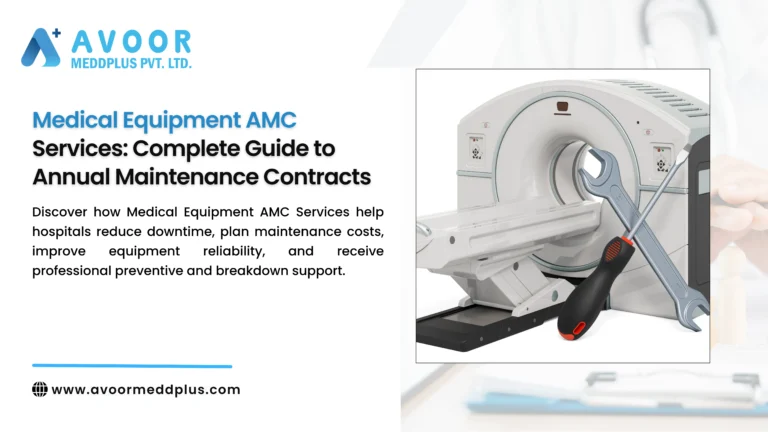
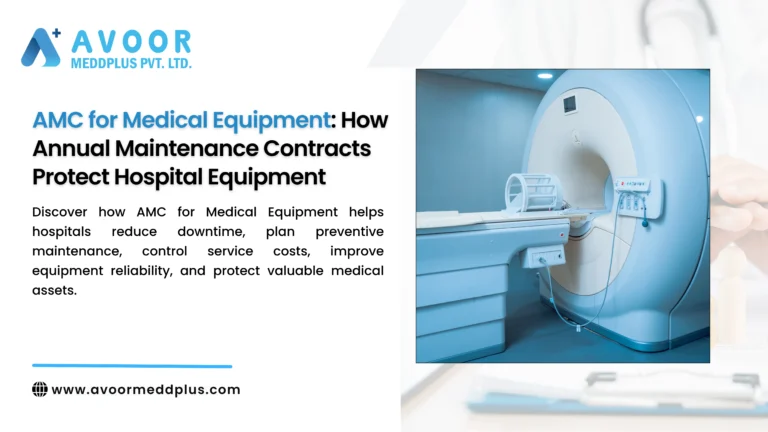
Hospitals may use an Annual Maintenance Contract (AMC) or Comprehensive Annual Maintenance Contract (CAMC) for ongoing CT service.
CT AMC
A CT AMC may cover:
- Preventive maintenance
- Technical inspection
- Troubleshooting
- Defined breakdown support
- Service reporting
The exact scope depends on the contract.
CT CAMC
A CAMC may provide broader coverage and can potentially include specified spare parts and labor.
Before signing a CT maintenance contract, confirm:
- CT tube coverage
- Detector coverage
- Labor coverage
- Preventive maintenance schedule
- Emergency response
- Parts availability
- Software support
- Exclusions
- Service-level commitments
Read our related guide: [AMC for Medical Equipment].
When to Call a CT Scanner Repair Expert
Professional CT Scanner Repair Services should be considered when:
- The same error appears repeatedly
- The CT tube overheats
- Scans are repeatedly interrupted
- Image quality changes
- Gantry rotation becomes abnormal
- The patient table malfunctions
- Cooling alarms appear
- Detector errors occur
- The system repeatedly restarts
- Calibration fails
- Equipment downtime increases
For high-voltage, X-ray tube, detector, gantry, and other specialized systems, technical intervention should be performed by appropriately qualified personnel.
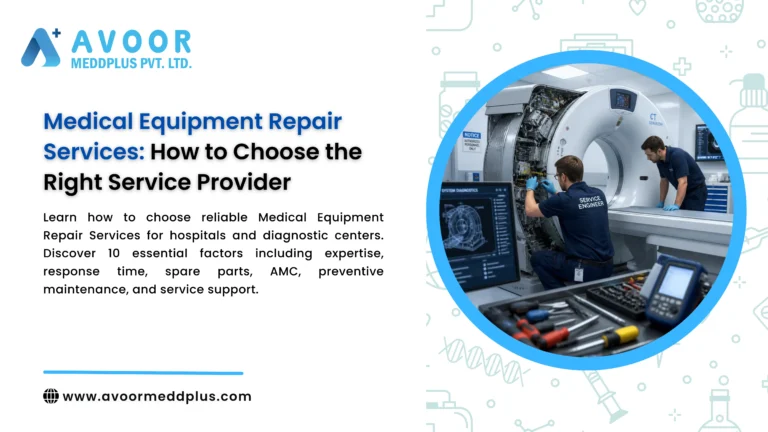
How to Choose CT Scanner Repair Services
Technical Experience
Choose a provider with relevant experience with the specific CT manufacturer and model.
Diagnostic Capability
A capable service provider should investigate the root cause instead of immediately replacing expensive components.
Spare Parts Availability
Ask about the availability of:
- CT tubes
- Detector components
- Power supplies
- PCBs
- Cooling components
- Mechanical parts
Response Time
For high-volume diagnostic centers, response time can directly affect operational continuity.
Preventive Maintenance
The provider should ideally be able to support both emergency repairs and scheduled preventive maintenance.
Documentation
Request detailed service reports after every intervention.
Why Choose Avoor Meddplus Pvt Ltd?
Avoor Meddplus Pvt Ltd provides professional CT Scanner Repair Services for hospitals, diagnostic centers, and healthcare organizations.
Our service capabilities include:
- CT Scanner Repair
- CT Preventive Maintenance
- CT Troubleshooting
- CT Tube Diagnostics
- CT Gantry Service
- CT Cooling-System Support
- CT Electronic Diagnostics
- Medical Equipment PCB Repair
- Error-Code Analysis
- Image-Quality Investigation
- Calibration Support
- CT AMC
- CT CAMC
- Spare Parts Support
- Installation and Commissioning
Our approach emphasizes systematic troubleshooting, preventive maintenance, technical documentation, and equipment-specific diagnosis.
For healthcare facilities where CT availability is critical, professional maintenance can help identify developing faults and support reliable equipment operation.
Conclusion
CT Scanner Repair Services are an important part of maintaining reliable diagnostic imaging operations.
CT scanners combine high-performance X-ray systems, detectors, rotating gantries, high-voltage electronics, cooling infrastructure, computers, software, and precision mechanical components.
A structured maintenance strategy can help healthcare facilities:
- Detect equipment problems early
- Reduce avoidable downtime
- Maintain image-quality performance
- Protect expensive components
- Manage CT tube and cooling-system issues
- Track recurring faults
- Improve maintenance planning
- Extend the serviceability of supported equipment
The best approach combines preventive maintenance, professional troubleshooting, appropriate repairs, quality control, and accurate service documentation.
For hospitals and diagnostic centers, choosing an experienced CT service provider can make a significant difference when dealing with complex equipment problems.
Need Professional CT Scanner Repair Services?
Avoor Meddplus Pvt Ltd provides CT scanner repair, preventive maintenance, troubleshooting, electronic diagnostics, PCB repair, AMC/CAMC support, spare-parts assistance, and technical services.
Contact Avoor Meddplus Pvt Ltd for professional CT scanner repair and maintenance support.