Introduction
Medical devices play a vital role in patient diagnosis, monitoring, and treatment. From advanced imaging systems like CT, PET/CT, DR, and C-ARM to life-support and monitoring equipment, consistent device performance is critical for patient safety and clinical accuracy. However, importance of periodic performance testing medical devices, over time, even the most advanced medical devices can experience calibration drift, component wear, and performance instability.
This is why importance of periodic performance testing in medical devices cannot be overstated. Regular performance testing ensures devices operate within specified standards, maintain accuracy, and comply with regulatory requirements. At Avoor Meddplus Pvt Ltd, structured periodic performance testing programs are designed to safeguard equipment reliability and enhance operational confidence in healthcare facilities.
1. What Is Periodic Performance Testing?
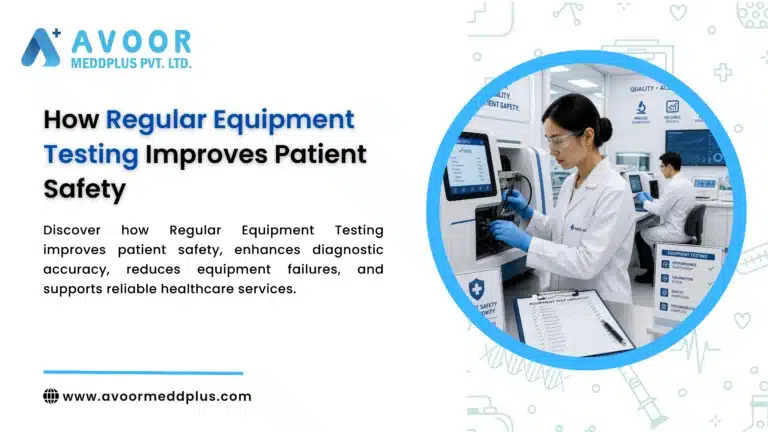
Periodic performance testing refers to scheduled evaluations of medical devices to verify their accuracy, safety, and operational stability. Unlike reactive repairs, performance testing is proactive and systematic.
It typically includes:
- Calibration verification
- Functional testing
- Electrical safety checks
- Radiation output measurement (for imaging systems)
- Mechanical alignment inspection
- Software validation
- importance of periodic performance testing medical devices
These evaluations ensure medical devices continue performing according to manufacturer and regulatory standards.
2. Why Periodic Performance Testing Is Critical in Healthcare
Medical devices operate in high-demand clinical environments. Continuous use, environmental factors, and electrical fluctuations can gradually affect system performance. Without periodic testing, these changes may go unnoticed until a major failure occurs.
The importance of periodic performance testing in medical devices lies in its ability to:
- Detect hidden performance deviations
- Prevent unexpected equipment failure
- Protect patient safety
- Maintain diagnostic accuracy
- Support compliance and audit readiness
- importance of periodic performance testing medical devices
Proactive testing significantly reduces operational risk.
3. 7 Key Benefits of Periodic Performance Testing
1️⃣ Ensures Diagnostic Accuracy
Imaging and diagnostic devices must maintain precise calibration. Performance testing verifies:
- Radiation output consistency
- Detector alignment
- Image quality stability
- Measurement accuracy
- importance of periodic performance testing medical devices
Accurate performance directly impacts clinical decision-making.
2️⃣ Enhances Patient Safety
Performance testing includes verification of safety parameters such as:
- Electrical grounding
- Radiation dose limits
- Functional safety interlocks
Compliance with safety standards protects both patients and healthcare professionals.
3️⃣ Reduces Equipment Downtime
Identifying minor issues during scheduled testing prevents sudden breakdowns. Early intervention allows repairs to be planned rather than reactive.
This results in:
- Improved equipment uptime
- Fewer emergency service calls
- Stable departmental workflows
- importance of periodic performance testing medical devices
4️⃣ Extends Equipment Lifespan
Periodic performance testing detects component stress and wear before failure. By maintaining balanced system operation, device lifespan is significantly extended.
5️⃣ Supports Regulatory Compliance
Healthcare facilities must maintain detailed records of device performance and maintenance. Performance testing provides:
- Documented verification reports
- Calibration certificates
- Safety inspection records
These documents are essential during regulatory inspections and accreditation audits.
6️⃣ Improves Financial Predictability
Preventive testing reduces unexpected repair expenses and emergency downtime costs. Hospitals benefit from predictable maintenance planning and controlled budgets.
7️⃣ Builds Clinical Confidence
When medical devices consistently deliver accurate results, clinicians gain confidence in diagnostic outcomes and treatment decisions.
4. Periodic Performance Testing Across Imaging Modalities
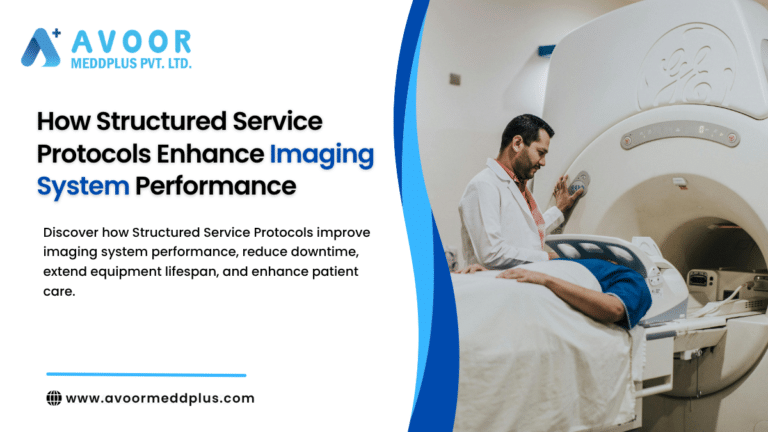
CT & PET/CT Systems
- Gantry alignment checks
- Detector sensitivity testing
- Dose calibration
- Cooling and power system validation
DR & CR Systems
- Flat-panel detector inspection
- Exposure linearity verification
- Image uniformity testing
C-ARM Systems
- Fluoroscopy output measurement
- Radiation monitoring
- Mechanical performance checks
SPECT/CT & Nuclear Medicine
- Energy peaking validation
- Uniformity correction
- Fusion alignment testing
Each modality requires specialized performance testing protocols tailored to system complexity.
5. Periodic Testing vs Reactive Maintenance
| Aspect | Periodic Performance Testing | Reactive Maintenance |
|---|---|---|
| Risk Detection | Early | After failure |
| Downtime | Planned & minimal | Often extended |
| Compliance | Documented | Inconsistent |
| Cost Control | Predictable | Escalated |
| Diagnostic Accuracy | Stable | Variable |
This comparison clearly demonstrates the importance of periodic performance testing in medical devices for long-term reliability.
6. Role of Skilled Biomedical Engineers
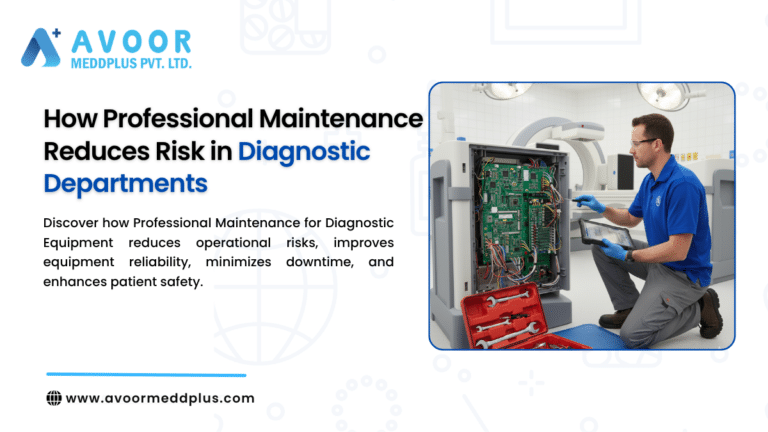
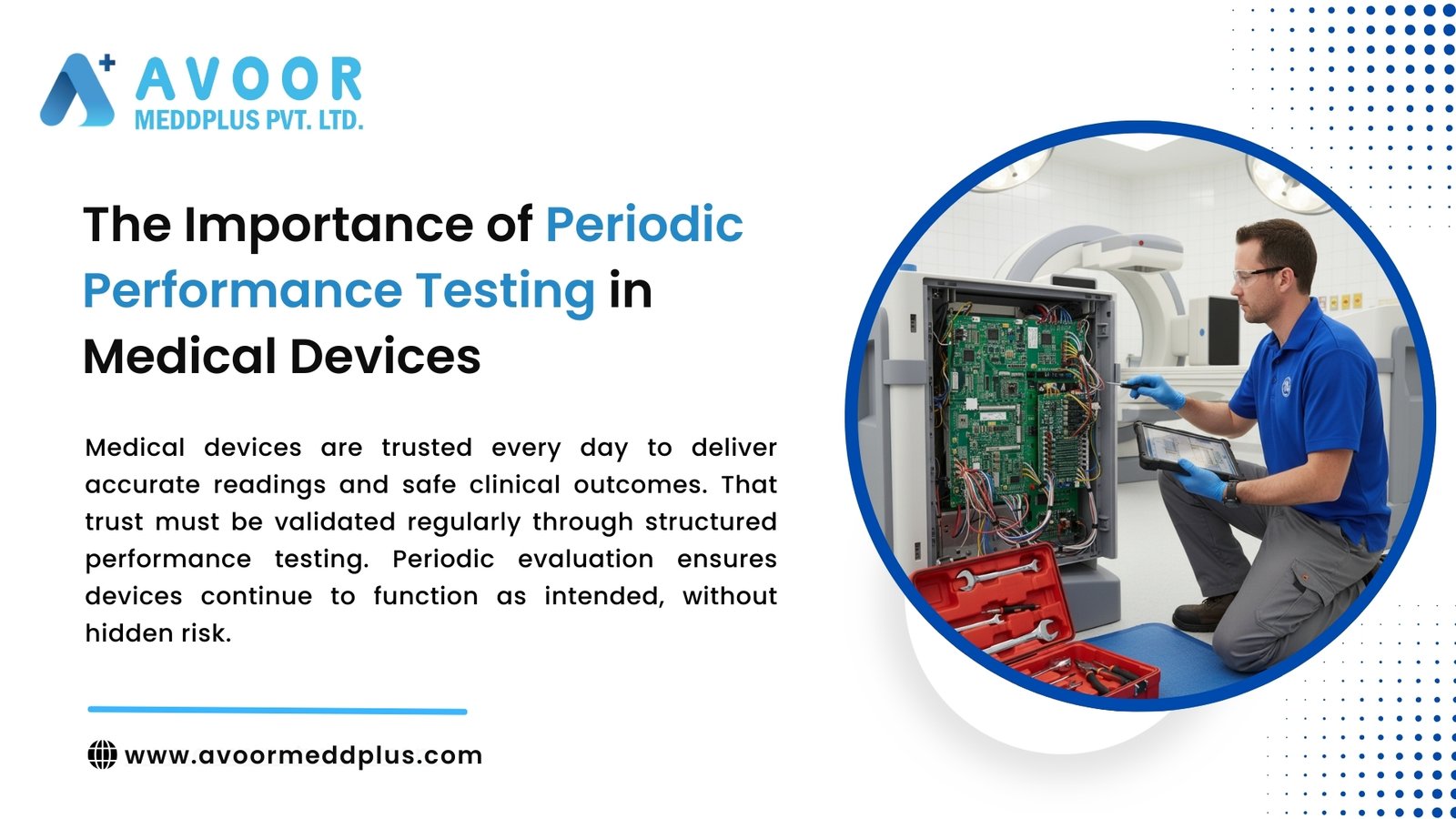
Effective performance testing requires expertise. Skilled biomedical engineers:
- Interpret performance data
- Detect subtle deviations
- Perform precise calibration
- Validate safety parameters
- Document compliance
Their technical knowledge ensures that testing results are accurate and actionable.
7. Strategic Value for Healthcare Facilities
Periodic performance testing is not just a technical requiremen. it is a strategic investment. Healthcare facilities that prioritize structured testing experience:
- Higher operational stability
- Reduced risk exposure
- Improved patient trust
- Enhanced equipment ROI
Reliable devices contribute directly to consistent patient care delivery.
8. How Avoor Meddplus Pvt Ltd Strengthens Device Reliability
Avoor Meddplus Pvt Ltd supports healthcare facilities with:
- Structured periodic performance testing programs
- OEM-grade calibration and validation
- Radiation and electrical safety checks
- PCB-level repair expertise
- Detailed performance documentation
- Nationwide technical support
By combining expertise with disciplined protocols, Avoor Meddplus Pvt Ltd ensures medical devices perform safely, accurately, and consistently.
Conclusion
Medical devices are central to modern healthcare, and their reliability cannot be left to chance. The importance of periodic performance testing in medical devices lies in its ability to protect patient safety, maintain diagnostic accuracy, reduce downtime, and support regulatory compliance.
Healthcare facilities that adopt structured testing programs safeguard both their technology investments and their clinical reputation. With expert support from Avoor Meddplus Pvt Ltd, periodic performance testing becomes a proactive strategy for delivering safe, reliable, and uninterrupted healthcare services.