Introduction
Modern diagnostic imaging systems CT, PET/CT, DR, CR, SPECT/CT, C-ARM, and mammography operate with high precision and are central to accurate diagnosis. However, the stability and accuracy of these systems depend heavily on regular inspection, calibration, and preventive upkeep. This is where the importance of preventive maintenance imaging becomes undeniable. Without structured maintenance, even the most advanced imaging systems experience performance drift, breakdowns, and diagnostic inaccuracies.
At Avoor Meddplus, we ensure that every imaging system runs at OEM-grade precision through preventive maintenance programs that protect uptime, reduce risk, and maintain long-term system health.
1. Importance of Preventive Maintenance Imaging for Diagnostic Accuracy
Diagnostic accuracy is only as good as the equipment providing the images. Preventive maintenance ensures that detectors, power systems, X-ray tubes, cooling units, and software modules stay within OEM performance thresholds.
Poorly maintained equipment may lead to:
- Artifacts on CT/DR images
- Incorrect CT Hounsfield values
- PET/CT misregistration
- Blurred fluoroscopy on C-ARM
- Detector non-uniformity
- Tube overheating
This is why the importance of preventive maintenance imaging is central to delivering reliable clinical reports and ensuring radiologists have complete confidence in the output.
2. Reduces Unplanned Downtime and Workflow Disruption
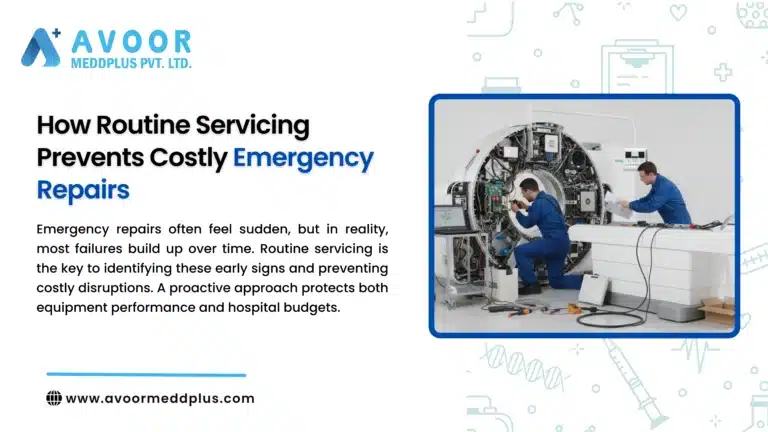
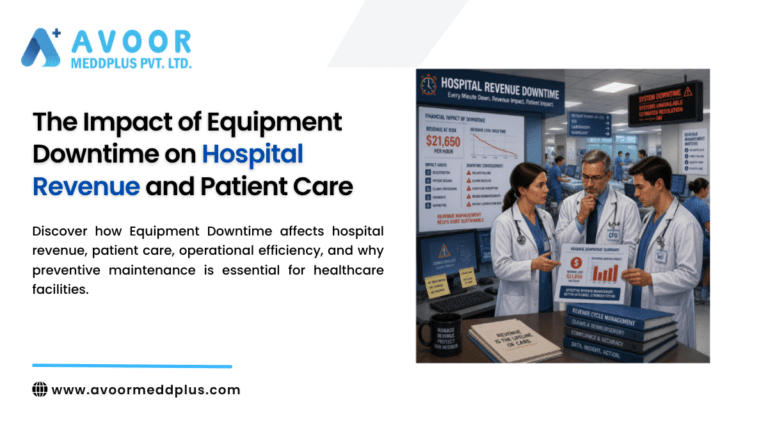
Downtime is one of the biggest threats to imaging centers. An unexpected equipment failure can disrupt a full day’s patient flow, delay diagnostics, and significantly affect operational efficiency.
Preventive maintenance:
- Identifies early signs of component wear
- Detects calibration drift before it becomes critical
- Reduces emergency breakdown calls
- Ensures stable workflow throughput
- Minimizes cancellations and patient rescheduling
A facility with structured preventive maintenance faces up to 70% fewer breakdowns, ensuring uninterrupted clinical operations.
3. 5 Expert Reasons Preventive Maintenance Is Critical for Modern Imaging Systems
1️⃣ Ensures Radiation Safety
AERB mandates periodic radiation accuracy checks for CT, DR, C-ARM, and nuclear medicine systems. Preventive maintenance verifies radiation output, ensuring patient and staff safety.
2️⃣ Protects the Imaging System’s Lifespan
Imaging equipment is a long-term capital investment. Regular preventive care prevents premature component failure, extending the system life by several years.
3️⃣ Improves Image Quality Consistency
Calibration helps avoid image drift, noise, or inconsistency over time. This is especially critical in PET/CT, DR panels, and mammography systems.
4️⃣ Reduces Costly Repairs
A small part failure can cascade into expensive damage if left unchecked. Preventive maintenance reduces repair cost and improves spare management planning.
5️⃣ Ensures Audit-Ready Compliance
NABH and AERB audits require complete service documentation, calibration certificates, and quality-control reports. Preventive maintenance ensures all documentation is ready and compliant.
4. What Preventive Maintenance Includes – A Detailed Breakdown
✔ CT & PET/CT Systems
- Detector calibration
- Tube cooling checks
- HV testing
- Gantry alignment
- Airflow & HVAC validation
- DICOM performance checks
✔ DR & CR Systems
- Flat-panel calibration
- Exposure linearity testing
- Detector uniformity
- Tube condition evaluation
✔ C-ARM Systems
- Fluoroscopy brightness tests
- KV/mA output validation
- Power and grounding checks
- Image intensifier performance
✔ SPECT/CT & Nuclear Medicine
- Energy peaking
- COR (Center-of-Rotation)
- Uniformity correction
- Fusion alignment
✔ Mammography Systems
- Detector compression accuracy
- Radiation dose testing
- Image contrast evaluation
Each of these steps ensures precision, safety, and clinical reliability.
5. Preventive Maintenance vs Reactive Repair: What Facilities Must Know
| Factor | Preventive Maintenance | Reactive Repair |
|---|---|---|
| Cost | Predictable and lower | High and sudden |
| Downtime | Minimal | High |
| Safety | Compliant | Risk-prone |
| Image Quality | Consistent | Variable |
| System Life | Extended | Reduced |
| Risk Level | Low | High |
This comparison highlights why hospitals now prioritize the importance of preventive maintenance imaging rather than relying solely on breakdown-based servicing.
6. Regulatory Importance of AERB Requirements
Preventive maintenance is not only a best practice; it is a regulatory requirement.
👉 Reference:
AERB – Diagnostic Radiology Equipment Guidelines
https://www.aerb.gov.in
AERB requires periodic QC tests, radiation output testing, tube performance verification, and calibration documentation. Avoor Meddplus ensures complete compliance.
7. How Avoor Meddplus Supports Preventive Maintenance for All Imaging Modalities
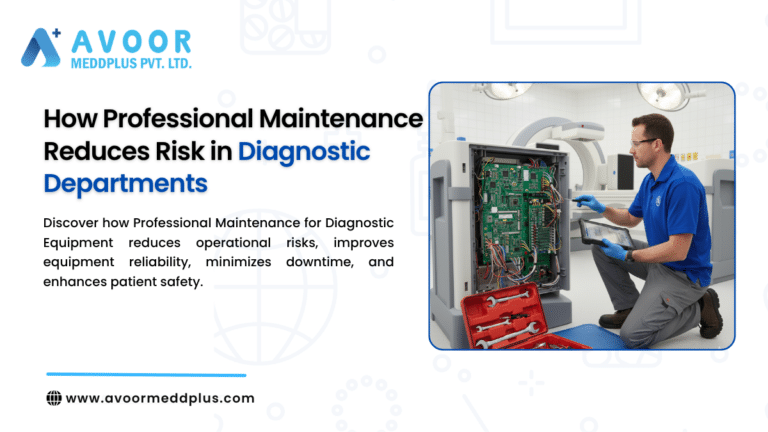
Avoor Meddplus provides structured preventive maintenance with:
- OEM-grade calibration tools
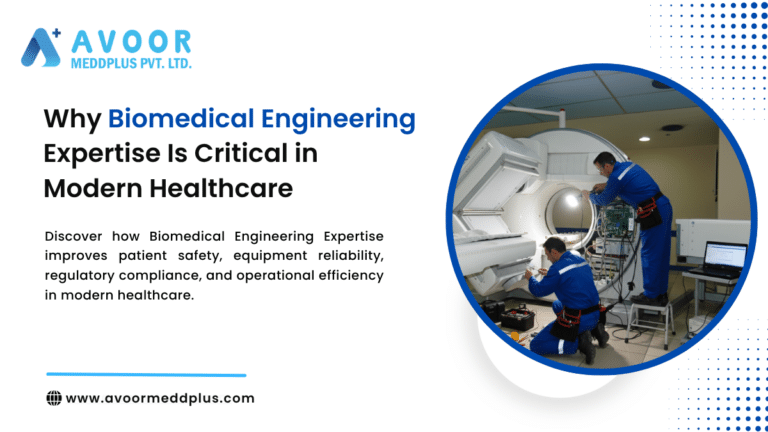
- Certified biomedical engineers
- PCB-level repair expertise
- Immediate breakdown support
- Audit-ready service reports
- Nationwide coverage
- Spare availability for quick restoration
Our preventive maintenance programs deliver a 98% uptime guarantee, helping hospitals ensure reliability, efficiency, and clinical safety across all equipment.
Conclusion
The importance of preventive maintenance imaging continues to grow as healthcare facilities depend on consistency, accuracy, and uptime. Preventive maintenance protects diagnostic quality, reduces breakdowns, ensures compliance, and extends equipment life.
With OEM-grade calibration, fast response, and expert engineering, Avoor Meddplus ensures that every imaging system performs at its peak every day, every scan.