
Introduction
Diagnostic Imaging Equipment Maintenance plays an important role in keeping hospitals, diagnostic centers, and imaging departments operational. CT scanners, MRI systems, X-ray machines, ultrasound systems, PET/CT scanners, and other imaging equipment are complex systems that require regular inspection, testing, calibration, and servicing.
Unexpected equipment failure can result in appointment cancellations, delayed diagnosis, increased emergency repair expenses, and loss of revenue. In busy healthcare facilities, even a short period of downtime can affect multiple departments and patients.
A structured Diagnostic Imaging Equipment Maintenance program helps identify potential problems before they become major failures. It also improves equipment reliability, extends service life, and makes maintenance costs more predictable.
This guide explains how hospitals and diagnostic centers can use preventive maintenance, professional repair services, equipment monitoring, and annual maintenance contracts to reduce downtime and control repair costs.
What Is Diagnostic Imaging Equipment Maintenance?
Diagnostic Imaging Equipment Maintenance is the planned inspection, testing, servicing, troubleshooting, and repair of equipment used for medical diagnosis.
The objective is not simply to repair equipment after it fails. A good maintenance strategy focuses on identifying early warning signs and correcting problems before they cause significant downtime.
Depending on the equipment, maintenance may include:
- Preventive inspection
- Electrical and electronic testing
- Mechanical inspection
- Cooling-system checks
- Power-supply inspection
- System calibration
- Image-quality verification
- Error-code analysis
- Component-level diagnostics
- Software and system checks
- Replacement of worn components
- Breakdown repair
- Performance testing
- Service documentation
Regular maintenance should always follow the equipment manufacturer’s requirements, applicable safety procedures, and facility-specific protocols.
Why Diagnostic Imaging Equipment Maintenance Matters
Medical imaging systems operate through the interaction of sophisticated electronics, mechanical assemblies, software, sensors, cooling systems, power supplies, and imaging components.
A small problem in one subsystem can eventually affect the entire machine.
For example, an issue with a cooling system may contribute to overheating. A deteriorating power supply may cause intermittent shutdowns. Electronic component degradation can create recurring error codes or system instability.
Without proper maintenance, minor problems can become expensive failures.
Key benefits include:
- Reduced unexpected downtime
- Lower emergency repair expenses
- Improved equipment availability
- Better image-system reliability
- Longer equipment service life
- Improved maintenance planning
- Better budgeting
- Faster troubleshooting
- Reduced risk of repeated failures
- Improved operational continuity
Common Causes of Diagnostic Imaging Equipment Downtime
Understanding common failure sources is essential for developing an effective maintenance program.
1. Electrical and Power Problems
Voltage fluctuations, unstable power, defective power supplies, and damaged electrical components can affect sensitive imaging systems.
2. Cooling-System Failures
Many high-performance imaging systems generate substantial heat and depend on effective cooling.
Cooling problems can contribute to overheating, system shutdowns, component stress, or reduced equipment availability.
3. Electronic Component Failure
PCBs, sensors, controllers, capacitors, relays, power modules, and other electronic components can degrade over time.
4. Mechanical Wear
Moving assemblies, bearings, positioning mechanisms, motors, fans, and other mechanical components can wear with repeated use.
5. Software and Communication Errors
Imaging systems depend on software, control systems, network communication, and data interfaces. Configuration or communication problems can interrupt workflow.
6. Poor Environmental Conditions
Temperature, humidity, dust, ventilation, and power quality can influence equipment reliability.
7. Lack of Preventive Maintenance
Skipping scheduled inspections often allows small problems to remain undetected until they cause equipment failure.
1. Schedule Preventive Maintenance
Preventive maintenance is one of the most effective ways to reduce unexpected failures.
Instead of waiting for a scanner or imaging system to fail, technicians inspect important components at predetermined intervals.
A preventive maintenance schedule may include:
- Electrical inspection
- Mechanical inspection
- Cooling-system inspection
- Error-log review
- Image-quality checks
- Component testing
- Cleaning
- Calibration verification
- Performance testing
Regular inspections can reveal early signs of deterioration.
2. Monitor Early Warning Signs
Imaging equipment often provides warning signs before a major failure occurs.
These may include:
- Repeated error codes
- Unusual noises
- Excessive heat
- Longer startup times
- Intermittent shutdowns
- Image-quality changes
- Communication errors
- Abnormal cooling-system behavior
- Repeated software alarms
These symptoms should not simply be reset and ignored.
Recording recurring errors can help service engineers identify the underlying problem before it develops into a major breakdown.
3. Maintain Cooling Systems Properly
Cooling is particularly important for high-performance imaging equipment.
Cooling units, heat exchangers, fans, pumps, filters, and associated electronics should be inspected according to manufacturer requirements.
A cooling problem that is ignored may eventually affect equipment availability and increase repair costs.
For this reason, cooling-system inspection should be part of a comprehensive Diagnostic Imaging Equipment Maintenance program.
4. Inspect Power Supplies and Electrical Systems
Stable electrical power is critical for sensitive diagnostic equipment.
Maintenance teams should evaluate relevant:
- Power supplies
- Electrical connections
- Protection systems
- Cooling fans
- Internal power modules
- UPS systems where applicable
- Grounding and facility power conditions
Early identification of electrical problems can help prevent secondary damage to expensive electronic components.
5. Maintain Image Quality
Equipment can remain operational while still experiencing performance problems.
For imaging systems, image quality is an important indicator of equipment condition.
Depending on the modality, maintenance programs may include appropriate quality-control and performance checks.
A system that produces inconsistent images may require investigation even if no major hardware failure has occurred.
6. Use Error-Code and Service-Log Analysis
Error messages can provide valuable information about recurring equipment problems.
Instead of treating every error as an isolated event, technicians can review:
- Error frequency
- Error history
- Operating conditions
- Previous repairs
- Replaced components
- Recurring alarms
- Related system failures
This approach can help identify patterns and prevent repeated repairs.
7. Repair Components Before Secondary Damage Occurs
A small electronic or mechanical failure can sometimes place additional stress on other components.
Professional diagnostics can determine whether a component should be repaired or replaced before the problem spreads.
Component-level diagnostics may be particularly useful for certain electronic assemblies, power modules, PCBs, and control circuits, subject to equipment design and manufacturer requirements.
8. Maintain Critical Spare Parts
Long equipment downtime can occur when a required component is unavailable.
Facilities can reduce delays by identifying critical and frequently required spare parts.
A maintenance provider can help classify components into categories such as:
| Spare Part Category | Purpose |
|---|---|
| Critical components | Minimize downtime during major failures |
| Frequently replaced parts | Support routine servicing |
| Consumable items | Maintain regular operation |
| Electronic components | Support electronic repair |
| Cooling components | Reduce overheating-related failures |
| Backup assemblies | Support faster restoration |
Spare-parts planning should be based on equipment type, age, failure history, availability, and manufacturer recommendations.
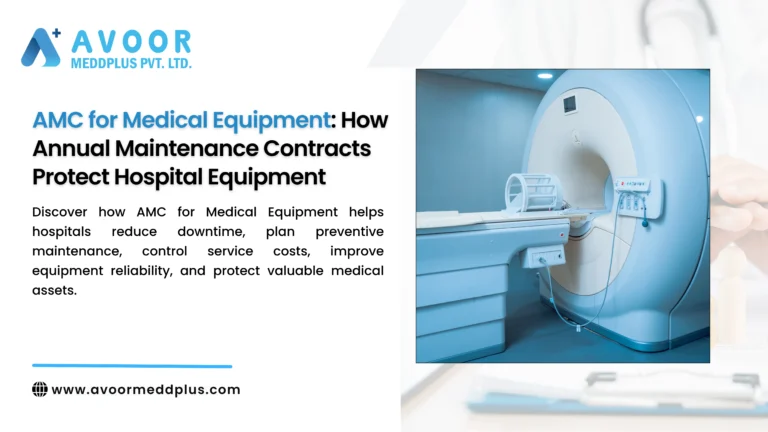
9. Use an Annual Maintenance Contract
Medical Equipment AMC Services can provide a structured approach to preventive and corrective maintenance.
An AMC can define:
- Preventive maintenance frequency
- Breakdown response procedures
- Service responsibilities
- Inspection schedules
- Documentation requirements
- Spare-parts responsibilities
- Escalation procedures
- Reporting requirements
For facilities with multiple imaging systems, an AMC can simplify maintenance planning and make service expenses easier to manage.
10. Choose Experienced Imaging Equipment Service Engineers
Complex diagnostic systems require specialized knowledge.
An experienced service team can combine:
- Biomedical engineering knowledge
- Electronic diagnostics
- Equipment-specific troubleshooting
- Preventive maintenance
- Component-level repair
- Fault analysis
- Service documentation
The right service provider can help facilities move from reactive repair toward proactive equipment management.
Preventive vs Corrective Diagnostic Imaging Equipment Maintenance
Both preventive and corrective maintenance are important, but they serve different purposes.
| Maintenance Type | Main Objective | Typical Activity |
|---|---|---|
| Preventive Maintenance | Prevent failures | Inspection and scheduled servicing |
| Corrective Maintenance | Restore failed equipment | Troubleshooting and repair |
| Predictive Maintenance | Identify developing problems | Trend and condition monitoring |
| Emergency Repair | Restore urgent operation | Rapid breakdown response |
A strong maintenance program combines these approaches rather than depending exclusively on emergency repairs.
Maintenance Requirements for Different Imaging Systems
Different imaging modalities have different service requirements.
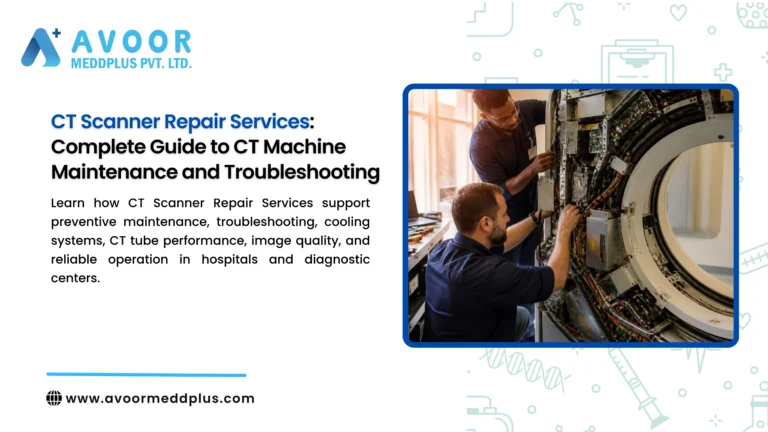
CT Scanner Maintenance
CT systems require attention to areas such as:
- X-ray tube condition
- Cooling systems
- Gantry components
- High-voltage systems
- Detectors
- Power electronics
- Mechanical components
- Image-quality performance
Regular inspection can help identify developing problems before they cause extended downtime.
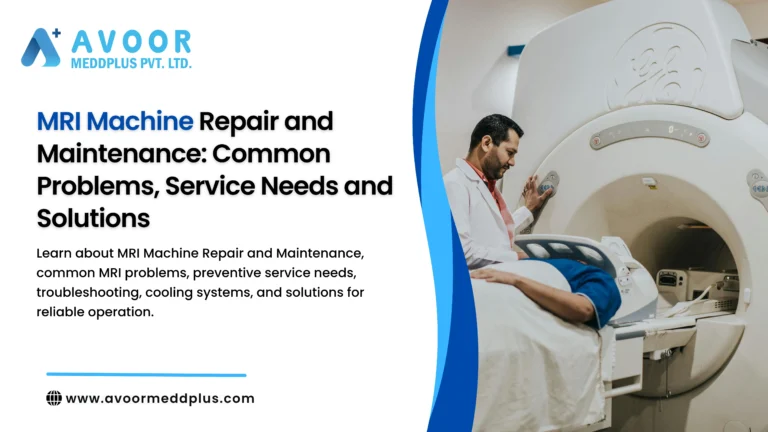
MRI Machine Maintenance
MRI systems require specialized maintenance involving areas such as:
- Cooling systems
- Magnet-related systems
- RF components
- Gradient systems
- Electronics
- Patient table mechanisms
- Environmental conditions
MRI servicing should be performed by appropriately trained personnel following manufacturer and safety requirements.
X-Ray Equipment Maintenance
X-ray systems may require inspection of:
- X-ray generators
- Tubes
- Detectors
- Exposure controls
- High-voltage components
- Mechanical positioning systems
- Image-processing components
PET/CT and SPECT/CT Maintenance
Hybrid imaging systems combine multiple technologies, increasing the importance of coordinated maintenance.
Maintenance may involve:
- CT components
- Detector systems
- Cooling systems
- Electronics
- Gantry systems
- Image-processing systems
- Nuclear medicine-related components
Because these systems are complex, maintenance should be planned according to equipment-specific requirements.
Ultrasound Equipment Maintenance
Ultrasound systems may require attention to:
- Transducers
- Connectors
- Display systems
- Power supplies
- Cooling fans
- Internal electronics
- Software and image-processing systems
The Role of Biomedical Engineers in Imaging Equipment Maintenance
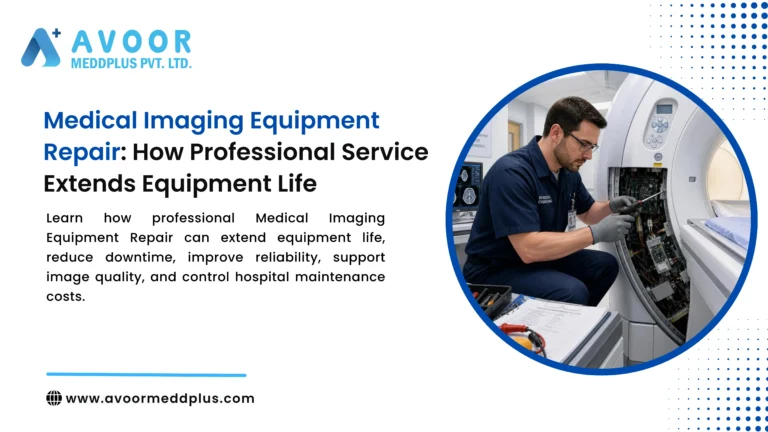
Biomedical engineers and specialized service technicians play an important role in maintaining diagnostic equipment.
Their responsibilities can include:
- Equipment inspection
- Fault diagnosis
- Preventive maintenance
- Performance testing
- Electrical safety checks
- Troubleshooting
- Repair coordination
- Documentation
- Service scheduling
- Risk identification
For facilities with multiple imaging systems, experienced technical support can significantly improve maintenance planning.
How AMC Services Support Imaging Equipment
A properly structured AMC can help healthcare facilities establish predictable maintenance processes.
Depending on the agreement, an AMC may include:
Preventive Visits
Scheduled inspections help identify developing problems.
Breakdown Support
Technical assistance is available when equipment develops a fault.
Maintenance Documentation
Service reports create a record of equipment condition and maintenance history.
Equipment Performance Monitoring
Repeated failures can be identified through service history.
Budget Planning
Scheduled maintenance can make annual maintenance expenses easier to forecast.
Facilities should carefully review what is and is not included in an AMC before signing the agreement.
Diagnostic Imaging Equipment Maintenance Checklist
Healthcare facilities can use the following checklist as a general planning reference.
Daily / Routine Checks
- Check for unusual alarms
- Observe abnormal noises or vibrations
- Review system messages
- Check visible damage
- Confirm basic operating conditions
- Report recurring errors
Scheduled Preventive Checks
- Inspect electrical systems
- Inspect mechanical assemblies
- Check cooling systems
- Review service logs
- Inspect relevant connectors
- Perform required calibration checks
- Verify equipment performance
- Clean appropriate components
After Repair
- Verify equipment operation
- Confirm the original fault has been addressed
- Perform appropriate performance checks
- Document replaced components
- Record service activities
- Monitor for recurrence
How to Choose the Right Diagnostic Imaging Equipment Maintenance Provider
Choosing the right service provider is an important part of equipment reliability.
Consider the following factors:
1. Technical Expertise
Look for engineers with relevant experience in diagnostic imaging systems.
2. Multi-Modality Capability
A provider capable of supporting different equipment types can simplify service management.
3. Preventive Maintenance Capability
The provider should offer structured preventive maintenance rather than only breakdown repair.
4. Diagnostic Capability
Good troubleshooting should focus on identifying root causes rather than repeatedly replacing components.
5. Response Time
Ask about service response procedures and escalation processes.
6. Documentation
Service reports should clearly record:
- Equipment condition
- Fault reported
- Diagnosis
- Work performed
- Components replaced
- Recommendations
- Follow-up requirements
7. Transparent Commercial Terms
Review AMC coverage, exclusions, spare-parts responsibilities, response times, and payment terms before signing.
Diagnostic Imaging Equipment Maintenance: Repair vs Replacement
Repair is not always the best option, but replacement is not always necessary either.
A professional evaluation should consider:
| Factor | Repair | Replacement |
|---|---|---|
| Equipment age | Newer/medium age | Very old equipment |
| Failure type | Repairable component | Major system failure |
| Spare availability | Available | Difficult to source |
| Repair cost | Reasonable | Excessively high |
| Future reliability | Acceptable | Poor |
| Technology | Still suitable | Obsolete |
| Downtime risk | Manageable | Increasing |
A qualified service provider can help determine whether continued maintenance or replacement makes better financial and operational sense.
Why Choose Avoor Meddplus Pvt Ltd?
Avoor Meddplus Pvt Ltd provides technical support for medical equipment maintenance and repair, helping healthcare facilities improve equipment reliability and reduce avoidable downtime.
Our service capabilities can support areas such as:
- Diagnostic imaging equipment maintenance
- Preventive maintenance
- Breakdown maintenance
- Medical equipment repair
- CT scanner service
- MRI equipment service
- PET/CT service
- SPECT/CT service
- X-ray equipment service
- Ultrasound equipment support
- Electronic diagnostics
- PCB diagnostics and repair
- Component-level electronic repair
- Power-supply troubleshooting
- Equipment fault analysis
- Maintenance documentation
- AMC support
The objective is to help hospitals and diagnostic centers maintain dependable equipment while controlling unnecessary repair and replacement costs.
Conclusion
Diagnostic Imaging Equipment Maintenance is an important part of maintaining reliable healthcare operations.
Regular preventive servicing, early fault detection, cooling-system checks, electrical inspection, error-log analysis, spare-parts planning, and professional troubleshooting can significantly reduce avoidable equipment downtime.
For hospitals and diagnostic centers, the goal should not simply be to repair equipment after it fails. A proactive maintenance strategy can identify problems earlier, control repair expenses, extend equipment service life, and support consistent imaging operations.
Whether you operate CT, MRI, X-ray, PET/CT, SPECT/CT, or ultrasound equipment, a structured maintenance program can help your facility achieve greater equipment reliability and better long-term cost control.