Introduction
Modern hospitals depend heavily on advanced medical equipment to deliver accurate diagnoses, perform life-saving procedures, and maintain smooth patient flow. Imaging systems such as CT, PET/CT, DR, C-ARM, and nuclear medicine equipment operate continuously to support clinical decisions. When these systems fail unexpectedly, the consequences extend far beyond technical inconvenience.impact of equipment downtime on hospital revenue and patient care, impact of equipment downtime hospital revenue patient care.
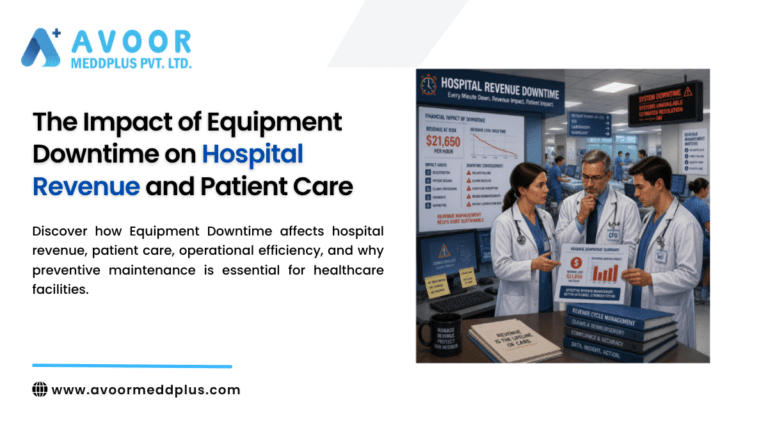
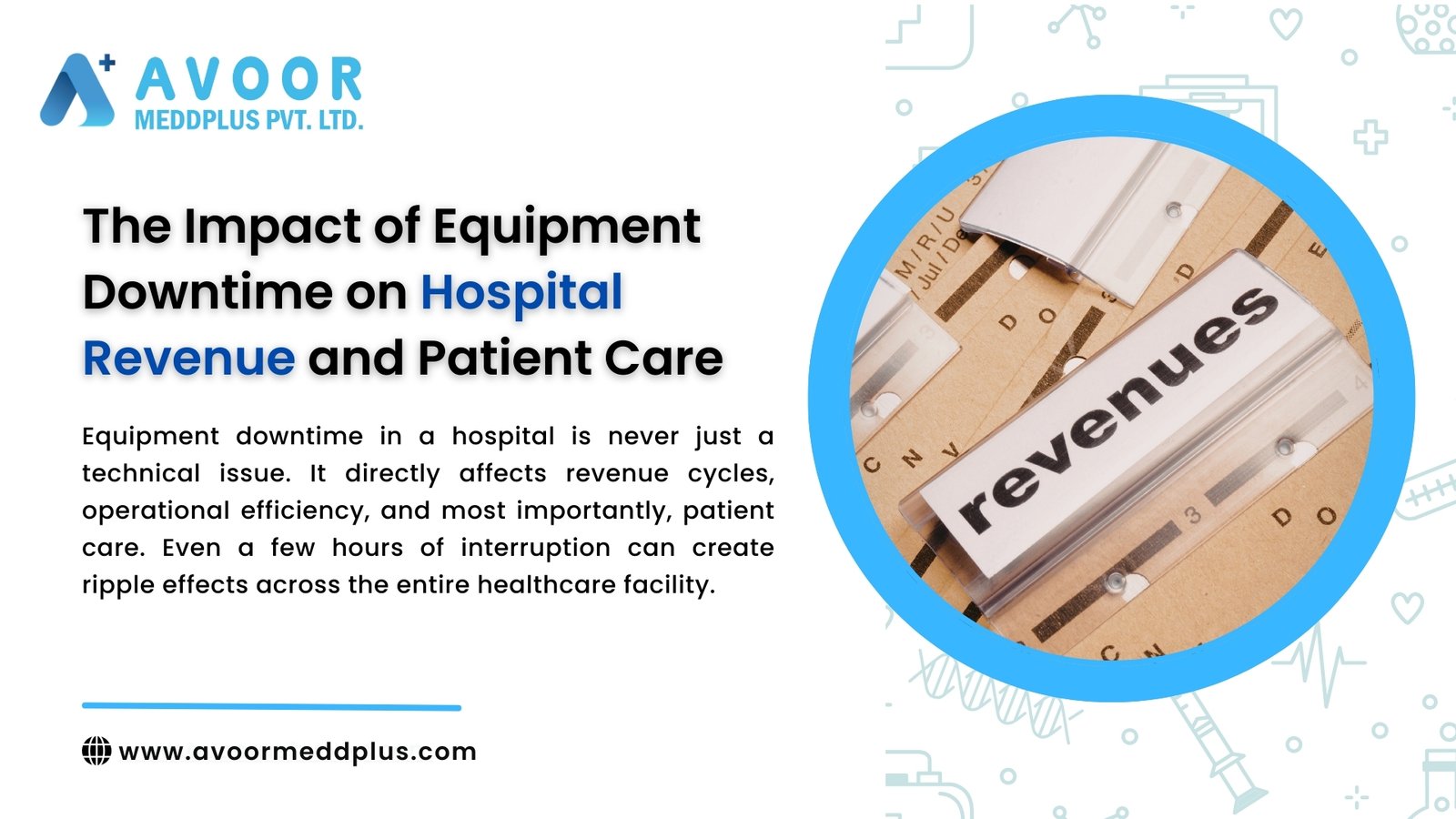
The impact of equipment downtime on hospital revenue and patient care is significant, affecting financial stability, operational efficiency, and patient trust. Even short periods of downtime can disrupt schedules, delay diagnoses, and increase operational stress. At Avoor Meddplus Pvt Ltd, minimizing downtime through structured preventive maintenance and rapid service response is a strategic priority for healthcare facilities.
1. Understanding Equipment Downtime in Hospitals
Equipment downtime refers to any period during which medical systems are unavailable for clinical use due to malfunction, maintenance delay, or technical failure.
Common causes include:
- Delayed preventive maintenance
- Component wear and overheating
- Calibration drift
- Electrical instability
- Software errors
- Lack of timely service response
Regardless of the cause, downtime interrupts clinical operations and directly impacts hospital performance.
2. Financial Impact on Hospital Revenue
1️⃣ Loss of Diagnostic Revenue
Imaging departments generate significant revenue for hospitals. When equipment such as CT or DR systems goes offline:
- Patient appointments are canceled or rescheduled
- Referrals may shift to competing facilities
- Daily scan volumes drop significantly
Even a single day of downtime in a high-volume imaging center can result in substantial revenue loss.
2️⃣ Increased Emergency Repair Costs
Unplanned breakdowns often require urgent spare parts, emergency labor, and expedited logistics. These unexpected expenses strain maintenance budgets and increase operational costs.
Preventive strategies are far more cost-effective than emergency interventions.
3️⃣ Reduced Operational Efficiency
Idle staff, rescheduled procedures, and workflow disruptions reduce overall productivity. Departments may operate below capacity, further impacting financial performance.
The cumulative effect of downtime can significantly reduce annual revenue margins,impact of equipment downtime hospital revenue patient care.
3. Impact on Patient Care and Clinical Outcomes
1️⃣ Delayed Diagnosis and Treatment
When imaging systems are unavailable, patients experience delays in diagnosis. For critical conditions, even small delays can impact treatment outcomes.
Equipment downtime may lead to:
- Postponed surgeries
- Delayed emergency interventions
- Slower report turnaround
Reliable equipment availability is directly linked to timely patient care.
2️⃣ Increased Patient Anxiety
Patients expect hospitals to operate efficiently. Rescheduled appointments and repeated visits create inconvenience and stress, reducing overall satisfaction and trust.
3️⃣ Compromised Diagnostic Accuracy
In some cases, equipment nearing failure may still operate but deliver inconsistent image quality. This can lead to:
- Repeat scans
- Increased radiation exposure
- Reduced diagnostic confidence
Stable equipment performance is essential for accurate patient care.
4. 6 Critical Consequences of Equipment Downtime
1️⃣ Revenue Loss
Cancelled imaging procedures directly reduce income.
2️⃣ Reputation Damage
Frequent equipment issues can impact hospital credibility and referral rates.
3️⃣ Workflow Disruption
Departments must adjust schedules and reallocate resources.
4️⃣ Increased Operational Costs
Emergency repairs and overtime expenses rise.
5️⃣ Compliance Risk
Missed preventive maintenance and incomplete documentation increase regulatory exposure.
6️⃣ Staff Burnout
Repeated operational stress can affect morale and efficiency.
5. Downtime Across Imaging Modalities
CT & PET/CT Systems
- High revenue impact per hour of downtime
- Critical for oncology and emergency diagnostics
DR & CR Systems
- High patient throughput disruption
- Impact on outpatient and emergency services
C-ARM Systems
- Surgical schedule interruptions
- Delays in interventional procedures
SPECT/CT & Nuclear Medicine
- Time-sensitive radiopharmaceutical workflows
- Impact on cancer diagnosis and monitoring
Each modality plays a crucial role in hospital revenue and patient care continuity.
6. Preventive Maintenance as a Downtime Reduction Strategy
Hospitals can significantly reduce downtime by adopting structured preventive maintenance programs.
Preventive strategies include:
- Scheduled system inspections
- Calibration and validation checks
- Early fault detection
- Component performance monitoring
- Predictive maintenance planning
Proactive maintenance transforms downtime from a crisis into a manageable event, impact of equipment downtime hospital revenue patient care.
7. Role of Skilled Biomedical Engineers
Certified biomedical engineers play a vital role in minimizing downtime by:
- Identifying early warning signs
- Performing precise calibration
- Ensuring electrical and radiation safety
- Responding quickly to system failures
- Maintaining detailed service documentation
Expert engineering support reduces both downtime frequency and duration.
8. How Avoor Meddplus Pvt Ltd Helps Protect Revenue and Patient Care
Avoor Meddplus Pvt Ltd supports hospitals through:
- Structured preventive maintenance programs
- OEM-grade calibration and validation
- PCB-level repair expertise
- Fast-response breakdown support
- Compliance-focused documentation
- Nationwide service coverage
By focusing on uptime, accuracy, and reliability, Avoor Meddplus Pvt Ltd helps healthcare facilities protect revenue streams and maintain uninterrupted patient care, impact of equipment downtime hospital revenue patient care.
Conclusion
The impact of equipment downtime on hospital revenue and patient care is far-reaching. Financial losses, workflow disruptions, delayed diagnoses, and reduced patient satisfaction are just a few of the consequences hospitals face when equipment reliability is compromised, impact of equipment downtime hospital revenue patient care.
Investing in preventive maintenance, skilled service support, and structured service protocols is essential for minimizing downtime. With proactive strategies and trusted partners like Avoor Meddplus Pvt Ltd, hospitals can protect both their financial performance and their commitment to high-quality patient care.