
Introduction
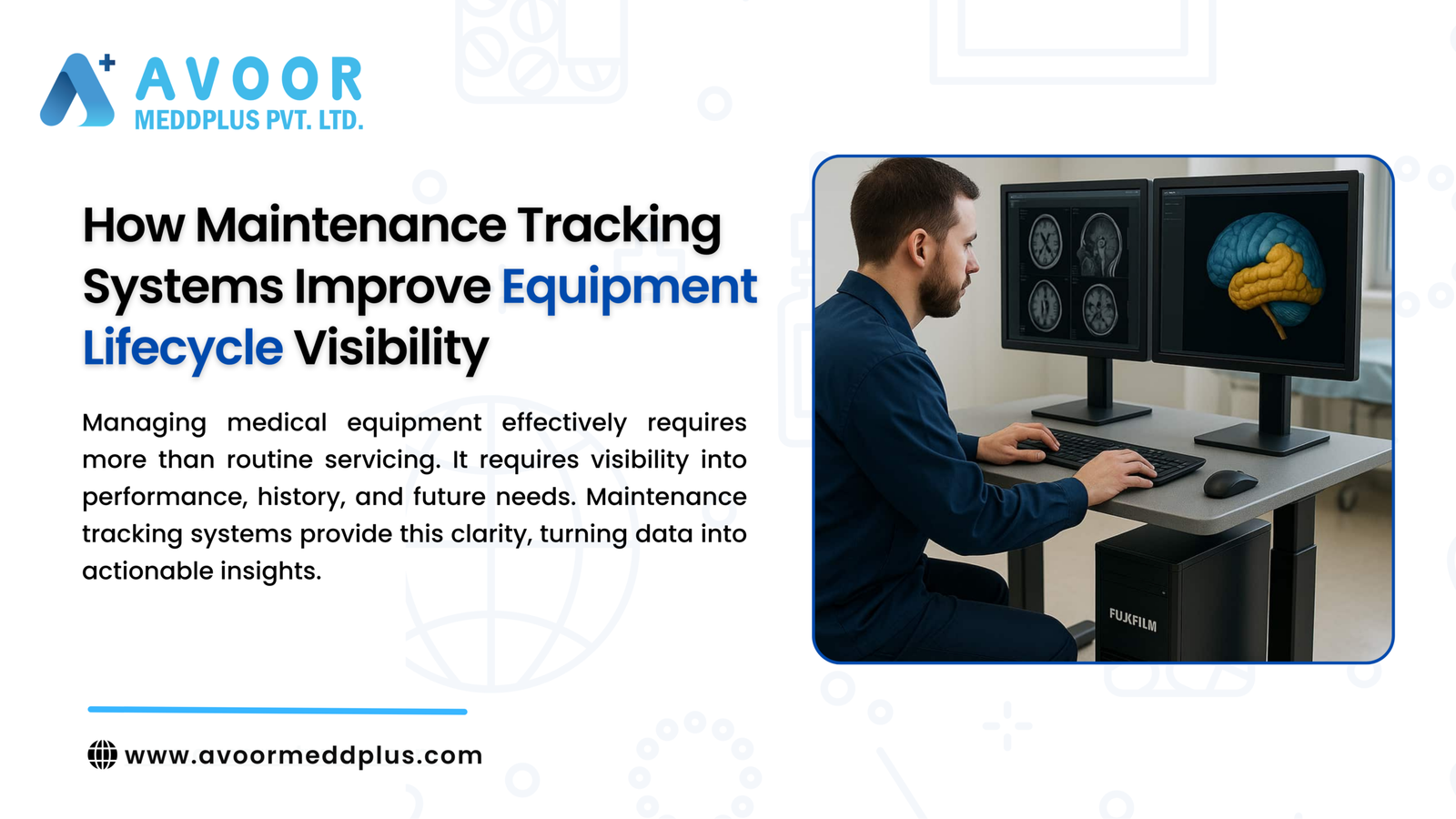
Maintenance tracking systems improve equipment lifecycle visibility by providing healthcare organizations with real-time insights into the condition, usage, and performance of critical medical equipment. In modern hospitals and diagnostic centers, managing complex biomedical devices without a structured tracking system can lead to inefficiencies, unexpected failures, and increased operational costs.
With growing dependence on advanced imaging systems, patient monitoring devices, and nuclear medicine equipment, visibility into the equipment lifecycle has become essential. At Avoor Meddplus Pvt Ltd, we help healthcare providers implement smart maintenance strategies that ensure better control, improved reliability, and long-term performance of medical equipment.
Table of Contents
- What Are Maintenance Tracking Systems
- Why Equipment Lifecycle Visibility Matters
- How Maintenance Tracking Systems Improve Equipment Lifecycle Visibility
- Key Features of Maintenance Tracking Systems
- Risks of Poor Equipment Tracking
- Benefits of Using Maintenance Tracking Systems
- Conclusion
What Are Maintenance Tracking Systems
Maintenance tracking systems are digital solutions designed to monitor, manage, and record all maintenance activities related to medical equipment. These systems track:
- Equipment usage and performance
- Maintenance schedules
- Service history
- Spare parts replacement
- Compliance and audit records
By centralizing all data, maintenance tracking systems improve equipment lifecycle visibility and enable better decision-making.
Why Equipment Lifecycle Visibility Matters
Improved Asset Management
Hospitals often manage hundreds of devices. Lifecycle visibility helps track each asset efficiently.
Better Planning and Budgeting
Understanding equipment condition allows healthcare providers to plan upgrades and replacements effectively.
Reduced Downtime
Timely maintenance reduces unexpected breakdowns and improves equipment availability.
Regulatory Compliance
Proper tracking ensures adherence to healthcare regulations and audit requirements.
How Maintenance Tracking Systems Improve Equipment Lifecycle Visibility
Real-Time Monitoring
These systems provide real-time data on equipment status, enabling quick decision-making.
Predictive Maintenance
By analyzing usage patterns, systems can predict failures before they occur.
Centralized Data Management
All maintenance records are stored in one place, improving accessibility and transparency.
Performance Analytics
Detailed reports help evaluate equipment efficiency and identify recurring issues.
Key Features of Maintenance Tracking Systems
Automated Scheduling
Ensures timely preventive maintenance without manual tracking.
Alerts and Notifications
Reminds teams about upcoming service or potential issues.
Asset Tracking
Tracks equipment location, usage, and condition.
Compliance Reporting
Generates reports required for audits and regulatory checks.
Risks of Poor Equipment Tracking
Without proper tracking systems, healthcare facilities may face:
- Unexpected equipment failures
- Increased repair costs
- Loss of critical data
- Reduced equipment lifespan
- Compliance issues
This makes it clear that maintenance tracking systems improve equipment lifecycle visibility and reduce operational risks.
How Avoor Meddplus Pvt Ltd Supports Lifecycle Management
At Avoor Meddplus Pvt Ltd, we provide advanced solutions to help healthcare organizations manage their equipment lifecycle effectively.
Our Approach
- Implementation of smart maintenance tracking systems
- Preventive and predictive maintenance strategies
- Detailed service documentation and reporting
- Expert biomedical engineering support
- End-to-end lifecycle management solutions
- Detailed service documentation and reporting
- Expert biomedical engineering support
- End-to-end lifecycle management solutions
- End-to-end lifecycle management solutions
We ensure that healthcare providers gain complete visibility and control over their equipment performance.
Benefits of Using Maintenance Tracking Systems
Enhanced Equipment Lifespan
Regular monitoring ensures timely servicing and reduces wear.
Cost Optimization
Prevents major failures and reduces repair expenses.
Improved Operational Efficiency
Ensures equipment is always available when needed.
Data-Driven Decisions
Helps in planning upgrades and replacements.
Better Patient Care
Reliable equipment improves diagnostic accuracy and treatment outcomes.
Conclusion
Maintenance tracking systems improve equipment lifecycle visibility by offering real-time insights, predictive maintenance capabilities, and centralized data management. These systems are essential for modern healthcare facilities aiming to improve efficiency, reduce downtime, and ensure patient safety.
By partnering with Avoor Meddplus Pvt Ltd, healthcare providers can implement effective maintenance tracking solutions that enhance equipment performance and extend lifecycle value.