
What Are Medical Equipment Repair Services?
Understanding Medical Equipment Repair Services
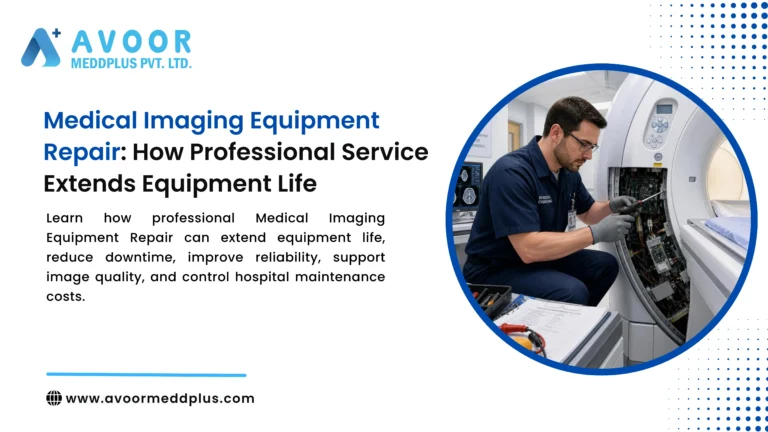
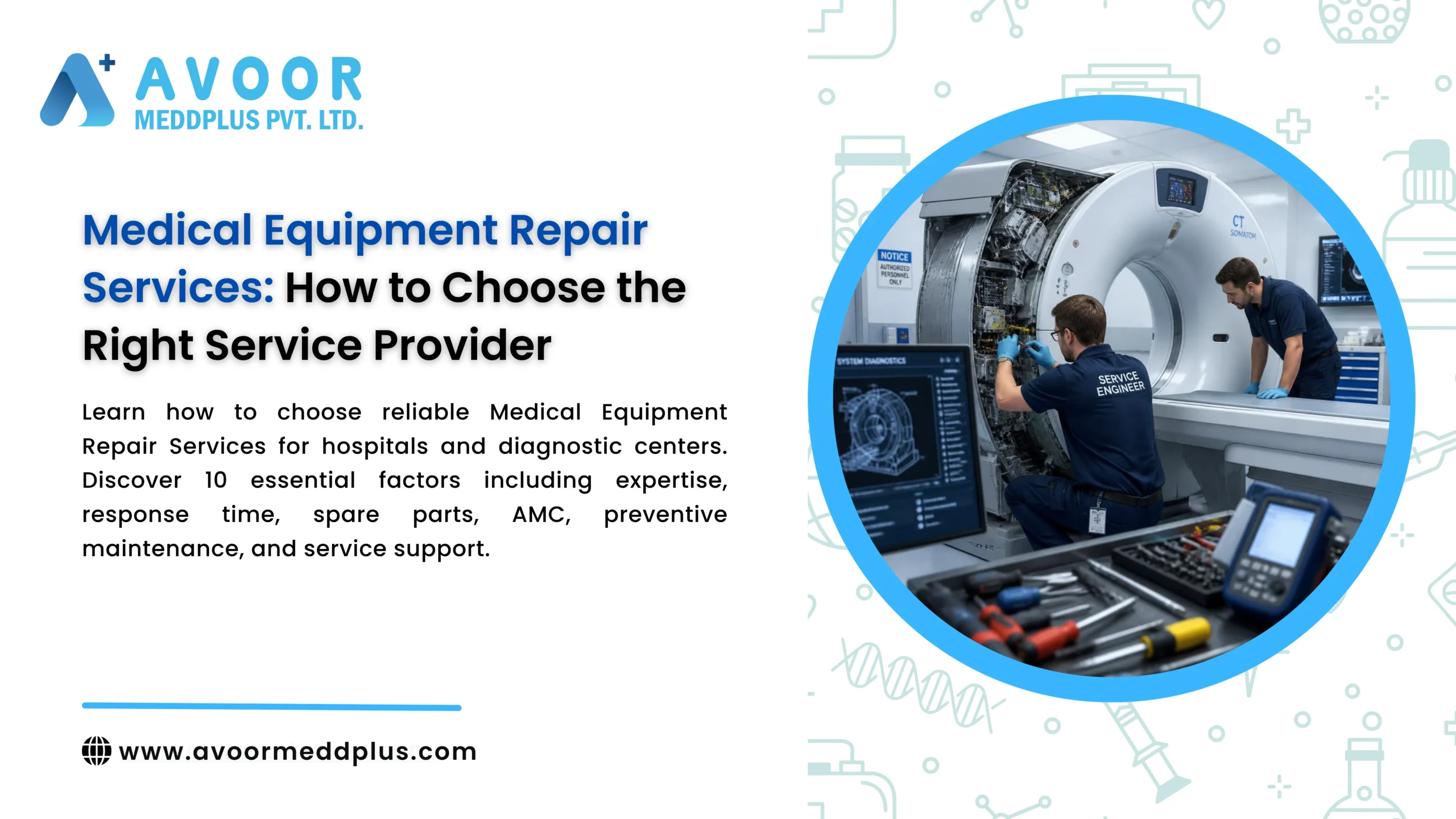
Medical Equipment Repair Services include the diagnosis, maintenance, troubleshooting, repair, testing, and technical support of healthcare equipment.
Depending on the equipment type, professional service can include:
- Preventive maintenance
- Corrective repair
- Breakdown service
- Electronic diagnostics
- PCB repair
- Mechanical troubleshooting
- Error-code analysis
- Calibration support
- Performance testing
- Spare-parts support
- Installation and commissioning
- AMC support
- CAMC support
Different medical devices require different technical skills.
For example, servicing an MRI system is very different from repairing an infusion pump or an X-ray generator.
A good service provider should therefore have appropriate expertise for the specific equipment being maintained.
Why Choosing the Right Service Provider Matters
Healthcare equipment is not ordinary commercial machinery.
A technical failure can affect:
- Patient scheduling
- Diagnostic workflow
- Clinical decision-making
- Hospital productivity
- Equipment utilization
- Maintenance budgets
- Patient experience
For imaging equipment, downtime can be particularly disruptive because systems such as CT, MRI, PET/CT, and X-ray machines can support large numbers of examinations.
The right technical partner can help healthcare facilities establish a structured approach to equipment maintenance rather than relying only on emergency repairs.
10 Factors to Consider When Choosing Medical Equipment Repair Services
1. Check Technical Experience
The first consideration should be relevant technical experience.
Ask whether the provider has worked with:
- Your equipment manufacturer
- Your specific equipment model
- Similar equipment configurations
- Older or discontinued systems
- The type of fault you are experiencing
Experience with the exact equipment family can make troubleshooting more efficient.
For example, a provider experienced with CT Scanner Repair Services may have a different skill set from a provider specializing in laboratory analyzers.
2. Look for Equipment-Specific Expertise
Healthcare facilities often operate multiple equipment categories.
These can include:
Medical Imaging
- CT scanners
- MRI systems
- PET/CT
- SPECT/CT
- X-ray systems
- C-Arms
- Mammography systems
- Ultrasound
Patient-Care Equipment
- Patient monitors
- Infusion pumps
- Ventilators
- ECG systems
- Defibrillators
Laboratory Equipment
- Analyzers
- Centrifuges
- Incubators
- Microscopes
- Laboratory automation systems
The service provider should be transparent about which equipment categories they are qualified and equipped to support.
3. Evaluate Diagnostic Capability
A repair provider should do more than replace components.
Good troubleshooting begins with diagnosis.
A professional approach can include:
- Understanding the reported symptoms
- Reviewing error messages
- Checking equipment history
- Testing relevant subsystems
- Identifying the probable root cause
- Performing the appropriate repair
- Verifying equipment operation
- Documenting the work
This approach can help reduce repeated failures caused by treating symptoms without addressing the underlying problem.
4. Check Response Time
Downtime can be costly for healthcare facilities.
Before signing a service agreement, ask:
- How quickly is remote support available?
- What is the normal response time?
- Is emergency service available?
- How quickly can an engineer reach the facility?
- Is support available outside normal working hours?
- Is there an escalation process?
Response commitments should be clearly documented in the service agreement.
5. Evaluate Spare Parts Support
Some equipment failures require replacement components.
Ask the service provider about:
- Parts availability
- Lead times
- Original parts
- Compatible parts
- Refurbished parts
- Obsolete equipment support
- Warranty on supplied components
Not every component should automatically be replaced.
Where technically appropriate and permitted, specialized repair capabilities such as PCB or electronic component-level repair may provide additional options.
6. Review Preventive Maintenance Capability
A provider that only responds to breakdowns may not provide complete lifecycle support.
Ask whether the company offers preventive maintenance.
Preventive maintenance can include:
- Equipment inspection
- Functional testing
- Error-log review
- Mechanical inspection
- Electrical checks
- Cooling-system inspection
- Performance checks
- Calibration support
- Image-quality assessment where applicable
Read our related guide: [Medical Equipment Maintenance: Best Practices].
7. Examine Service Documentation
Every service visit should be documented.
A useful service report should include:
- Equipment name
- Manufacturer
- Model
- Serial number
- Reported problem
- Error code
- Diagnosis
- Work performed
- Parts replaced
- Testing performed
- Equipment status
- Recommendations
- Engineer details
- Date of service
Good documentation helps hospitals maintain a reliable equipment history.
It can also support future troubleshooting and budgeting decisions.
8. Check AMC and CAMC Options
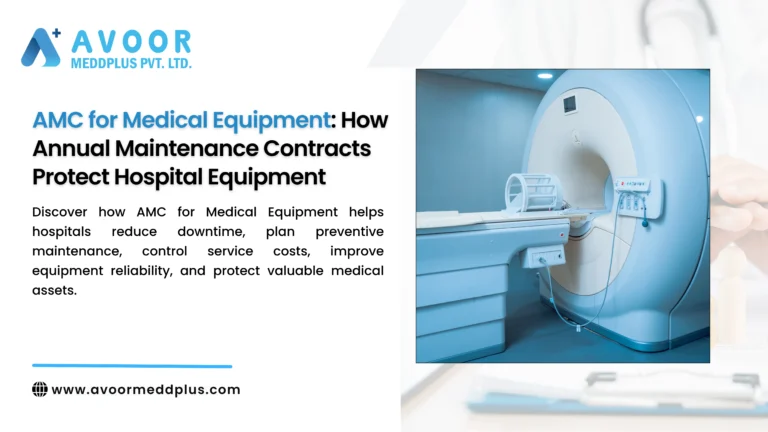
An Annual Maintenance Contract (AMC) or Comprehensive Annual Maintenance Contract (CAMC) can provide structured technical support.
However, contract terms vary significantly.
Before signing, review:
- Preventive maintenance frequency
- Breakdown coverage
- Labor coverage
- Spare-parts coverage
- Emergency response
- Calibration
- Travel charges
- Exclusions
- Service-level commitments
- Replacement-equipment provisions, if any
Do not assume that every AMC or CAMC provides comprehensive parts coverage.
Read our guide: [AMC for Medical Equipment].
9. Consider Support for Older Equipment
Hospitals often continue using equipment after the original warranty period.
Older equipment can remain useful if:
- It performs adequately
- Parts are available
- Qualified technical support exists
- Safety requirements can be met
- Maintenance costs remain reasonable
Ask the service provider whether they support older equipment.
This can be especially valuable for hospitals operating older imaging systems.
However, obsolete equipment should be evaluated periodically to determine whether continued repair remains practical.
10. Assess Reputation and Professionalism
Before selecting a service provider, evaluate:
- Technical experience
- Customer references
- Service documentation
- Engineer qualifications
- Response times
- Spare-parts capability
- Preventive-maintenance processes
- Contract transparency
Hospitals should avoid choosing a provider based solely on the lowest quotation.
The lowest initial price does not necessarily represent the lowest total cost over the equipment lifecycle.
Medical Equipment Repair vs Preventive Maintenance
Corrective Maintenance
Corrective maintenance occurs after a problem has been identified.
Examples include:
- PCB repair
- Component replacement
- Motor repair
- Cooling-system repair
- Electronic troubleshooting
- Mechanical repair
Preventive Maintenance
Preventive maintenance is scheduled before equipment failure.
Its purpose is to identify developing issues and maintain appropriate equipment performance.
Why Both Matter
A healthcare facility should ideally maintain a balance between:
Preventive Maintenance + Corrective Repair + Equipment Monitoring
This approach can support better equipment reliability and maintenance planning.
Equipment Types That Require Specialized Service
CT Scanners
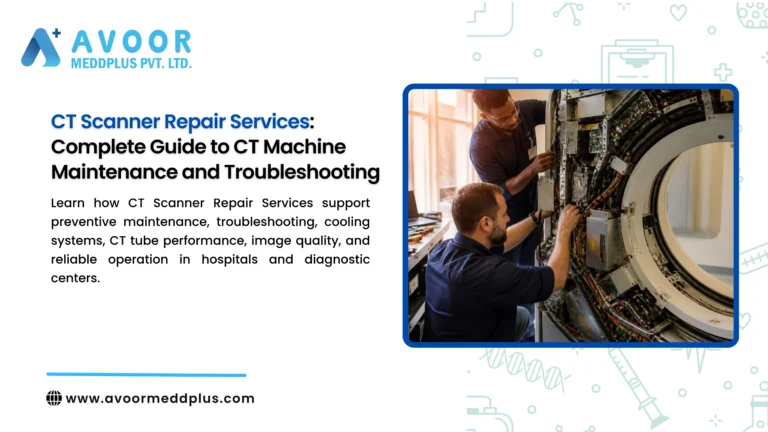
CT systems include high-voltage components, X-ray tubes, detectors, gantry systems, cooling, electronics, and software.
Read: [CT Scanner Repair Services]
MRI Systems
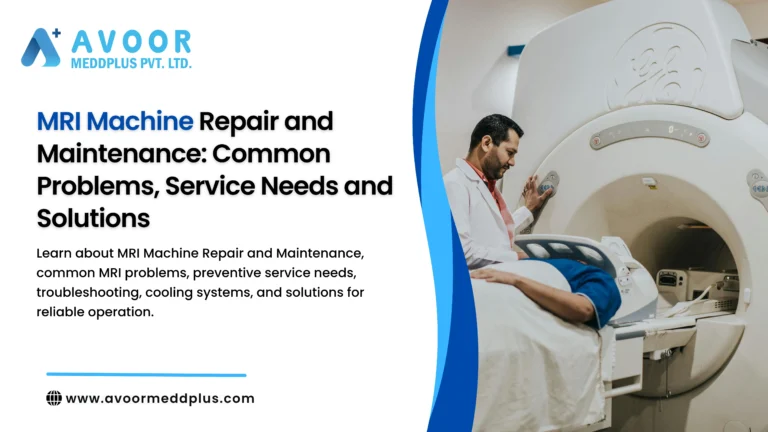
MRI equipment contains specialized magnet, gradient, RF, cooling, electronic, and software systems.
Read: [MRI Machine Repair and Maintenance]
PET/CT Systems
PET/CT combines PET and CT technologies and requires specialized hybrid-system maintenance.
Read: [PET CT Machine Service and Repair]
X-Ray Systems
X-ray service can involve generators, tubes, detectors, high-voltage systems, controls, and mechanical assemblies.
C-Arms
C-Arms require specialized service for imaging systems, mechanical positioning, electronics, generators, and displays.
AMC and CAMC for Medical Equipment
What Is an AMC?
An Annual Maintenance Contract provides defined technical support for a specified period.
Depending on the agreement, it may include:
- Preventive maintenance
- Breakdown support
- Technical inspection
- Service reports
What Is a CAMC?
A Comprehensive Annual Maintenance Contract provides broader coverage according to the contract.
It may include specified:
- Labor
- Spare parts
- Preventive maintenance
- Breakdown support
- Technical assistance
Always review the contract in detail before signing.
Questions to Ask a Medical Equipment Service Provider
Before choosing a provider, ask:
Technical Questions
- Do you service this exact equipment model?
- How many similar systems have you supported?
- Do you provide preventive maintenance?
- Can you perform electronic diagnostics?
- Do you provide PCB repair?
- Do you support older equipment?
Service Questions
- What is your standard response time?
- Do you provide emergency support?
- Is remote technical support available?
- Do you have trained service engineers?
Parts Questions
- Which spare parts are available?
- What is the expected lead time?
- Are repaired or refurbished parts available where appropriate?
- What warranty is provided?
Contract Questions
- What does the AMC cover?
- What does the CAMC cover?
- Are spare parts included?
- Are travel costs included?
- What are the exclusions?
Medical Equipment Repair Checklist
Use this checklist when evaluating a service provider:
- Equipment-specific expertise
- Qualified technical personnel
- Preventive maintenance capability
- Breakdown support
- Emergency response
- Spare-parts support
- PCB/electronic diagnostics
- Service documentation
- AMC options
- CAMC options
- Older-equipment support
- Transparent pricing
- Clear contract terms
- Customer references
- Appropriate safety procedures
When Should You Call a Service Provider?
Healthcare facilities should consider professional service when they notice:
- Repeated error codes
- Unexpected shutdowns
- Image-quality changes
- Unusual mechanical noise
- Overheating
- Cooling alarms
- Calibration problems
- Equipment restarting unexpectedly
- Communication failures
- Repeated component failures
- Increasing downtime
For safety-critical or high-voltage equipment, unauthorized troubleshooting should be avoided.
Why Choose Avoor Meddplus Pvt Ltd?
Avoor Meddplus Pvt Ltd provides professional Medical Equipment Repair Services for hospitals, diagnostic centers, clinics, laboratories, and healthcare organizations.
Our service capabilities include:
- Medical Equipment Repair
- Medical Imaging Equipment Repair
- CT Scanner Repair
- MRI Repair and Maintenance
- PET/CT Repair
- SPECT/CT Service
- X-Ray Equipment Repair
- C-Arm Service
- Medical Equipment PCB Repair
- Electronic Fault Diagnosis
- Preventive Maintenance
- Calibration Support
- AMC Services
- CAMC Services
- Spare Parts Support
- Installation and Commissioning
Our approach emphasizes systematic troubleshooting, equipment-specific technical support, preventive maintenance, service documentation, and long-term equipment lifecycle management.
For healthcare facilities, the objective is not simply to repair equipment after failure.
It is to build a reliable maintenance strategy that supports equipment availability, operational efficiency, and informed lifecycle decisions.
Frequently Asked Questions
What are Medical Equipment Repair Services?
Medical Equipment Repair Services include technical diagnosis, preventive maintenance, corrective repair, testing, calibration support, component replacement, and ongoing service for healthcare equipment.
How do I choose the right medical equipment service provider?
Look for equipment-specific experience, qualified technical personnel, fast response times, spare-parts support, preventive-maintenance capability, detailed documentation, transparent contracts, and appropriate safety procedures.
Is preventive maintenance better than emergency repair?
Preventive maintenance and corrective repair serve different purposes. Preventive maintenance aims to identify potential problems before failure, while corrective repair addresses an existing fault. Healthcare facilities generally benefit from combining both approaches.
Should hospitals use AMC or CAMC?
AMC or CAMC can provide structured technical support, but the right option depends on equipment type, age, usage, parts availability, repair history, and the specific contract terms.
Can medical equipment PCB boards be repaired?
Depending on the equipment, PCB design, component availability, technical feasibility, and applicable requirements, specialized electronic or component-level repair may be possible.
How can hospitals reduce medical equipment downtime?
Hospitals can use preventive maintenance, equipment monitoring, service-history tracking, timely repairs, appropriate environmental controls, spare-parts planning, and reliable technical support.
Does the cheapest repair provider offer the best value?
Not necessarily. Hospitals should consider total lifecycle cost, response time, repair quality, parts availability, documentation, and long-term equipment reliability rather than comparing quotations based only on price.
Conclusion
Choosing the right Medical Equipment Repair Services provider is an important decision for hospitals and diagnostic centers.
Healthcare equipment is becoming increasingly sophisticated, and technical problems can affect clinical workflows, patient scheduling, operating costs, and equipment availability.
A capable service provider should offer more than emergency breakdown repair.
The right partner should provide:
- Equipment-specific expertise
- Systematic troubleshooting
- Preventive maintenance
- Spare-parts support
- Electronic diagnostics
- Service documentation
- AMC/CAMC options
- Responsive technical assistance
Before selecting a provider, evaluate their technical capabilities, experience, response times, documentation, contract terms, and ability to support your specific equipment.
A structured approach to medical equipment maintenance can help healthcare facilities make better decisions about repair, maintenance, upgrades, and eventual replacement.
Looking for Professional Medical Equipment Repair Services?
Avoor Meddplus Pvt Ltd provides medical equipment repair, preventive maintenance, imaging equipment service, PCB repair, AMC/CAMC support, spare-parts assistance, installation, and technical support for healthcare facilities.