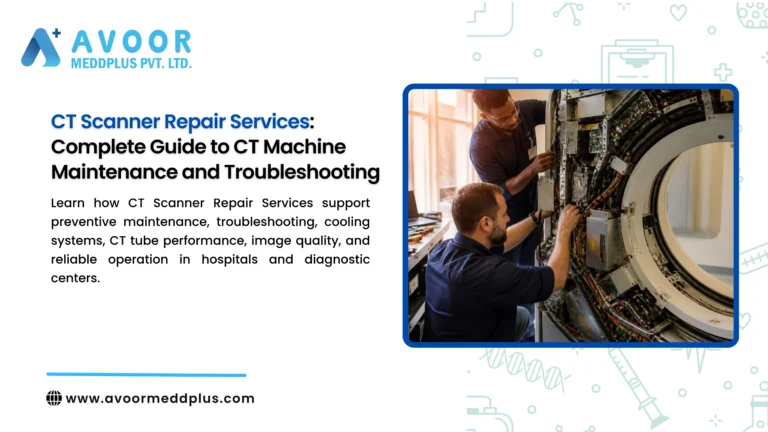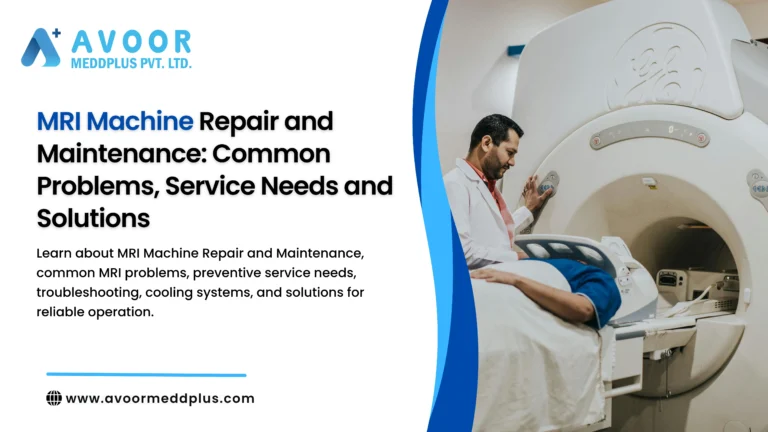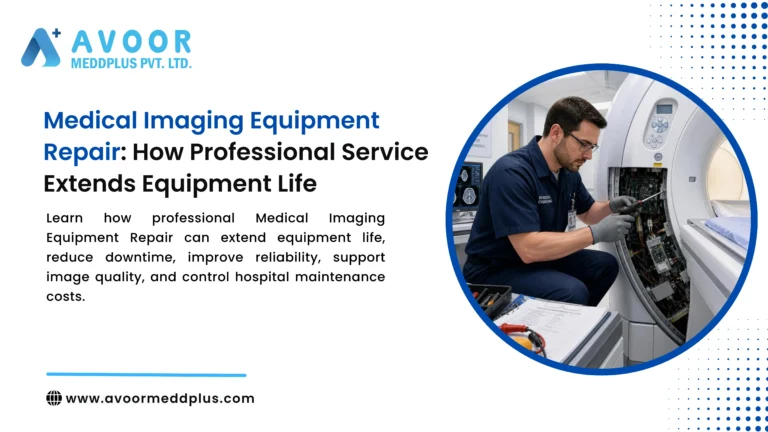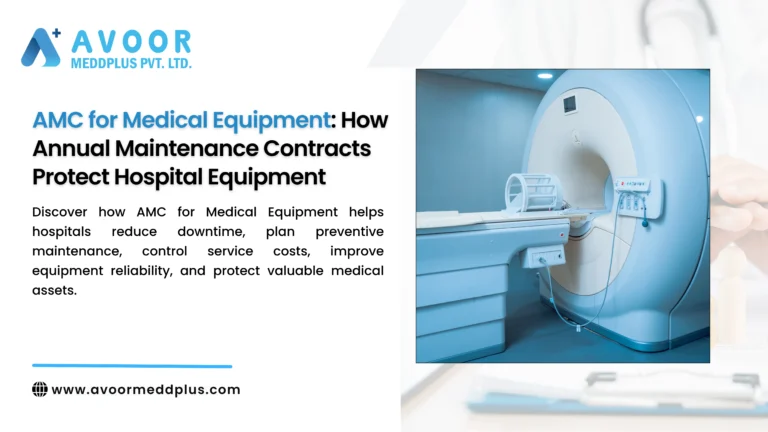

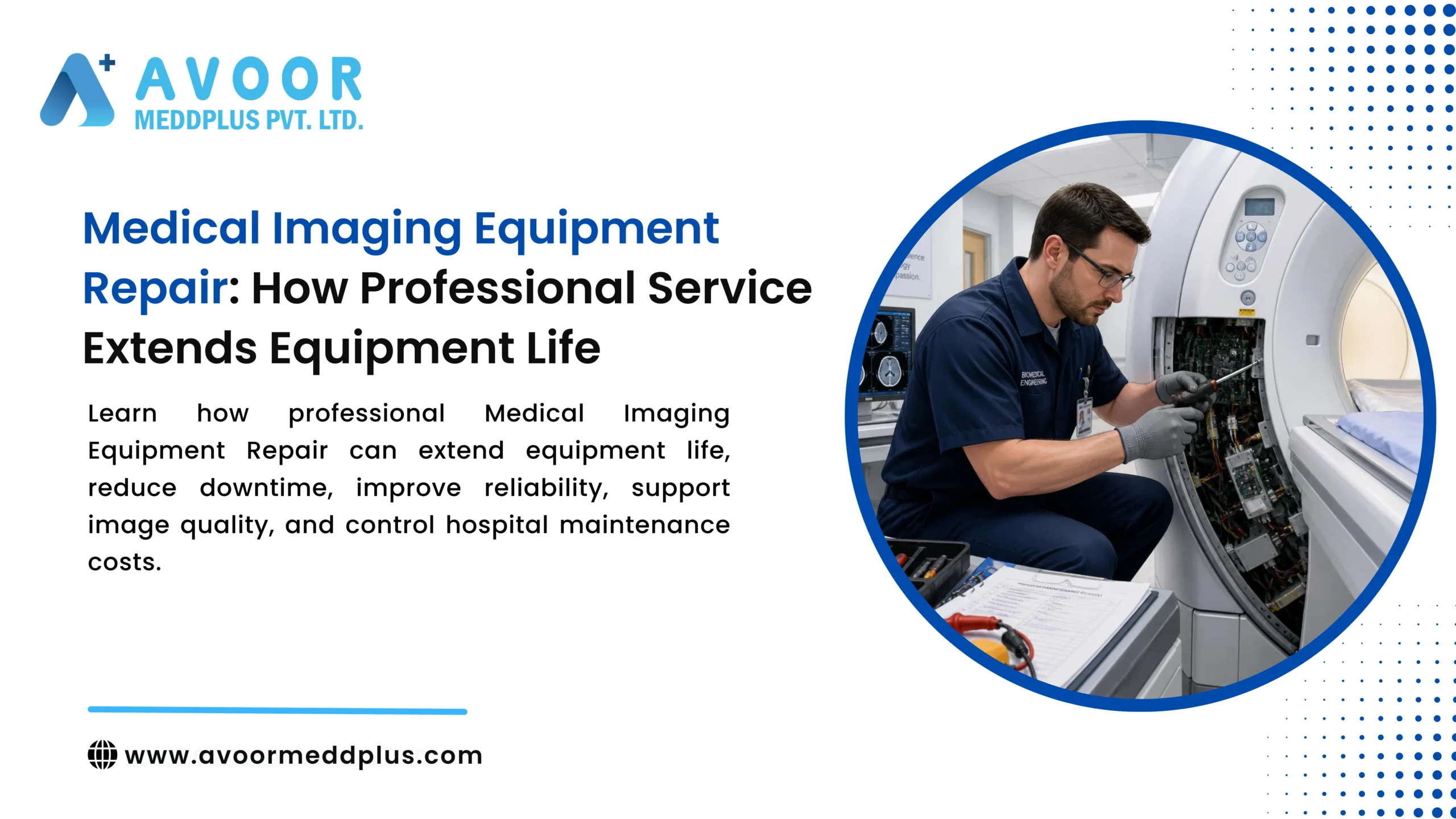
Medical Imaging Equipment Repair is an important part of managing hospitals and diagnostic centers that depend on sophisticated imaging systems every day.
Modern medical imaging equipment represents a significant investment. CT scanners, MRI systems, PET/CT, SPECT/CT, X-ray systems, C-Arms, mammography equipment, and ultrasound machines contain complex electronic, mechanical, software, cooling, and imaging components.
When these systems develop faults, simply replacing the entire machine is not always the most practical solution.
Professional repair and maintenance can help healthcare facilities identify faults, restore equipment functionality, manage recurring problems, and potentially extend the useful service life of supported equipment.
However, repair should never be viewed as a substitute for proper preventive maintenance, quality control, manufacturer requirements, or equipment replacement when a system is no longer technically or economically viable.
This guide explains how professional Medical Imaging Equipment Repair can contribute to equipment longevity, reliability, and better maintenance planning.
Table of Contents
- What Is Medical Imaging Equipment Repair?
- Why Professional Repair Matters
- 10 Ways Professional Repair Can Extend Equipment Life
- Common Medical Imaging Equipment Problems
- Repair and Maintenance by Equipment Type
- Preventive Maintenance vs Corrective Repair
- Medical Imaging Equipment Repair Checklist
- Signs Your Imaging Equipment Needs Professional Service
- How to Choose a Medical Imaging Equipment Repair Provider
- AMC and CAMC for Imaging Equipment
- When Should Equipment Be Repaired or Replaced?
- Why Choose Avoor Meddplus Pvt Ltd?
- Frequently Asked Questions
- Conclusion
What Is Medical Imaging Equipment Repair?
Understanding Medical Imaging Equipment Repair
Medical Imaging Equipment Repair involves diagnosing and correcting faults affecting medical imaging systems and their supporting components.
Depending on the equipment, professional service may involve:
- Electronic diagnostics
- PCB troubleshooting
- Component-level repair
- Mechanical repair
- Cooling-system service
- Power-supply diagnosis
- Error-code analysis
- Software troubleshooting
- Calibration support
- Image-quality investigation
- Preventive maintenance
- Replacement of approved components
The repair approach depends heavily on the manufacturer, model, equipment condition, component availability, and applicable service requirements.
Complex imaging equipment should be serviced only by appropriately qualified personnel using suitable technical procedures.
Why Professional Medical Imaging Equipment Repair Matters
Medical imaging systems are interconnected.
For example, a CT scanner may contain:
- X-ray tube
- Detector system
- Gantry
- High-voltage components
- Data acquisition electronics
- Cooling system
- Patient table
- Computer systems
- Software
Similarly, an MRI system can include:
- Magnet
- Gradient system
- RF system
- Coils
- Cooling infrastructure
- Electronics
- Patient table
- Computing systems
A failure in one subsystem can affect the entire imaging workflow.
Professional diagnosis is therefore important.
The objective should not simply be to replace a failed component.
The goal should be to understand why the failure occurred and what is required to restore the equipment appropriately.
10 Ways Professional Repair Can Extend Equipment Life
1. Early Fault Detection
Small equipment problems can sometimes become larger failures if they are ignored.
Recurring warnings, intermittent errors, abnormal noises, overheating, or image-quality changes can provide useful diagnostic information.
Professional service can investigate these symptoms before they potentially develop into more serious equipment problems.
Examples
- Repeated CT cooling warnings
- MRI communication errors
- PET/CT detector alerts
- X-ray exposure problems
- C-Arm positioning issues
Early investigation can support better maintenance planning.
2. Component-Level Electronic Repair
Many medical imaging systems contain sophisticated circuit boards and electronic assemblies.
Depending on the equipment and technical feasibility, some electronic faults may be repairable at component or board level rather than requiring complete assembly replacement.
Potential areas can include:
- Power-supply boards
- Control boards
- Interface boards
- Communication boards
- Display-related electronics
- Signal-processing electronics
Component-level repair may sometimes reduce repair costs and help maintain older supported equipment.
However, repairability depends on the equipment design, component availability, technical documentation, safety requirements, and manufacturer’s policies.
3. Preventing Recurring Failures
A professional repair should aim to identify the underlying cause of a failure.
For example, if an electronic board repeatedly fails, replacing the board without investigating the surrounding conditions may not solve the root problem.
Possible contributing factors can include:
- Excessive heat
- Cooling problems
- Electrical instability
- Component aging
- Mechanical stress
- Environmental conditions
Root-cause analysis can help reduce repeated service calls.
4. Maintaining Cooling Systems
Thermal management is important for many imaging systems.
Cooling problems can contribute to equipment interruptions or component stress.
Depending on the system, maintenance may involve:
- Cooling units
- Fans
- Pumps
- Heat exchangers
- Filters
- Temperature sensors
- Airflow
- Environmental conditions
For systems such as CT and MRI, maintaining appropriate environmental and cooling conditions can be an important part of equipment care.
5. Addressing Mechanical Wear
Medical imaging systems contain mechanical components that experience repeated movement.
Examples include:
- Gantry mechanisms
- Patient tables
- Motors
- Bearings
- Drive systems
- Positioning mechanisms
- Cables
Abnormal vibration, noise, slow movement, or positioning errors should be investigated.
Ignoring mechanical problems may allow wear to progress.
6. Maintaining Image Quality
Equipment longevity is not only about whether the machine turns on.
An imaging system must also perform appropriately for its intended clinical use.
Changes in image quality can indicate a problem involving:
- Detectors
- Coils
- Calibration
- Electronics
- Software
- Mechanical alignment
- Environmental interference
Professional service can help determine whether an image-quality issue originates from the equipment or another factor.
7. Monitoring Error Codes and Service History
A good service history can reveal patterns that may otherwise be missed.
Record:
- Error code
- Date
- Frequency
- Equipment condition
- Repair performed
- Components replaced
- Downtime
- Technician observations
If the same error appears repeatedly, it may indicate a larger underlying issue.
Historical service data can help technicians diagnose recurring problems more efficiently.
8. Performing Preventive Maintenance
Repair alone is not enough.
Preventive maintenance should be integrated into the equipment lifecycle.
Depending on the system, preventive maintenance can include:
- Functional testing
- Electrical inspection
- Mechanical inspection
- Cooling-system checks
- Performance verification
- Calibration
- Error-log review
- Image-quality testing
Maintenance schedules should follow manufacturer requirements and applicable facility procedures.
9. Maintaining Older but Supported Equipment
Some hospitals continue to operate older imaging equipment because the system remains clinically useful and replacement costs are significant.
Professional service may help maintain supported older systems when:
- Spare parts are available
- Technical expertise exists
- Safety requirements can be met
- Performance remains acceptable
- Manufacturer or qualified service support remains available
However, older equipment should be evaluated periodically.
If repairs become frequent or critical components are no longer available, replacement may become more practical.
10. Helping Hospitals Make Better Replacement Decisions
Professional service history can provide useful information when management is deciding whether to repair or replace equipment.
Useful indicators include:
- Repair frequency
- Annual repair costs
- Downtime
- Parts availability
- Equipment age
- Manufacturer support
- Image-quality performance
- Clinical requirements
- Software compatibility
A machine that requires frequent repairs may eventually become more expensive to maintain than replace.
Professional service documentation can help make that decision based on actual data.
Common Medical Imaging Equipment Problems
CT Scanner Problems
Common issues can involve:
- X-ray tube
- Detector
- Gantry
- Cooling system
- High-voltage system
- Patient table
- Electronics
- Software
Read our related guide: [CT Scanner Repair and Maintenance].
MRI Problems
MRI service may involve:
- RF system
- Gradient system
- Coils
- Cooling
- Electronics
- Patient table
- Software
- Communication systems
Read our related guide: [MRI Machine Repair and Maintenance].
PET/CT Problems
PET/CT systems combine two imaging technologies.
Possible issues can involve:
- PET detector systems
- CT subsystem
- Cooling
- Electronics
- Calibration
- Software
- Mechanical systems
Read our related guide: [PET/CT Repair and Maintenance].
SPECT/CT Problems
SPECT/CT systems require maintenance of both nuclear medicine and CT components.
Service requirements may include:
- Detector systems
- Gantry
- CT subsystem
- Electronics
- Calibration
- Image-quality testing
X-Ray Equipment Problems
X-ray equipment can develop issues involving:
- X-ray tube
- Generator
- Exposure controls
- Detectors
- High-voltage components
- Collimators
- Mechanical assemblies
C-Arm Problems
C-Arms may require attention to:
- X-ray generator
- Image intensifier or flat-panel detector
- C-Arm movement
- Brakes
- Power systems
- Displays
- Software
Preventive Maintenance vs Corrective Repair
Preventive Maintenance
Preventive maintenance is planned before a failure occurs.
Its purpose is to:
- Monitor equipment condition
- Identify potential problems
- Maintain performance
- Reduce avoidable failures
- Support equipment reliability
Corrective Repair
Corrective repair takes place after a fault has been identified.
Examples include:
- PCB repair
- Component replacement
- Mechanical repair
- Cooling-system repair
- Electronic troubleshooting
- Software-related troubleshooting
Why Both Are Important
The most effective equipment-management strategy generally combines preventive maintenance with professional corrective repair.
Medical Imaging Equipment Repair Checklist
Before Repair
- Record equipment model
- Record serial number
- Document error code
- Record symptoms
- Review previous service history
- Identify recent maintenance
- Check environmental conditions
During Diagnosis
- Follow appropriate service procedures
- Identify affected subsystem
- Test relevant components
- Investigate root cause
- Check related components
- Document findings
After Repair
- Verify equipment operation
- Perform applicable performance tests
- Check image quality where applicable
- Record components replaced
- Document repair
- Monitor for recurring faults
Signs Your Imaging Equipment Needs Professional Service
Healthcare facilities should consider professional technical support when they notice:
- Repeated error codes
- Frequent equipment restarts
- Unexpected shutdowns
- Image-quality changes
- Unusual mechanical noise
- Overheating warnings
- Cooling-system alarms
- Calibration failures
- Communication problems
- Patient-table movement issues
- Repeated component failures
- Increasing downtime
A single warning does not necessarily indicate a major failure.
However, recurring or worsening problems should be investigated.
How to Choose a Medical Imaging Equipment Repair Provider
1. Technical Experience
Ask whether the service provider has experience with your specific equipment manufacturer and model.
2. Diagnostic Capability
A good service provider should focus on systematic diagnosis rather than unnecessary component replacement.
3. Spare Parts Support
Ask about:
- Original parts
- Compatible parts
- Refurbished parts
- Component availability
- Obsolete equipment support
Parts should be appropriate for the equipment and service requirements.
4. Preventive Maintenance Capability
Choose a provider capable of supporting both repairs and preventive maintenance.
5. Service Documentation
Every service visit should be appropriately documented.
6. Response Time
For critical imaging equipment, response time can be an important consideration.
Hospitals should establish clear expectations for:
- Remote support
- Engineer dispatch
- On-site response
- Escalation
AMC and CAMC for Imaging Equipment
Hospitals may use Annual Maintenance Contracts (AMC) or Comprehensive Annual Maintenance Contracts (CAMC) to manage ongoing equipment service.
AMC
An AMC generally defines preventive maintenance and technical support for a specified period.
CAMC
A CAMC generally provides broader coverage according to contract terms and may include specified parts and labor.
Before signing either contract, hospitals should verify:
- Preventive maintenance frequency
- Response time
- Emergency service
- Parts coverage
- Labor coverage
- Calibration
- Exclusions
- Service documentation
Read our related article: [AMC for Medical Equipment].
When Should Equipment Be Repaired or Replaced?
Repair is not always the best long-term option.
A hospital should evaluate replacement when:
- Critical parts are obsolete
- Manufacturer support has ended
- Failures are becoming frequent
- Downtime is increasing
- Repair costs are consistently high
- Image quality no longer meets requirements
- Software is no longer supported
- Safety requirements cannot be adequately maintained
- The equipment no longer meets clinical needs
A Simple Decision Framework
Consider these five questions:
1. Is the equipment clinically adequate?
If yes, repair may remain viable.
2. Are parts available?
If critical parts are unavailable, replacement may be necessary.
3. How often does it fail?
Increasing failure frequency is an important warning sign.
4. What is the annual repair cost?
Compare recurring repair costs with replacement cost.
5. How much downtime is occurring?
High downtime can affect both clinical operations and financial performance.
Why Choose Avoor Meddplus Pvt Ltd?
Avoor Meddplus Pvt Ltd provides professional Medical Imaging Equipment Repair and maintenance support for hospitals, diagnostic centers, and healthcare organizations.
Our service capabilities include:
- Medical Imaging Equipment Repair
- Preventive Maintenance
- CT Scanner Repair
- MRI Repair and Maintenance
- PET/CT Repair
- SPECT/CT Service
- X-Ray Equipment Repair
- C-Arm Service
- Medical Equipment PCB Repair
- Electronic Fault Diagnosis
- Cooling-System Support
- Calibration Support
- AMC Services
- CAMC Services
- Spare Parts Support
- Installation and Commissioning
Our technical approach emphasizes systematic troubleshooting, root-cause analysis, preventive maintenance, and equipment-specific service requirements.
For healthcare facilities operating expensive imaging systems, professional technical support can help improve equipment reliability and support more informed repair-versus-replacement decisions.
Conclusion
Medical Imaging Equipment Repair is an important part of maintaining valuable diagnostic equipment and supporting reliable healthcare operations.
Professional service can help healthcare facilities:
- Identify developing faults
- Diagnose equipment problems
- Repair electronic and mechanical components
- Maintain cooling systems
- Address recurring failures
- Support image-quality performance
- Reduce avoidable downtime
- Maintain supported older equipment
- Make informed repair-versus-replacement decisions
However, repair should always be combined with appropriate preventive maintenance, quality control, environmental monitoring, and manufacturer requirements.
For sophisticated systems such as MRI, CT, PET/CT, SPECT/CT, X-ray, and C-Arm equipment, specialized technical expertise is particularly important.
The objective is not simply to make a machine operational again.
It is to understand the underlying problem, restore the equipment appropriately, document the service, and establish a maintenance approach that supports long-term reliability.
Need Medical Imaging Equipment Repair Support?
Avoor Meddplus Pvt Ltd provides professional medical imaging equipment repair, preventive maintenance, electronic diagnostics, PCB repair, AMC/CAMC services, spare-parts support, and technical assistance.