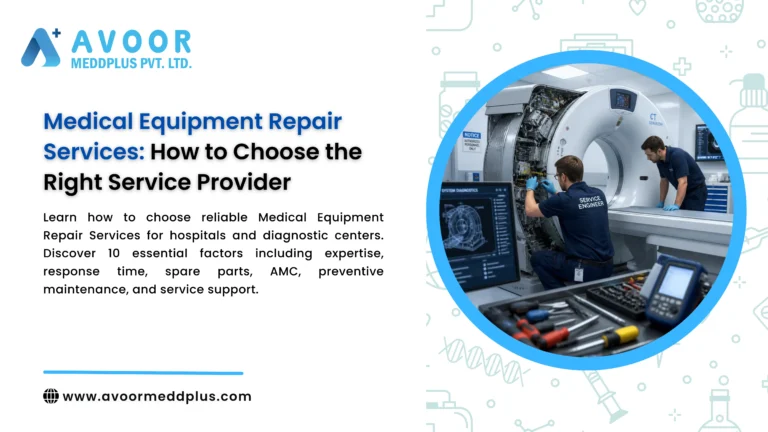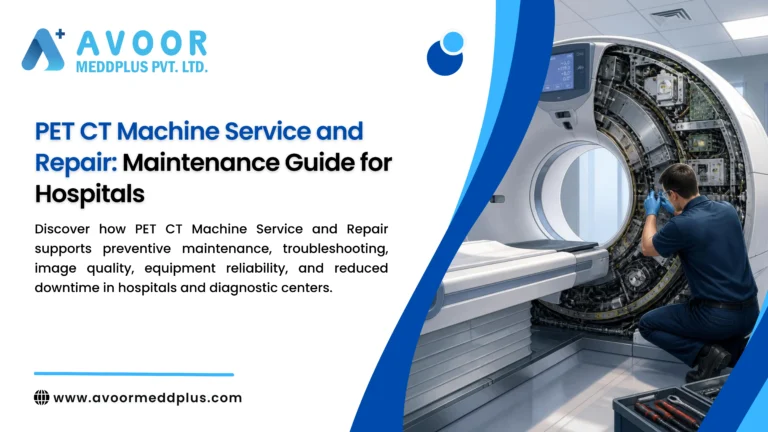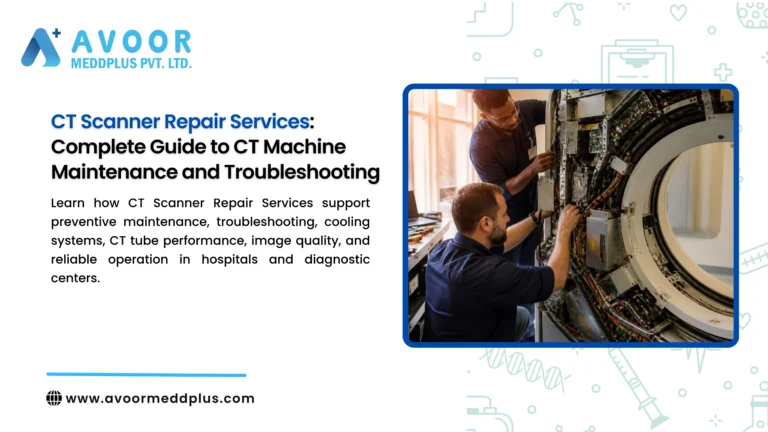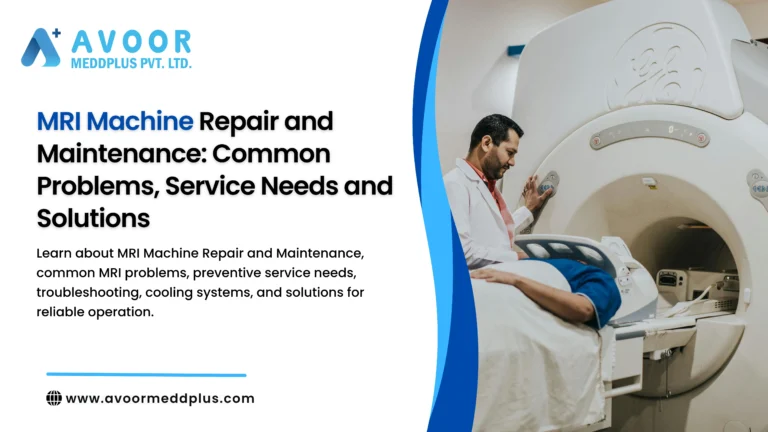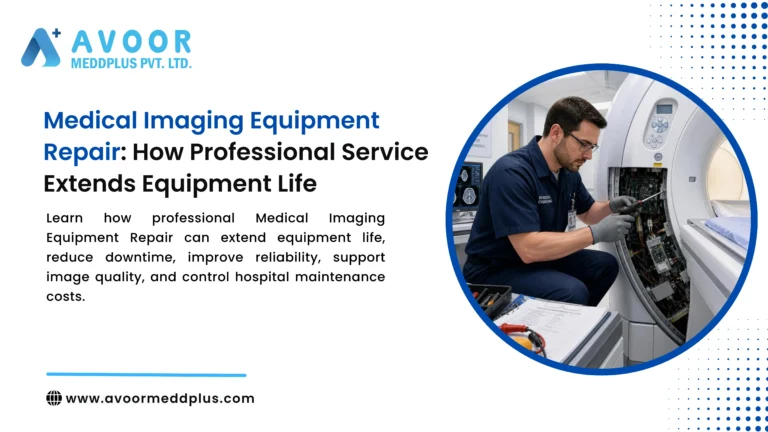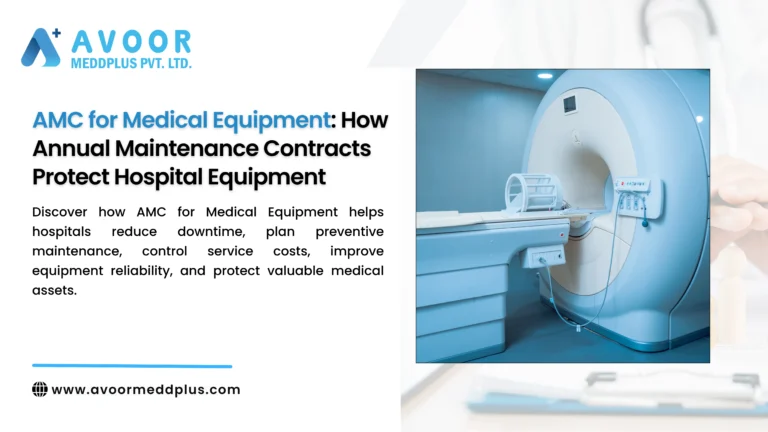

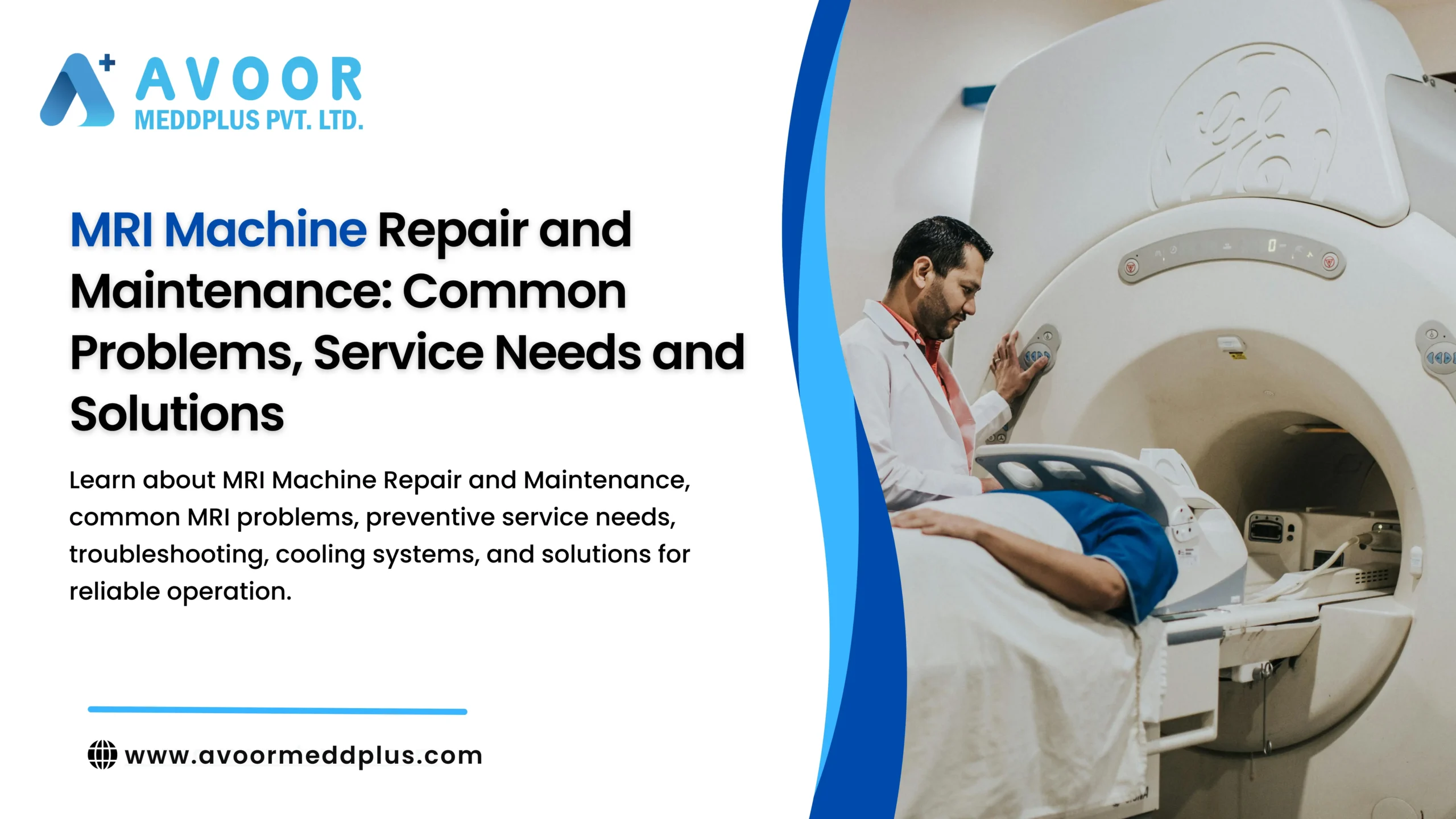
MRI Machine Repair and Maintenance is essential for hospitals and diagnostic centers that depend on magnetic resonance imaging for routine and advanced diagnostic examinations.
MRI systems are highly sophisticated medical imaging platforms. Unlike conventional X-ray-based systems, an MRI scanner combines a powerful magnetic field with radiofrequency technology, gradient systems, specialized electronics, cooling infrastructure, computers, software, patient-positioning systems, and safety equipment.
Because these subsystems work together, a problem in one area can affect the performance or availability of the complete MRI system.
Common problems may include cooling-system alarms, RF-related faults, gradient-system issues, communication errors, image-quality changes, patient-table problems, software failures, and recurring system warnings.
A structured maintenance program can help hospitals identify developing problems earlier, plan service activities, reduce avoidable downtime, and maintain reliable imaging operations.
This guide explains the most common MRI equipment problems, important maintenance practices, and situations where professional MRI service support should be considered.
Table of Contents
- What Is MRI Machine Repair and Maintenance?
- Why MRI Maintenance Is Important
- 10 Common MRI Problems and Solutions
- MRI Preventive Maintenance Checklist
- MRI Cooling System Maintenance
- MRI RF and Gradient System Maintenance
- MRI Image Quality Problems
- MRI Error Codes and Warning Signs
- MRI AMC and CAMC Services
- When to Call an MRI Repair Expert
- Why Choose Avoor Meddplus Pvt Ltd?
- Frequently Asked Questions
- Conclusion
- MRI Machine Repair and Maintenance
- MRI Machine Repair and Maintenance
What Is MRI Machine Repair and Maintenance?
Understanding MRI Machine Repair and Maintenance
MRI Machine Repair and Maintenance includes preventive inspection, performance testing, troubleshooting, calibration, corrective repair, component replacement, and technical servicing required to keep an MRI system operating appropriately.
Depending on the equipment model and manufacturer, maintenance can involve:
- Magnet-related systems
- Gradient systems
- RF systems
- Coils
- Cooling systems
- Electronics
- Patient table
- Computers and workstations
- Communication systems
- Software
- Image-quality testing
- Safety systems
- Environmental conditions
MRI service is highly specialized. Maintenance and repair involving the magnet, cryogenic systems, RF systems, gradients, or other specialized components should only be performed by appropriately trained and qualified personnel following manufacturer procedures.
Why MRI Machine Repair and Maintenance Is Important
1. Reduces Unexpected Downtime
MRI examinations are often scheduled in advance, and unexpected equipment downtime can disrupt patient appointments and departmental workflow.
Preventive maintenance can help identify certain developing problems before they become major failures.
2. Supports Image Quality
MRI image quality depends on the coordinated performance of multiple systems.
Problems involving RF components, gradients, coils, magnetic-field conditions, software, or other subsystems can potentially affect imaging performance.
3. Helps Protect Expensive Equipment
MRI systems represent a significant investment.
Professional maintenance can help healthcare facilities monitor equipment condition and address problems appropriately.
4. Supports Patient and Staff Safety
MRI environments have unique safety requirements because of the strong static magnetic field and other hazards associated with MRI operation.
Maintenance and safety checks should follow the manufacturer’s requirements and applicable facility procedures.
5. Improves Maintenance Planning
A documented maintenance history can help identify recurring problems, component trends, and equipment reliability issues.
10 Common MRI Problems and Solutions
1. MRI Cooling System Problems
Cooling is important for many MRI subsystems.
A cooling-related problem can potentially cause:
- Temperature warnings
- System alarms
- Reduced equipment availability
- Protective shutdowns
- Performance instability
Potential contributing factors can include:
- Cooling-unit problems
- Restricted airflow
- Environmental temperature
- Fan or pump issues
- Heat-exchanger problems
- Sensor faults
Solution
Cooling performance should be checked according to the manufacturer’s requirements.
The service engineer may inspect applicable cooling components, temperature readings, alarms, environmental conditions, and system logs.
Do not bypass temperature alarms or continue operating equipment outside its specified conditions.
2. RF System Problems
The radiofrequency system is essential for MRI signal transmission and reception.
RF-related problems can contribute to:
- Reduced signal quality
- Increased image noise
- Artifacts
- Failed scans
- Communication or system errors
Possible causes can involve RF amplifiers, coils, cables, connectors, shielding, electronics, or other components.
Solution
A qualified MRI service engineer should perform systematic diagnostics.
Operators should document the affected scan sequence, coil, error message, and circumstances surrounding the problem.
3. Gradient System Problems
Gradient systems are responsible for rapidly changing magnetic fields used during MRI image acquisition.
A gradient-related fault may result in:
- Scan interruptions
- System warnings
- Image artifacts
- Unusual equipment behavior
- Increased system downtime
Gradient systems can involve significant electrical and thermal loads.
Solution
Recurring gradient errors should be professionally investigated.
Maintenance may involve reviewing system logs, cooling performance, electrical conditions, and applicable gradient-system diagnostics.
4. MRI Coil Problems
MRI coils are essential for transmitting and/or receiving RF signals.
A faulty coil may cause:
- Poor signal
- Image artifacts
- Reduced image quality
- Coil recognition errors
- Intermittent problems
Solution
If an issue occurs only with a specific coil, the coil should be evaluated separately from the main MRI system.
Facilities should also follow appropriate coil handling, cleaning, inspection, and storage procedures.
Avoid using damaged cables, connectors, or coils.
5. Image Artifacts and Reduced Image Quality
Image-quality problems can be among the most noticeable MRI issues.
Possible symptoms include:
- Increased noise
- Ghosting
- Shading
- Distortion
- Signal loss
- Unexpected artifacts
- Non-uniformity
The cause may involve many factors, including:
- RF systems
- Coils
- Gradient performance
- Magnetic-field conditions
- Calibration
- Patient movement
- Software
- Environmental interference
Solution
Image-quality problems should be investigated systematically rather than assuming that a single component has failed.
Quality-control results and previous images can be useful when identifying changes in equipment performance.
6. Patient Table Problems
The MRI patient table must move accurately and reliably.
Problems may include:
- Slow movement
- Failure to move
- Positioning errors
- Unusual mechanical noise
- Intermittent operation
Solution
Maintenance personnel should inspect applicable mechanical, electrical, and control components.
Operators should not attempt unauthorized mechanical repairs.
Patient-positioning and table-safety procedures should always follow manufacturer and facility requirements.
7. Communication and Computer Errors
Modern MRI systems depend on computers and communication networks.
Problems can occur between:
- MRI console
- Scanner electronics
- Reconstruction computer
- Workstation
- PACS
- Hospital network
Symptoms may include:
- Failed image transfers
- Slow processing
- System freezes
- Communication errors
- Unexpected restarts
Solution
The service team should determine whether the problem originates in the scanner hardware, computer system, software, network, or communication interface.
Recording exact error messages can significantly help troubleshooting.
8. Magnet-Related Issues
The MRI magnet is one of the most important components of the system.
MRI systems can use different magnet technologies and configurations, and maintenance requirements vary accordingly.
Potential concerns may include:
- Magnetic-field-related warnings
- System alarms
- Specialized cooling or cryogenic-system issues
- Unexpected equipment behavior
Solution
Magnet-related problems require specialized technical expertise.
Facilities should never attempt unauthorized intervention involving the magnet or cryogenic system.
Emergency procedures for magnet-related incidents should be established and maintained according to the MRI manufacturer’s requirements and facility safety policies.
9. Software and System Errors
Software controls many aspects of MRI operation.
Software-related problems may appear as:
- System freezes
- Failed sequences
- Processing errors
- Communication failures
- Unexpected restarts
- Configuration problems
Solution
Maintain appropriate software versions and follow manufacturer-approved update and configuration procedures.
When an error occurs, record:
- Error message
- Sequence being performed
- Time of occurrence
- User action immediately before the error
- Frequency of the problem
This information can help technical personnel identify the root cause.
10. Electrical and Power Problems
MRI systems contain sensitive electronic components that depend on appropriate electrical infrastructure.
Potential symptoms include:
- Unexpected shutdowns
- System restarts
- Power-related warnings
- Communication failures
- Electronic faults
Solution
Electrical issues should be investigated by qualified technical personnel.
Facilities should maintain appropriate power-quality monitoring and backup systems where required by the equipment and facility design.
MRI Preventive Maintenance Checklist
A structured preventive maintenance program can help healthcare facilities monitor MRI equipment condition.
MRI System
- Review service history
- Review recurring error codes
- Check system startup
- Review system logs
- Verify applicable performance parameters
RF System
- Inspect applicable RF components
- Check coil performance
- Investigate recurring RF errors
- Review image-quality trends
Gradient System
- Review gradient-related warnings
- Check applicable cooling conditions
- Review system diagnostics
Cooling System
- Check environmental conditions
- Inspect applicable cooling components
- Review temperature alarms
- Check airflow where applicable
Patient Table
- Check movement
- Check positioning
- Inspect mechanical condition
- Review unusual noise or vibration
Software and Electronics
- Review system errors
- Check communication problems
- Review workstation performance
- Check applicable software status
Documentation
- Record maintenance activities
- Document repairs
- Record replaced components
- Track downtime
- Schedule the next service
MRI Cooling System Maintenance
Why Cooling Is Important
MRI systems can generate substantial heat through their electronics, gradient systems, RF components, and associated infrastructure.
Effective thermal management helps equipment operate within its specified conditions.
Facilities should pay attention to:
- Room temperature
- Humidity
- HVAC performance
- Cooling equipment
- Airflow
- Temperature alarms
If an MRI system repeatedly reports temperature-related warnings, the problem should be investigated promptly.
Ignoring thermal warnings can increase the risk of equipment interruption.
MRI RF and Gradient System Maintenance
RF Maintenance
RF components require specialized testing and maintenance.
Potential maintenance activities can include applicable:
- RF performance checks
- Coil testing
- Cable and connector inspection
- System diagnostics
- Image-quality evaluation
Gradient Maintenance
Gradient systems require careful technical attention because they operate with high electrical and thermal demands.
Maintenance may include:
- Diagnostic testing
- Cooling-system evaluation
- Error-log review
- Performance monitoring
- Electrical-system inspection
Only qualified MRI service personnel should perform internal technical work.
MRI Image Quality Problems
Image quality should be monitored as part of an appropriate quality-control program.
Potential MRI image-quality concerns include:
Increased Noise
May be associated with multiple factors including coil performance, acquisition conditions, electronics, or environmental interference.
Ghosting
Can be associated with motion, system characteristics, RF-related factors, or other causes.
Signal Loss
May involve coils, RF components, positioning, or other equipment-related factors.
Distortion
May have several possible causes, including gradients, magnetic-field conditions, hardware, or acquisition factors.
Shading
Can be associated with coil performance, magnetic-field conditions, calibration, and other factors.
Because many image artifacts have multiple possible causes, professional diagnosis is important.
MRI Error Codes and Warning Signs
Repeated warnings should not be ignored.
Important warning signs include:
- Recurring error codes
- Repeated system restarts
- RF-related errors
- Gradient warnings
- Cooling alarms
- Coil recognition failures
- Calibration problems
- Image-quality changes
- Patient-table problems
- Communication failures
- Unusual equipment noise
Operators should record the exact error message and follow approved operating procedures.
If the problem persists, professional technical support should be contacted.
MRI Maintenance and Quality Control
Quality-control procedures are an important part of MRI equipment management.
Depending on the system and applicable requirements, quality-control activities may evaluate:
- Image uniformity
- Signal-to-noise characteristics
- Geometric accuracy
- Artifact levels
- Spatial resolution
- System stability
The exact tests, frequency, tolerances, and acceptance criteria should follow applicable professional guidance, manufacturer requirements, and facility procedures.
MRI AMC and CAMC Services
Hospitals and diagnostic centers may use maintenance contracts to manage long-term MRI service requirements.
MRI AMC
An Annual Maintenance Contract (AMC) can provide scheduled preventive maintenance and technical support according to defined contract terms.
MRI CAMC
A Comprehensive Annual Maintenance Contract (CAMC) may provide broader coverage, potentially including specified spare parts and labor depending on the agreement.
Before signing an MRI maintenance contract, facilities should clarify:
- Preventive maintenance frequency
- Response time
- Emergency service
- Parts coverage
- Labor coverage
- Calibration support
- Software support
- Exclusions
- Reporting
- Service availability
The contract should match the MRI system’s age, workload, criticality, and support requirements.
When to Call an MRI Repair Expert
Professional MRI service should be considered when:
- The same error repeatedly appears
- Image quality changes unexpectedly
- RF problems occur
- Gradient errors appear
- Cooling alarms occur
- The patient table malfunctions
- The system repeatedly restarts
- Calibration fails
- Communication problems persist
- Equipment becomes unavailable
- Any MRI safety concern arises
For problems involving the magnet, cryogenic systems, RF systems, gradients, or other specialized components, only appropriately qualified MRI service personnel should perform technical intervention.
Why Choose Avoor Meddplus Pvt Ltd?
Avoor Meddplus Pvt Ltd provides professional MRI Machine Repair and Maintenance support for hospitals, diagnostic centers, and healthcare facilities.
Our service capabilities include:
- MRI Machine Repair
- MRI Preventive Maintenance
- MRI Troubleshooting
- MRI System Diagnostics
- RF System Technical Support
- Gradient System Support
- MRI Cooling-System Inspection
- MRI Coil Support
- Medical Equipment PCB Repair
- Electronic Fault Diagnosis
- Calibration Support
- AMC Services
- CAMC Services
- Spare Parts Support
- Installation and Commissioning Support
Our approach focuses on systematic troubleshooting and identifying the underlying cause of equipment problems.
For healthcare facilities operating critical MRI systems, proactive maintenance and timely technical support can help improve equipment availability and reduce avoidable interruptions.
Conclusion
MRI Machine Repair and Maintenance is essential for maintaining the reliability and availability of MRI equipment in hospitals and diagnostic centers.
MRI systems combine highly specialized technologies, including magnets, RF systems, gradient systems, coils, cooling systems, electronics, computers, software, and mechanical components.
Problems in any of these areas can potentially affect equipment availability or imaging performance.
A strong MRI maintenance program should include:
- Preventive maintenance
- Error-code monitoring
- Cooling-system inspection
- RF and gradient-system checks
- Coil inspection
- Image-quality monitoring
- Calibration and quality control
- Environmental monitoring
- Service documentation
- Professional technical support
The key is to identify warning signs early rather than waiting for a complete system failure.
Recurring error codes, cooling alarms, image-quality changes, RF problems, gradient warnings, table malfunctions, and unexpected system restarts should receive appropriate technical attention.
With professional MRI Machine Repair and Maintenance, hospitals and diagnostic centers can better manage equipment reliability, plan service requirements, and reduce avoidable disruptions to diagnostic operations.
Need MRI Machine Repair and Maintenance Support?
Avoor Meddplus Pvt Ltd provides professional MRI repair and maintenance support, including:
- MRI Machine Repair
- Preventive Maintenance
- MRI Troubleshooting
- RF & Gradient System Support
- Cooling-System Maintenance
- Coil Support
- Calibration Support
- Electronic Diagnostics
- PCB Repair
- AMC & CAMC Services
- Spare Parts Support
- Installation & Commissioning