
Introduction
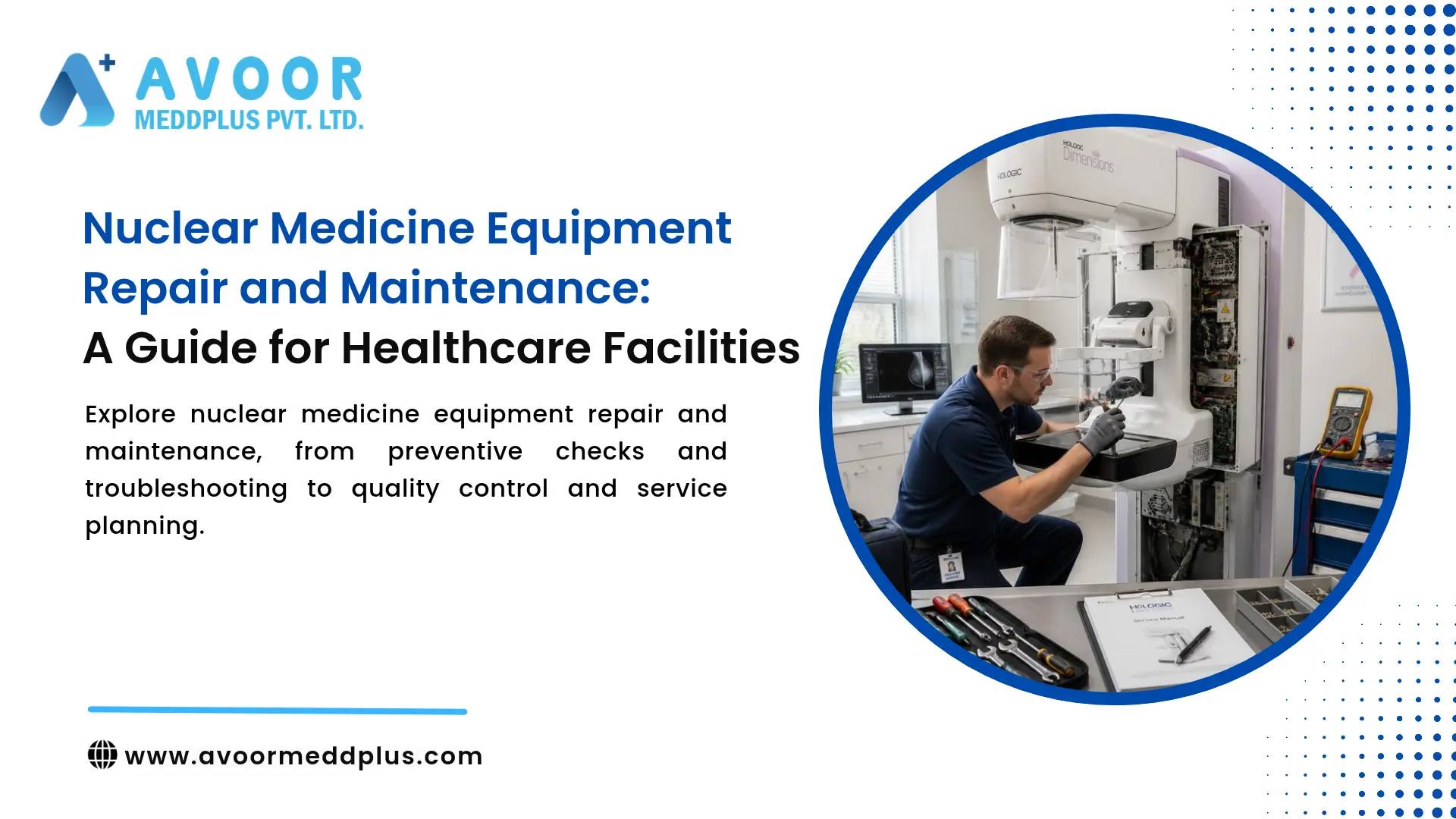
Nuclear medicine departments rely on specialized equipment to support diagnostic imaging and related clinical procedures. Gamma cameras, SPECT systems, PET/CT scanners, dose calibrators, and supporting equipment must be maintained according to their manufacturer requirements and the facility’s quality and safety procedures.
When equipment develops a fault, the impact may extend beyond the scanner itself. Appointments may need to be rescheduled, staff workflows can be disrupted, and the department may need to review the status of planned procedures.
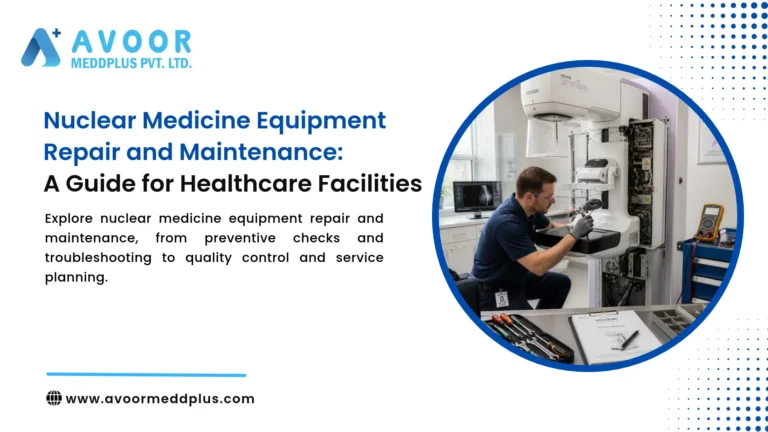
A structured approach to Nuclear Medicine Equipment Repair and Maintenance helps healthcare facilities identify problems, coordinate qualified service support, document maintenance, and complete the required checks before returning equipment to clinical use.
This guide covers common equipment types, preventive maintenance, troubleshooting, repair planning, quality control, and service-provider selection.
Table of Contents
- What Is Nuclear Medicine Equipment Repair and Maintenance?
- Equipment Used in Nuclear Medicine Departments
- Why Preventive Maintenance Matters
- Common Equipment Faults and Warning Signs
- What to Do When Equipment Breaks Down
- Repair and Maintenance Considerations by Equipment Type
- Quality Control and Safety After Service
- Nuclear Medicine Equipment Repair and Maintenance
- Building a Preventive Maintenance Plan
- Choosing a Nuclear Medicine Equipment Service Provider
- Frequently Asked Questions
- Nuclear Medicine Service Support from Avoor Meddplus Pvt Ltd
- Conclusion
What Is Nuclear Medicine Equipment Repair and Maintenance?
Nuclear medicine equipment repair and maintenance includes the technical activities used to inspect, troubleshoot, maintain, and restore equipment used in nuclear medicine services.
Depending on the equipment and service agreement, work may include:
- Reviewing reported faults and system logs
- Nuclear Medicine Equipment Repair and Maintenance
- Inspecting equipment and supporting components
- Troubleshooting mechanical, electrical, or electronic issues
- Performing manufacturer-recommended maintenance
- Assessing components for repair or replacement
- Checking system operation after service
- Recording maintenance actions and test results
The work should be performed by appropriately qualified personnel using equipment-specific service information and approved procedures. The exact scope depends on the equipment model, fault, and applicable requirements.
Equipment Used in Nuclear Medicine Departments
Nuclear medicine departments may use several interconnected systems and supporting devices.
Gamma Cameras and SPECT Systems
Gamma cameras and SPECT systems detect signals from radiopharmaceuticals to create images. Their operation depends on the condition and configuration of the detector, gantry, acquisition system, and associated components.
PET and PET/CT Systems
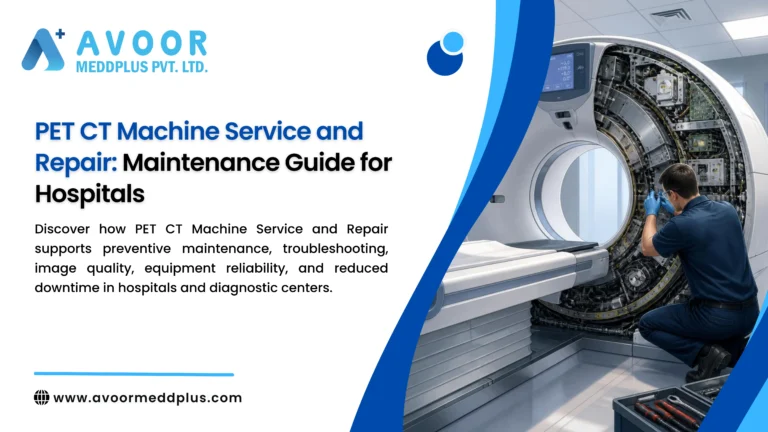
PET and PET/CT systems combine specialized imaging technology with system-specific software, electronics, and supporting subsystems. Maintenance needs vary by model and configuration.
Dose Calibrators
Dose calibrators are used to measure activity in nuclear medicine workflows. Their performance checks, calibration requirements, and service procedures should follow the manufacturer’s instructions and the facility’s applicable quality procedures.
Supporting Equipment
Other equipment may include workstations, patient tables, positioning accessories, hot lab accessories, and associated power or environmental support systems. These should be included in maintenance planning where relevant.Nuclear Medicine Equipment Repair and Maintenance.
Why Preventive Maintenance Matters
Preventive maintenance helps facilities identify developing issues and maintain a documented service history. It does not eliminate the possibility of breakdowns, but it can support more consistent equipment management.
Early Identification of Problems
Unusual noise, repeated error messages, inconsistent operation, or changes noticed during routine checks may indicate that technical evaluation is needed.Nuclear Medicine Equipment Repair and Maintenance.
Better Service Planning
Planned maintenance allows the department to coordinate equipment access, staff availability, and service visits.
More Informed Repair Decisions
Maintenance records can help service personnel understand previous faults, replaced components, and recurring issues.
Support for Quality and Safety Processes
Routine checks and documented service actions help the facility manage equipment in line with manufacturer instructions and its own quality procedures.
Common Equipment Faults and Warning Signs
The symptoms below are examples, not definitive diagnoses. A fault should be assessed using the equipment’s documentation and appropriate service procedures.
| Warning sign | Possible area for investigation |
|---|---|
| System fails to start | Power supply, system configuration, or internal fault |
| Repeated error messages | Software, communication, or hardware issue |
| Unusual mechanical noise | Moving assembly or mechanical component |
| Acquisition interruption | System communication, detector, workstation, or other subsystem |
| Inconsistent measurement or image quality | Equipment condition, setup, calibration, or quality-control issue |
| Excessive heat or cooling alerts | Cooling or environmental support components |
| Table or positioning issue | Mechanical, control, or safety-related subsystem |
A warning sign alone does not establish the root cause. Avoid repeated resets or trial-and-error adjustments when the cause is unknown, especially if the issue may affect safety or system performance.
What to Do When Equipment Breaks Down
A clear response process can help the department manage a breakdown safely and efficiently.
1. Follow the Facility’s Equipment-Use Procedure
If the equipment displays a safety-related warning, behaves unexpectedly, or may not be operating correctly, follow the facility’s procedure for taking it out of clinical use and escalating the issue.Nuclear Medicine Equipment Repair and Maintenance.l
2. Record the Symptoms
Document the displayed error message, when the fault occurred, what the system was doing, and whether the issue has happened before. Include relevant system identifiers according to the facility’s information-handling procedures.
3. Avoid Unauthorized Intervention
Do not bypass interlocks, defeat safety features, open restricted assemblies, or perform high-voltage or radiation-related work unless authorized and qualified to do so.
4. Contact Qualified Service Support
Provide the equipment model, fault description, relevant error details, and maintenance history. Clear information can help the service team prepare for the assessment.
5. Coordinate Access and Workflow
The department should coordinate service access, equipment availability, and any necessary changes to clinical scheduling.
6. Complete Required Checks Before Reuse
After service, complete the manufacturer-required operational checks and the facility’s applicable quality-control and safety procedures. The responsible facility personnel should authorize return to clinical use.
Repair and Maintenance Considerations by Equipment Type
Different nuclear medicine systems have different technical requirements. Maintenance should be specific to the equipment and its intended use.
Gamma Camera and SPECT Systems
Service evaluation may involve the detector, gantry movement, acquisition workstation, system communication, or other model-specific components.
After maintenance or repair, the facility should complete the required checks for the affected functions. Any image-quality or performance concern should be addressed through the department’s quality-control process before clinical use.
PET/CT Systems
PET/CT equipment combines multiple imaging subsystems. A fault may involve one subsystem or an interaction between them.
Service personnel should identify the affected subsystem, follow the applicable service documentation, and coordinate the required post-service checks. A repair to one component should not be assumed to confirm the performance of the complete system.
Dose Calibrators
Dose calibrator maintenance and performance verification should follow the manufacturer’s instructions and the facility’s applicable procedures. If a measurement concern is identified, follow the department’s process for assessing the instrument and determining whether it can continue to be used.
Hot Lab Accessories and Supporting Equipment
Supporting equipment should be maintained according to its own specifications and intended use. Include relevant accessories in service records and escalate faults that may affect safe or reliable operation.
Quality Control and Safety After Service
Repair completion and clinical readiness are not necessarily the same thing. The facility should determine which checks are required for the specific equipment and repair.
Depending on the equipment and work performed, post-service activities may include:
- Operational checks
- Manufacturer-specified performance tests
- Relevant quality-control procedures
- Safety checks appropriate to the affected subsystem
- Review of error logs or service findings
- Documentation of test results and recommendations
The exact tests and acceptance criteria should come from applicable manufacturer documentation, facility procedures, and regulatory requirements.
Do not return equipment to clinical use solely because it powers on or the original error message has disappeared. Required checks must be completed, documented, and reviewed by the responsible personnel.
Building a Preventive Maintenance Plan
A practical maintenance plan should reflect the equipment inventory, manufacturer recommendations, service history, and operational needs of the department.
Maintain an Equipment Register
Record equipment type, manufacturer, model, serial number, location, and relevant service information.
Follow Manufacturer Recommendations
Use the applicable maintenance schedule and instructions for each system. Avoid applying one equipment’s checklist to another model without verification.
Track Faults and Service History
Record breakdowns, recurring symptoms, service visits, parts replaced, test results, and recommendations.
Plan for Equipment Downtime
Coordinate planned service with clinical operations. Establish an escalation process for unexpected breakdowns and identify who is responsible for service coordination.
Review Maintenance Records
Periodically review the history for recurring faults, unresolved recommendations, and parts that may require advance planning.
Keep Staff Informed
Ensure relevant staff know how to report faults, preserve error information, and follow the facility’s equipment-use and escalation procedures.
Choosing a Nuclear Medicine Equipment Service Provider
When evaluating a service provider, healthcare facilities should consider more than the quoted repair cost.
Relevant Technical Experience
Ask about experience with the equipment type and model involved. Confirm that the proposed service scope matches the fault and the facility’s needs.
Clear Scope of Work
The provider should explain what will be inspected, what work is proposed, and what is excluded.
Parts and Compatibility Process
If parts are required, confirm how the part number, condition, and compatibility will be verified for the specific equipment.
Documentation
Ask what service report, findings, parts information, and test results will be supplied.
Safety and Work Authorization
Confirm that the work will be carried out by appropriately qualified personnel using suitable procedures and within the provider’s agreed scope.
Transparent Commercial Terms
Review the service charges, expected lead time, warranty terms, and any conditions that may affect the repair.
Frequently Asked Questions
What does nuclear medicine equipment maintenance include?
It may include planned inspections, manufacturer-recommended maintenance, troubleshooting, component assessment, operational checks, and service documentation. The exact scope depends on the equipment and its requirements.
How often should nuclear medicine equipment be serviced?
Follow the manufacturer’s recommended schedule and the facility’s applicable requirements. Service frequency can vary by equipment model, usage, environment, and service history.
What should we do if a gamma camera or SPECT system shows an error?
Follow the facility’s equipment-use and escalation procedures, record the error details, and contact qualified service support. Avoid unauthorized adjustments or bypassing safety features.
Can a medical imaging component be repaired instead of replaced?
Sometimes. The decision depends on the fault, component design, manufacturer guidance, safety considerations, parts availability, and whether the repair can be appropriately verified.
Can equipment be used immediately after repair?
Only after the required post-service checks and applicable quality-control procedures have been completed, documented, and reviewed by the responsible facility personnel.
Why is service documentation important?
It provides a record of the reported fault, work performed, components involved, test results, and recommendations. This information supports future troubleshooting and maintenance planning.
Nuclear Medicine Service Support from Avoor Meddplus Pvt Ltd
Avoor Meddplus Pvt Ltd provides medical imaging equipment repair, maintenance, installation, and spare-parts support for healthcare facilities.
Its medical imaging service scope includes nuclear medicine systems and related equipment, subject to the equipment model, fault, parts availability, and agreed service requirements.
Facilities can contact Avoor Meddplus Pvt Ltd to discuss nuclear medicine equipment troubleshooting, maintenance planning, repair assessment, or service support.
Conclusion
Nuclear medicine equipment repair and maintenance requires equipment-specific technical knowledge, careful troubleshooting, and a clear approach to quality and safety.
Healthcare facilities can strengthen their maintenance process by following manufacturer recommendations, keeping accurate service records, reporting faults promptly, and ensuring that required checks are completed before equipment returns to clinical use.
A planned approach to service coordination and repair assessment can support more informed decisions and help departments manage equipment interruptions responsibly.