
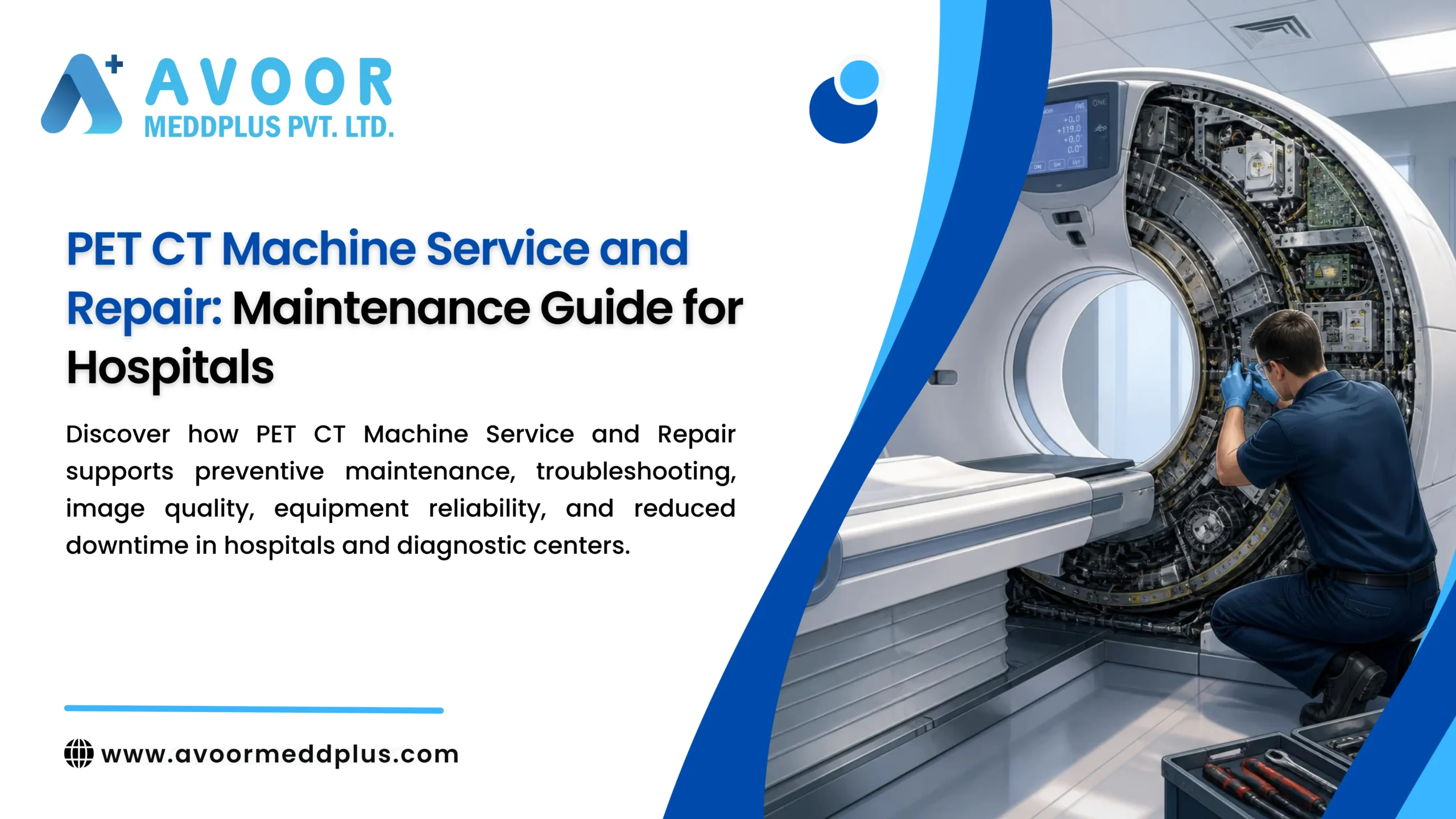
Understanding PET CT Machine Service and Repair
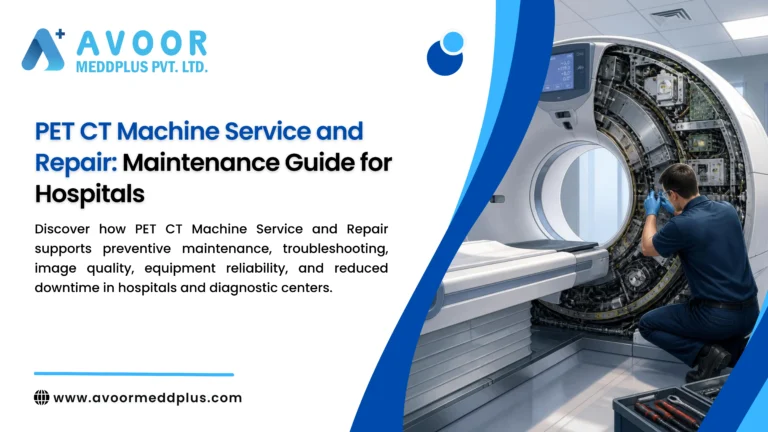
PET CT Machine Service and Repair includes preventive maintenance, technical inspection, troubleshooting, diagnostics, corrective repair, calibration support, and performance evaluation of PET CT Machine Service and Repair.
Because PET/CT combines two imaging modalities, service requirements can involve both systems.
PET System
Service may involve:
- Detector systems
- Electronics
- Data acquisition
- Cooling
- Calibration
- Image reconstruction
- Patient table
- Software
CT System
Service may involve:
- X-ray tube
- Detector array
- Gantry
- High-voltage system
- Cooling
- Patient table
- Data acquisition
- Reconstruction computer
- Software
The exact maintenance requirements depend on the manufacturer, model, system configuration, operating environment, workload, and applicable procedures.
Why PET/CT Maintenance Is Important
PET/CT equipment is expensive and technically complex.
A structured maintenance program can help healthcare facilities manage equipment reliability and service requirements.
Reducing Unexpected Downtime
Preventive maintenance can identify certain developing problems before they result in major equipment interruptions.
Supporting Image Quality
PET and CT image quality depend on appropriate performance of multiple interconnected systems.
Protecting Expensive Components
Specialized components can be expensive and may have long replacement lead times.PET CT Machine Service and Repair.
Improving Service Planning
Service records can help identify recurring faults and determine whether equipment requires increased maintenance or eventual replacement.
Supporting Safe Operation
Maintenance and performance checks should follow manufacturer instructions and applicable healthcare, radiation-safety, and facility procedures.
10 Essential PET/CT Maintenance Practices
1. Perform Scheduled Preventive Maintenance
Preventive maintenance should be planned according to the equipment manufacturer’s recommendations and the healthcare facility’s maintenance program.
Depending on the system, scheduled maintenance can include:
- System inspection
- Error-log review
- Mechanical inspection
- Electrical checks
- Cooling-system checks
- Detector-system evaluation
- Image-quality assessment
- Calibration support
- Software diagnostics
A documented maintenance schedule helps ensure that important activities are not missed.
2. Monitor PET Detector Performance
PET detector systems are fundamental to PET imaging.
Problems affecting detector performance can potentially lead to:
- Image-quality degradation
- Calibration errors
- System warnings
- Increased artifacts
- Scan interruptions
Professional Service
Qualified service personnel can review appropriate system diagnostics, calibration information, detector performance, and error history.
If recurring detector-related problems occur, the underlying cause should be investigated rather than repeatedly resetting the system.
3. Maintain the CT Subsystem
The CT portion of a PET/CT system requires many of the same maintenance considerations as a standalone CT scanner.
Important areas can include:
- X-ray tube
- Detector
- Gantry
- High-voltage system
- Cooling system
- Patient table
- Electronics
- Reconstruction system
Problems with the CT subsystem can affect anatomical imaging and may also interfere with integrated PET/CT workflows.
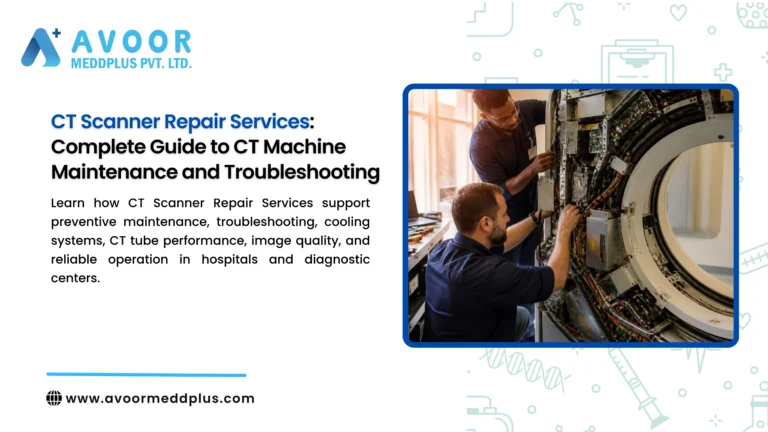
Read our related guide: [CT Scanner Repair Services].
4. Maintain PET/CT Cooling Systems
Thermal management is important for PET/CT equipment.
Cooling problems may contribute to:
- Temperature warnings
- System alarms
- Performance instability
- Unexpected shutdowns
- Equipment downtime
Potential causes can include:
- Cooling-unit faults
- Fan problems
- Pump issues
- Restricted airflow
- Temperature-sensor problems
- Environmental conditions
Preventive Approach
Service personnel should inspect applicable cooling components and verify that the equipment environment remains within the manufacturer’s specified operating range.
Repeated temperature warnings should not simply be ignored or bypassed.
5. Monitor Image Quality
Image quality should be monitored through an appropriate quality-control program.
PET/CT image-quality concerns may include:
- Artifacts
- Non-uniformity
- Reduced signal
- Unexpected noise
- Calibration-related changes
- Registration problems
A change in image quality does not automatically mean that the scanner is defective.
Possible causes can include:
- Patient movement
- Acquisition settings
- Reconstruction parameters
- Detector performance
- Calibration
- Hardware
- Software
Systematic investigation is therefore important.
6. Inspect the Patient Table and Positioning System
The patient table is important for both PET and CT acquisition.
Problems may include:
- Slow movement
- Positioning errors
- Movement failure
- Mechanical noise
- Intermittent operation
Accurate positioning is particularly important in hybrid imaging because PET and CT datasets must be spatially aligned appropriately.
Mechanical and positioning problems should be investigated by qualified technical personnel.
7. Review Error Codes and System Logs
Error codes can provide valuable diagnostic information.
Hospitals should maintain records of:
- Error code
- Date and time
- System status
- Scan type
- Frequency
- Service action
- Parts replaced
If the same error occurs repeatedly, the service team can use the history to investigate the underlying problem.
A detailed service history can also help identify equipment trends over time.
8. Maintain Electrical and Electronic Systems
PET/CT systems contain sensitive electronics and computer systems.
Electrical problems can contribute to:
- Unexpected shutdowns
- Communication errors
- System restarts
- Electronic faults
- Data-transfer problems
Maintenance should include appropriate inspection of applicable electrical and electronic systems.
Any work involving hazardous electrical or high-voltage components should be performed only by appropriately trained personnel.
9. Maintain Software and Communication Systems
Modern PET/CT systems rely heavily on software.
The scanner may need to communicate with:
- Hospital networks
- PACS
- Workstations
- Reporting systems
- Image archives
Problems may result in:
- Failed image transfer
- Reconstruction errors
- Software freezes
- Communication failures
- Slow workflow
Service teams should determine whether a problem originates in the scanner, computer system, software, network, or communication interface.
10. Maintain Accurate Service Documentation
Every service intervention should be documented appropriately.
A useful service record can contain:
- Equipment model
- Serial number
- Date of service
- Error code
- Problem description
- Diagnostic findings
- Work performed
- Parts replaced
- Performance checks
- Recommendations
- Next maintenance date
This information can become valuable when planning future repairs, AMC renewal, capital expenditure, or equipment replacement.
Common PET/CT Problems and Warning Signs
PET Detector Errors
Possible symptoms:
- Detector warnings
- Calibration failures
- Image-quality changes
- System alarms
CT Tube Problems
Possible symptoms:
- Tube-temperature warnings
- Exposure failures
- Scan interruptions
- Tube-related error codes
Cooling Problems
Possible symptoms:
- Temperature alarms
- System shutdowns
- Repeated cooling warnings
Gantry Problems
Possible symptoms:
- Rotation errors
- Unusual noise
- Vibration
- Positioning problems
Patient Table Problems
Possible symptoms:
- Movement failure
- Positioning errors
- Mechanical noise
Software Problems
Possible symptoms:
- System freezes
- Reconstruction failures
- Communication errors
- Unexpected restarts
PET Component Maintenance
PET Detector System
PET detectors are critical to the acquisition of functional imaging data.
Maintenance and quality-control procedures should follow the manufacturer’s requirements and applicable professional standards.
PET Calibration
Calibration is an important part of PET system performance.
Facilities should maintain appropriate calibration and quality-control procedures according to equipment requirements.
PET Electronics
Electronic problems may affect detector performance, communication, data acquisition, or system availability.
Qualified technical personnel should diagnose electronic faults.
CT Component Maintenance
The CT portion of a PET/CT system requires attention to:
X-Ray Tube
Monitor tube performance, temperature warnings, and related error messages.
Detector
Investigate calibration problems and image artifacts.
Gantry
Check rotation, mechanical operation, and abnormal vibration or noise.
High-Voltage System
High-voltage components require specialized technical expertise and appropriate safety procedures.
Patient Table
Check movement and positioning.
Cooling
Maintain appropriate cooling conditions for heat-generating components.
PET/CT Cooling System Maintenance
Why Cooling Matters
PET/CT equipment generates heat through multiple electronic and imaging components.
Maintaining appropriate thermal conditions can help support equipment reliability.
Facilities should monitor:
- Room temperature
- Humidity
- HVAC performance
- Cooling equipment
- Airflow
- Temperature alarms
If a system repeatedly reports overheating or cooling-related warnings, professional diagnosis should be arranged.
PET/CT Image-Quality Problems
Image quality is a critical consideration for PET/CT.
Potential problems can include:
PET Image Artifacts
May be related to:
- Detector performance
- Calibration
- Patient movement
- Reconstruction
- Electronics
CT Image Artifacts
May be associated with:
- Detector issues
- Tube performance
- Patient movement
- Calibration
- Reconstruction
PET/CT Registration Problems
PET and CT images must be appropriately aligned.
Potential contributing factors can include:
- Patient movement
- Positioning
- Table movement
- System calibration
- Mechanical issues
Any unexpected or persistent image-quality change should be investigated through appropriate quality-control and technical procedures.
PET/CT Preventive Maintenance Checklist
PET System
- Review system diagnostics
- Check detector performance
- Review calibration
- Check error logs
- Review image-quality trends
CT System
- Check tube performance
- Review tube warnings
- Inspect gantry
- Check detector performance
- Review CT calibration
Cooling System
- Check temperature
- Inspect cooling components
- Review alarms
- Check airflow
- Verify environmental conditions
Patient Table
- Check movement
- Verify positioning
- Inspect mechanical components
Software
- Review system logs
- Check reconstruction
- Check communication
- Review workstation performance
Documentation
- Record service
- Record repairs
- Record replaced parts
- Track downtime
- Schedule next maintenance
PET/CT Troubleshooting Guide
When a PET/CT system develops an error, use a structured approach.
Step 1: Record the Exact Error
Do not rely on memory.
Record the exact warning or error message.
Step 2: Identify the Affected System
Determine whether the problem appears related to:
- PET
- CT
- Gantry
- Cooling
- Table
- Software
- Communication
Step 3: Check Whether It Is Recurring
Recurring faults can provide important diagnostic information.
Step 4: Follow Approved Procedures
Use the manufacturer’s operator documentation for basic operator-level troubleshooting.
Step 5: Escalate Persistent Problems
If the problem continues, affects image quality, or prevents scanning, contact an appropriately qualified PET/CT service provider.
PET/CT AMC and CAMC Services
Hospitals can consider maintenance contracts for long-term PET/CT service.
PET/CT AMC
An Annual Maintenance Contract may include:
- Scheduled preventive maintenance
- Technical inspection
- Troubleshooting
- Breakdown support
- Service documentation
PET/CT CAMC
A Comprehensive Annual Maintenance Contract may provide broader coverage according to contract terms and can potentially include specified parts and labor.
Before signing, confirm whether the contract covers:
- PET detector components
- CT tube
- CT detector
- Cooling system
- Electronics
- Patient table
- Labor
- Emergency service
- Calibration
- Software support
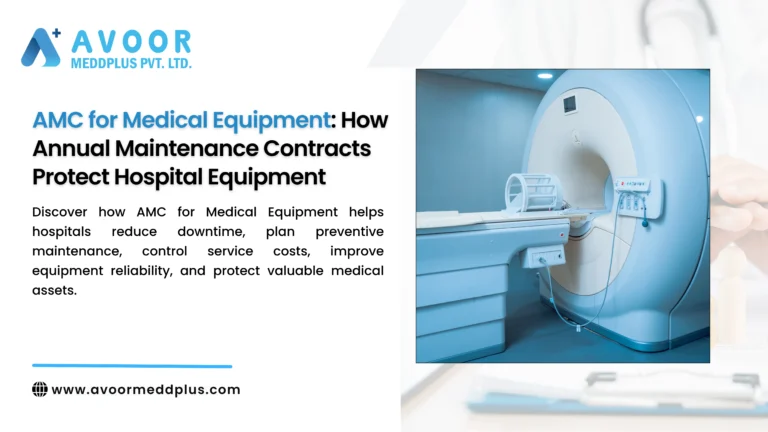
Read our related article: [AMC for Medical Equipment].
How to Choose PET CT Machine Service and Repair
1. Check PET/CT Experience
Look for a service provider with experience in hybrid imaging systems.
2. Verify Manufacturer and Model Expertise
Different PET/CT platforms can have significantly different architectures and service requirements.
3. Review Diagnostic Capability
Ask how the provider approaches recurring errors and complex faults.
4. Check Spare Parts Availability
Ask about availability of:
- Electronic boards
- Cooling components
- Mechanical parts
- CT components
- PET components
5. Review Response Times
Ask for clear response commitments for:
- Remote support
- On-site service
- Emergency calls
- Escalation
6. Review Service Documentation
A professional service provider should provide clear reports after service visits.
When to Call a PET/CT Repair Expert
Professional PET CT Machine Service and Repair should be considered when:
- PET detector errors recur
- CT tube warnings appear repeatedly
- Image quality changes
- Cooling alarms occur
- Gantry movement becomes abnormal
- Patient-table problems develop
- Calibration fails
- The system repeatedly restarts
- Image registration appears abnormal
- Communication problems persist
- Equipment downtime increases
Complex PET/CT systems should not be opened or repaired by unqualified personnel.
Why Choose Avoor Meddplus Pvt Ltd?
Avoor Meddplus Pvt Ltd provides professional PET CT Machine Service and Repair support for hospitals, diagnostic centers, and healthcare facilities.
Our service capabilities include:
- PET/CT Preventive Maintenance
- PET/CT Troubleshooting
- PET/CT Repair Support
- CT Subsystem Service
- PET System Diagnostics
- Cooling-System Support
- Electronic Diagnostics
- Medical Equipment PCB Repair
- Error-Code Analysis
- Image-Quality Investigation
- Calibration Support
- AMC Services
- CAMC Services
- Spare Parts Support
- Installation and Commissioning
Our approach focuses on systematic diagnosis, preventive maintenance, technical documentation, and equipment-specific service requirements.
For hospitals operating high-value PET/CT systems, a structured maintenance strategy can help improve service planning and reduce avoidable equipment interruptions.
Frequently Asked Questions
What is PET CT Machine Service and Repair?
PET CT Machine Service and Repair includes preventive maintenance, troubleshooting, diagnostics, corrective repair, calibration support, and technical servicing of PET/CT systems.
How often should a PET/CT machine be serviced?
Service frequency depends on the manufacturer, model, workload, environmental conditions, equipment age, and applicable requirements. Hospitals should follow manufacturer recommendations and their established maintenance program.
What are common PET/CT problems?
Common problems can involve PET detectors, CT tubes, CT detectors, gantry systems, cooling, patient tables, electronics, software, calibration, and image quality.
Why is PET/CT maintenance more complex than conventional CT maintenance?
PET/CT combines two imaging modalities, so maintenance must consider both PET and CT systems as well as their integration.
Can PET/CT downtime be reduced through preventive maintenance?
Preventive maintenance can help identify certain developing problems and support reliable equipment operation. It cannot eliminate every equipment failure or guarantee zero downtime.
What causes PET/CT image-quality problems?
Potential causes include detector performance, calibration, patient movement, CT tube or detector issues, reconstruction, electronics, software, and positioning.
Does PET/CT require specialized service?
Yes. PET/CT systems are highly specialized hybrid imaging systems and should be serviced by appropriately trained and qualified technical personnel.
What is PET/CT AMC?
PET/CT AMC is an annual maintenance agreement covering defined preventive maintenance and technical support.
What is PET/CT CAMC?
PET/CT CAMC is a comprehensive annual maintenance agreement that may provide broader coverage, potentially including specified parts and labor depending on the contract.
Conclusion
PET CT Machine Service and Repair is an important part of maintaining reliable hybrid imaging operations in hospitals and diagnostic centers.
PET/CT systems combine PET detectors, CT technology, cooling infrastructure, electronics, mechanical systems, computers, and specialized software.
A comprehensive maintenance strategy can help healthcare facilities:
- Identify developing faults
- Reduce avoidable downtime
- Monitor PET detector performance
- Maintain CT subsystem reliability
- Manage cooling-system issues
- Monitor image quality
- Track recurring errors
- Improve service planning
- Make better repair-versus-replacement decisions
The most effective approach combines preventive maintenance, professional troubleshooting, quality control, timely repair, environmental monitoring, and accurate service documentation.
For complex PET/CT systems, choosing an experienced service provider is especially important.
Need PET CT Machine Service and Repair?
Avoor Meddplus Pvt Ltd provides PET/CT service, repair support, preventive maintenance, electronic diagnostics, PCB repair, AMC/CAMC support, spare-parts assistance, and technical services.
Contact Avoor Meddplus Pvt Ltd for professional PET/CT machine service and repair support.