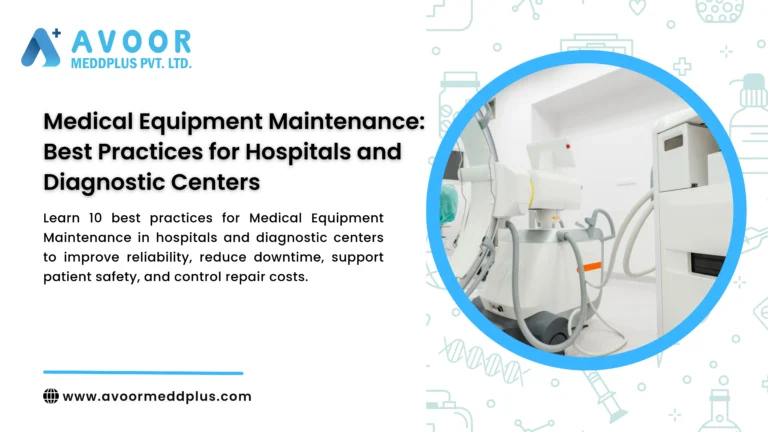

Healthcare organizations depend on Preventive Diagnostics for Medical Equipment to ensure every critical system performs accurately and safely. From CT scanners and MRI systems to ultrasound machines and digital X-ray units, preventive diagnostics help identify hidden issues before they become major failures. A proactive maintenance strategy significantly improves equipment reliability, minimizes downtime, enhances patient safety, and reduces operational costs.
For hospitals and diagnostic centers, reliable medical equipment is not just an operational necessity. it directly impacts patient care, diagnostic accuracy, and overall clinical efficiency.
What Is Preventive Diagnostics for Medical Equipment?
Understanding Preventive Diagnostics for Medical Equipment
Preventive Diagnostics for Medical Equipment is a proactive inspection and testing process designed to evaluate the health and performance of medical devices before unexpected failures occur.
Instead of waiting for equipment to malfunction, trained biomedical engineers perform routine inspections, calibration, software verification, electrical safety testing, component analysis, and performance validation.
The objective is simple:
- Detect hidden faults early
- Prevent unexpected breakdowns
- Maintain manufacturer specifications
- Improve equipment reliability
- Extend equipment lifespan
Why Medical Equipment Reliability Matters
Modern hospitals rely heavily on advanced imaging and diagnostic systems.
When equipment unexpectedly fails, hospitals may experience:
- Delayed patient diagnosis
- Increased patient waiting time
- Emergency repair expenses
- Revenue loss
- Reduced clinical productivity
- Higher operational risks
Reliable equipment ensures healthcare providers deliver accurate diagnoses while maintaining uninterrupted patient care.
How Preventive Diagnostics Works
Comprehensive Inspection Process
Preventive diagnostics typically includes:
Visual Inspection
Engineers inspect:
- Connectors
- Cables
- Power supplies
- Cooling systems
- Fans
- Mechanical assemblies
Electrical Safety Testing
Electrical testing verifies:
- Ground continuity
- Leakage current
- Insulation resistance
- Patient safety compliance
Functional Performance Testing
Every subsystem is tested to ensure:
- Accurate imaging
- Stable performance
- Proper communication
- Error-free operation
Software Diagnostics
Software checks include:
- Firmware validation
- System logs
- Error history
- Performance reports
- Configuration verification
Calibration Verification
Calibration ensures:
- Accurate image quality
- Correct measurements
- Reliable clinical output
- Compliance with manufacturer standards
10 Powerful Benefits of Preventive Diagnostics for Medical Equipment
1. Improves Medical Equipment Reliability
Routine diagnostics identify wear and potential failures before they interrupt clinical operations.
2. Reduces Unexpected Downtime
Hospitals can schedule maintenance during planned service windows rather than facing emergency breakdowns.
3. Extends Equipment Lifespan
Replacing worn components early prevents damage to expensive assemblies, extending the operational life of imaging systems.
4. Reduces Repair Costs
Early detection allows engineers to repair small issues before they develop into costly failures.
5. Improves Patient Safety
Properly functioning medical equipment delivers accurate diagnostic results and minimizes safety risks.
6. Maintains Imaging Accuracy
Routine calibration helps preserve image quality for:
- CT Scanners
- MRI Systems
- Digital X-ray
- PET/CT
- Cath Lab Systems
7. Enhances Regulatory Compliance
Preventive diagnostics support compliance with healthcare quality standards by maintaining service records and performance documentation.
8. Maximizes Equipment Availability
Reliable equipment means fewer cancelled appointments and improved workflow efficiency.
9. Protects High-Value Components
Monitoring cooling systems, power supplies, detectors, and electronic boards helps prevent major component failures.
10. Increases Return on Investment
Hospitals maximize the value of expensive medical equipment by reducing downtime and extending service life.
Equipment That Benefits from Preventive Diagnostics
Preventive diagnostics are recommended for:
- CT Scanners
- MRI Systems
- PET/CT Systems
- SPECT Systems
- Cath Lab Equipment
- Ultrasound Machines
- Digital X-ray Systems
- Mammography Systems
- C-Arm Machines
- Fluoroscopy Systems
- PACS Servers
- Medical Workstations
Best Practices for Hospitals
Hospitals should establish a structured preventive maintenance program that includes:
- Monthly equipment inspections
- Scheduled calibration
- Annual preventive maintenance
- Electrical safety testing
- Software updates
- Performance verification
- Detailed maintenance records
- Prompt replacement of aging components
A proactive maintenance strategy minimizes disruptions while ensuring continuous, reliable operation.
Why Choose Avoor Meddplus Pvt Ltd?
Avoor Meddplus Pvt Ltd provides professional preventive diagnostics, repair, installation, and maintenance services for advanced medical imaging equipment across India.
Our strengths include:
- 5+ years of industry expertise
- Certified biomedical service engineers
- Support for multiple equipment brands
- Preventive Maintenance (PM)
- AMC and CAMC services
- Installation and commissioning
- Spare parts support
- Fast response across India
- Cost-effective maintenance solutions
- Focus on maximizing equipment uptime
Whether your hospital operates a single imaging system or a complete diagnostic facility, our preventive diagnostics services help improve equipment reliability and reduce long-term maintenance costs.
Frequently Asked Questions
How often should preventive diagnostics be performed?
Most medical imaging equipment should undergo preventive diagnostics every 3 to 6 months, depending on manufacturer recommendations and equipment usage.
Why is preventive diagnostics important?
It identifies hidden faults before they become serious failures, improving equipment reliability and reducing downtime.
Does preventive diagnostics reduce repair costs?
Yes. Early detection helps avoid expensive component failures and emergency repairs.
Which medical equipment requires preventive diagnostics?
CT scanners, MRI systems, PET/CT, ultrasound, digital X-ray, Cath Lab, C-arm, and many other diagnostic systems benefit from routine diagnostics.
Can preventive diagnostics increase equipment lifespan?
Yes. Regular inspections and timely maintenance reduce wear, protect critical components, and extend the operational life of medical equipment.
Conclusion
Preventive Diagnostics for Medical Equipment is one of the most effective strategies for improving equipment reliability, reducing downtime, and ensuring uninterrupted patient care. Rather than reacting to unexpected failures, healthcare providers can proactively detect and resolve issues before they affect clinical operations.
By investing in routine diagnostics, preventive maintenance, and expert technical support, hospitals can extend equipment lifespan, improve diagnostic accuracy, reduce repair costs, and maximize the return on their medical technology investments.
If your hospital or diagnostic center is looking for reliable preventive maintenance and diagnostic services, Avoor Meddplus Pvt Ltd is ready to help with professional support, experienced engineers, and nationwide service coverage.