
Introduction
Routine Servicing for Medical Equipment is one of the most effective strategies for preventing unexpected breakdowns and reducing expensive emergency repairs in hospitals and diagnostic centers. Medical imaging systems such as CT scanners, MRI machines, PET/CT systems, ultrasound units, digital X-ray equipment, and Cath Lab systems are complex, high-value assets that require regular attention to maintain peak performance.
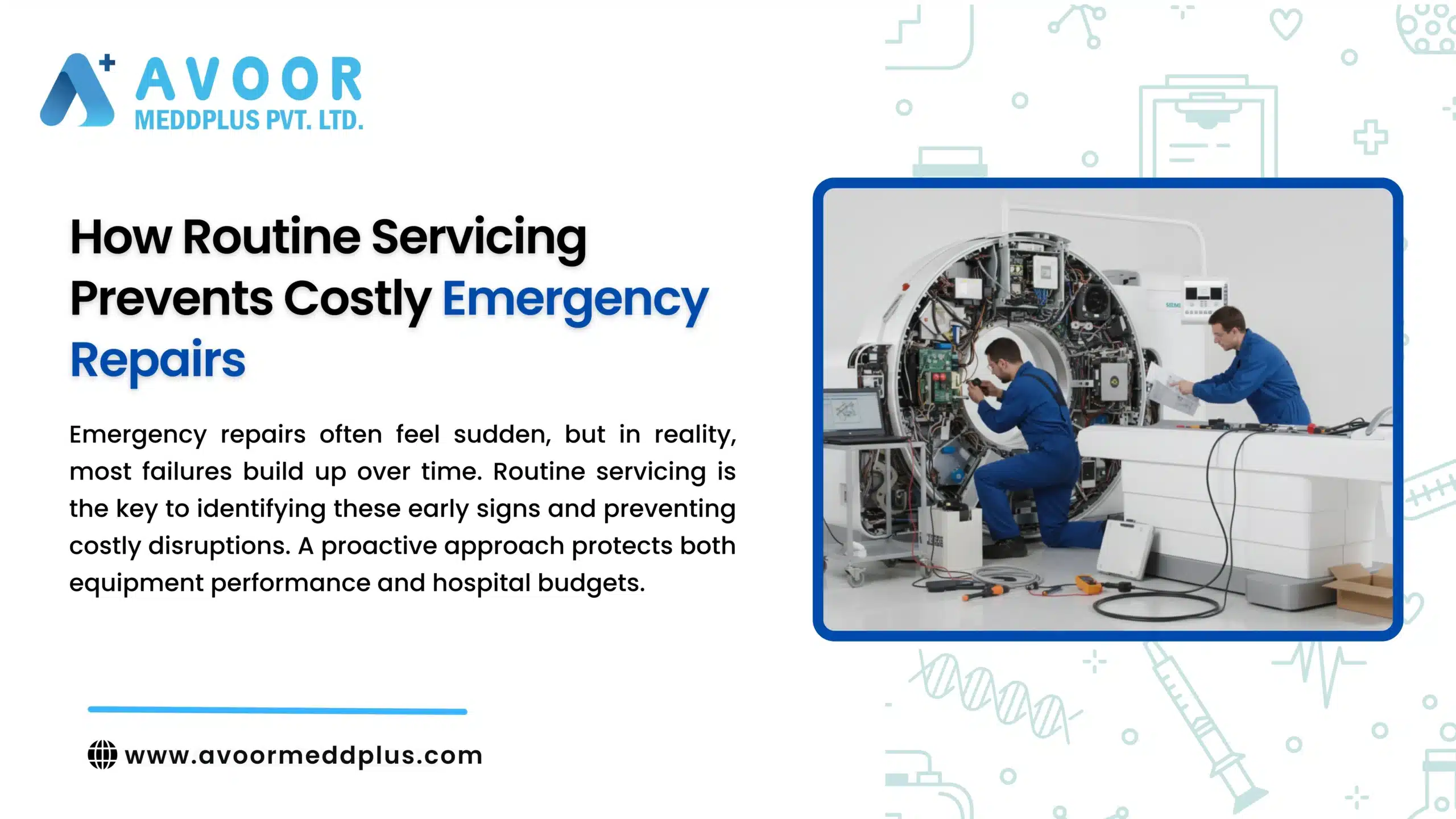
When routine servicing is neglected, small issues such as worn components, calibration drift, software errors, or cooling system inefficiencies can develop into major equipment failures. These failures often result in unplanned downtime, cancelled patient appointments, emergency repair costs, and disruptions to healthcare services.
By implementing a structured maintenance program, healthcare facilities can improve equipment reliability, protect their investment, and deliver uninterrupted patient care.
What Is Routine Servicing for Medical Equipment?
Understanding Routine Servicing
Routine Servicing for Medical Equipment is a scheduled maintenance process performed by qualified biomedical engineers to keep diagnostic and imaging equipment operating safely and efficiently.
Unlike emergency repairs that occur after a failure, routine servicing focuses on preventing problems before they affect clinical operations.
A comprehensive routine service generally includes:
- Visual inspection
- Electrical safety testing
- Calibration verification
- Mechanical inspection
- Cooling system cleaning
- Software and firmware updates
- Performance testing
- Image quality verification
- Replacement of worn components
- Maintenance documentation
These activities help identify potential issues early and maintain consistent equipment performance.
Why Preventive Servicing Matters
Medical equipment plays a vital role in patient Routine Servicing for Medical Equipment diagnosis and treatment. Unexpected equipment failures can delay clinical decisions, increase patient waiting times, and reduce hospital productivity, and Routine Servicing for Medical Equipment.
Routine servicing offers several advantages:
- Detects hidden faults before failure
- Improves equipment reliability
- Extends equipment lifespan
- Enhances patient safety
- Reduces unexpected downtime
- Maintains image quality
- Supports regulatory compliance
- Lowers long-term maintenance costs
Hospitals that follow preventive servicing schedules are better equipped to deliver consistent, high-quality healthcare services.
Common Causes of Emergency Equipment Repairs
Emergency repairs often result from issues that could have been detected during routine maintenance.
Common causes include:
Component Wear
Moving parts, cooling fans, connectors, bearings, and cables naturally wear over time and require periodic inspection.
Calibration Drift
Without regular calibration, imaging systems may produce inaccurate diagnostic results, increasing the need for corrective maintenance.
Electrical Problems
Power supply instability, damaged wiring, grounding issues, and voltage fluctuations can lead to sudden equipment failures.
Software Issues
Outdated firmware, corrupted software, and configuration errors may interrupt system functionality.
Cooling System Failure
Blocked air filters, faulty fans, and overheating can damage sensitive electronic components if not addressed promptly.
Routine servicing helps identify and resolve these issues before they become costly emergencies.
10 Powerful Benefits of Routine Servicing for Medical Equipment
1. Prevents Unexpected Equipment Failures
Routine inspections identify early signs of wear, allowing engineers to replace or repair components before they fail.
2. Reduces Emergency Repair Costs
Emergency repairs often require urgent labor, expedited spare parts, and prolonged downtime.
Routine servicing minimizes these expenses by addressing minor issues early.
3. Improves Equipment Reliability
Consistent maintenance keeps medical imaging systems operating within manufacturer specifications, reducing operational interruptions.
4. Extends Equipment Lifespan
Replacing worn parts and maintaining system performance helps hospitals maximize the life of expensive imaging equipment.
5. Enhances Patient Safety
Properly maintained equipment produces accurate diagnostic images while reducing the risk of equipment-related safety incidents.
Medical Equipment That Benefits from Routine Servicing
Routine servicing is recommended for:
- CT Scanners
- MRI Systems
- PET/CT Scanners
- SPECT Systems
- Digital X-ray Equipment
- Mammography Systems
- Ultrasound Machines
- Cath Lab Equipment
- C-Arm Systems
- Fluoroscopy Systems
- PACS Servers
- Medical Imaging Workstations
Each of these systems contains advanced electrical, electronic, and mechanical components that require scheduled maintenance to ensure dependable performance.