
Introduction
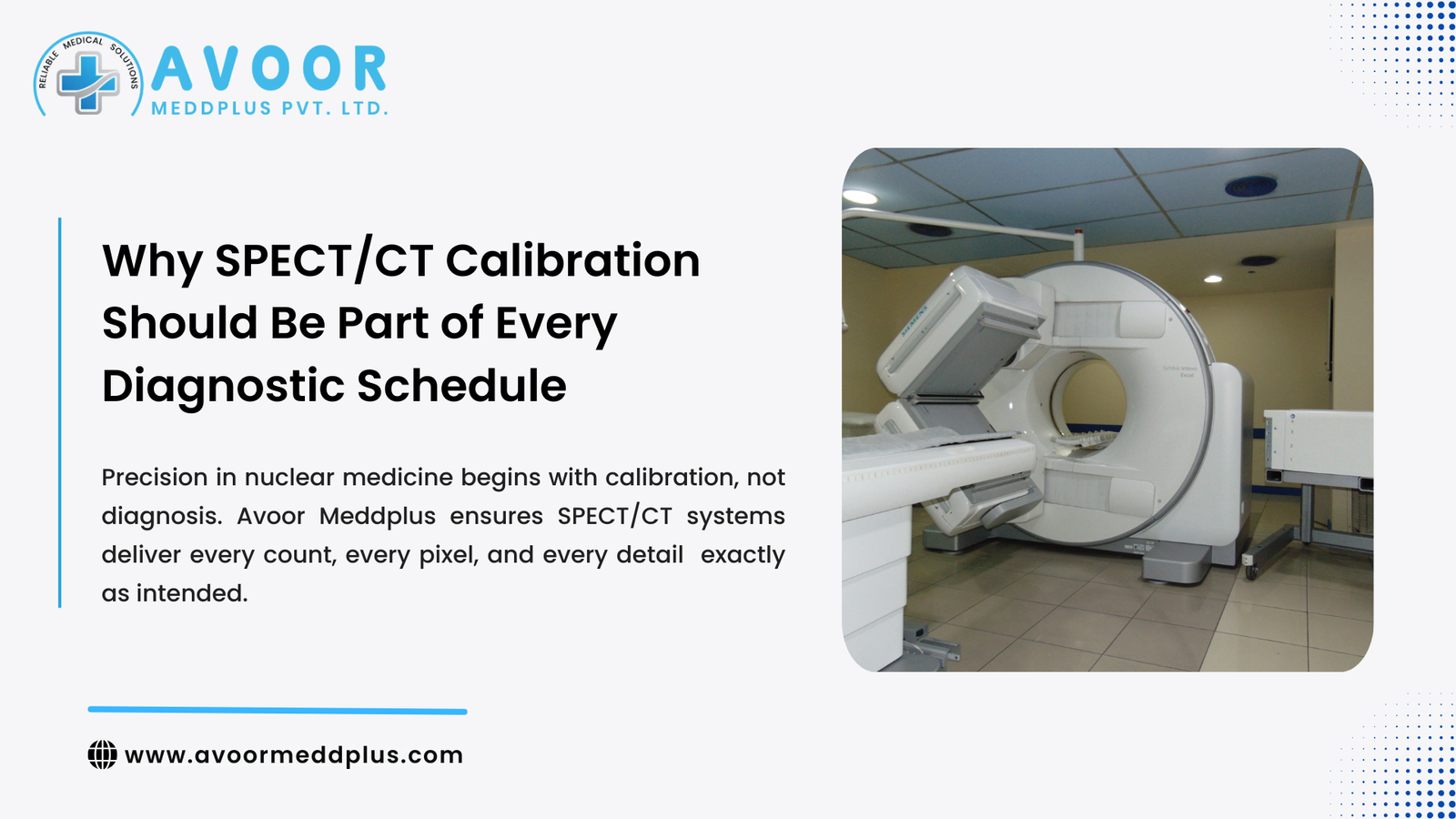
In nuclear medicine, precision is everything. A SPECT/CT system relies on accurate alignment between functional imaging (SPECT) and anatomical imaging (CT). Without proper SPECT/CT calibration, scans can produce misaligned images, incorrect uptake values, and diagnostic errors that impact patient care.
That is why every diagnostic facility must include SPECT/CT calibration as a routine part of its maintenance schedule not just as a corrective action, but as a preventive requirement. At Avoor Meddplus, we help hospitals ensure consistent accuracy, safety, and performance through OEM-grade calibration protocols.
1. What Is SPECT/CT Calibration?
SPECT/CT calibration is a structured process of adjusting, testing, and validating the alignment between the SPECT detector system and the CT subsystem. It ensures that functional and anatomical images overlay perfectly during reconstruction.
Proper calibration covers:
- Energy calibration
- Center-of-rotation calibration
- Gantry alignment
- Uniformity correction
- CT-to-SPECT fusion accuracy
- System performance validation
Consistent calibration helps maintain dependable image quality throughout the system’s lifecycle.
2. Why Calibration Matters in SPECT/CT Imaging
SPECT/CT systems are complex machines combining radiotracer imaging and CT-based anatomy mapping. Misalignment or incorrect energy settings can cause inaccurate tracer distribution readings, affecting diagnosis for:
- Oncology
- Cardiology
- Bone scanning
- Neurology
- Infection imaging
Incorrect calibration may lead to misinterpretation, unnecessary repeat scans, or delayed diagnosis.
3. 5 Expert Reasons SPECT/CT Calibration Must Be Routine
1️⃣ Ensures Diagnostic Accuracy:
Calibration aligns the SPECT and CT images precisely, ensuring correct lesion localization and uptake analysis.
2️⃣ Avoids Repeat Scans:
Proper calibration reduces unnecessary exposure and operational delays caused by image artifacts or misalignment.
3️⃣ Maintains Radiation Safety:
Calibration checks ensure that both detectors and X-ray components operate within regulated radiation levels.
4️⃣ Improves System Performance:
A well-calibrated SPECT/CT system provides stable output, higher throughput, and consistent clinical workflow.
5️⃣ Complies With AERB/NABH Standards:
Routine calibration meets mandatory nuclear medicine safety and quality requirements set by regulatory authorities.
4. How SPECT/CT Calibration Works (Technical Steps)
Avoor Meddplus engineers follow OEM-calibrated procedures for SPECT/CT systems that include:
- Energy Peaking: Ensures detectors respond accurately to radionuclide energy levels.
- Uniformity Testing: Verifies uniform detector response across all pixels.
- Collimator Verification: Confirms mechanical integrity of collimators used for different imaging protocols.
- CT-SPECT Alignment: Ensures accurate fusion between anatomical and functional images.
- Daily and Weekly QC Tests: Including bar phantom tests, COR calibration, and system warm-up procedures.
These steps ensure the SPECT/CT unit continues to deliver accurate and reliable clinical images.
5. Impact of Poor Calibration on Patient Care
When SPECT/CT calibration is overlooked, several issues may occur:
- Blurred or misregistered images
- Incorrect SUV (Standardized Uptake Value) readings
- Non-uniform hot/cold spots
- System errors leading to downtime
- Misdiagnosis or delayed reporting
Poor calibration compromises patient safety, clinical confidence, and hospital reputation.
6. Preventive Maintenance + Calibration = Maximum Uptime
Calibration should be integrated into preventive maintenance schedules rather than done only when issues occur.
At Avoor Meddplus, our SPECT/CT maintenance includes:
- System performance testing
- OEM-grade calibration
- Detector and hardware inspection
- Software optimization
- Radiation safety tests
This combined approach reduces long-term repair costs and extends equipment life.
7. Compliance and Regulatory Requirements
SPECT/CT systems fall under strict regulatory guidelines for performance and radiation safety. Calibration is a mandatory compliance requirement in:
- AERB operational safety standards
- IAEA imaging performance guidelines
- NABH hospital accreditation criteria
👉 Reference: AERB Nuclear Medicine Equipment Guidelines
(Outbound link satisfies Rank Math requirement)
8. Why Avoor Meddplus Is Your Trusted Calibration Partner
- Certified nuclear medicine engineers
- OEM-grade calibration tools and phantoms
- Accurate documentation for audits
- Nationwide service support
- Proven track record in multi-modality calibration
From PET/CT to SPECT/CT systems, Avoor Meddplus ensures imaging precision, compliance, and long-term performance reliability.
Conclusion
In modern nuclear medicine, SPECT/CT calibration is not optional — it is essential. Proper calibration helps maintain diagnostic accuracy, ensures radiation safety, prevents repeat scans, and improves operational efficiency.