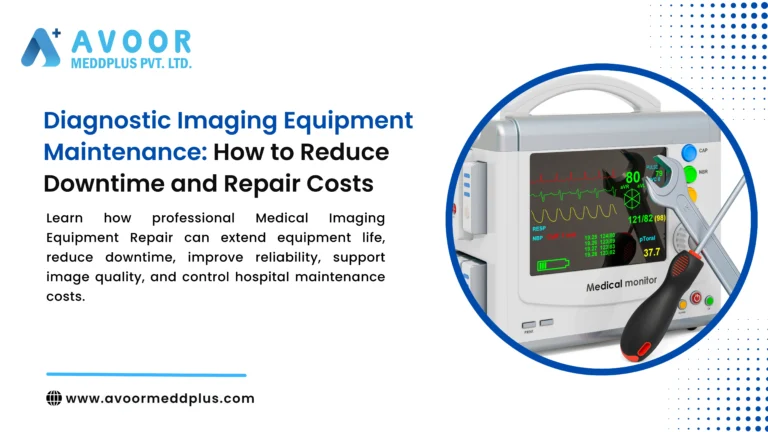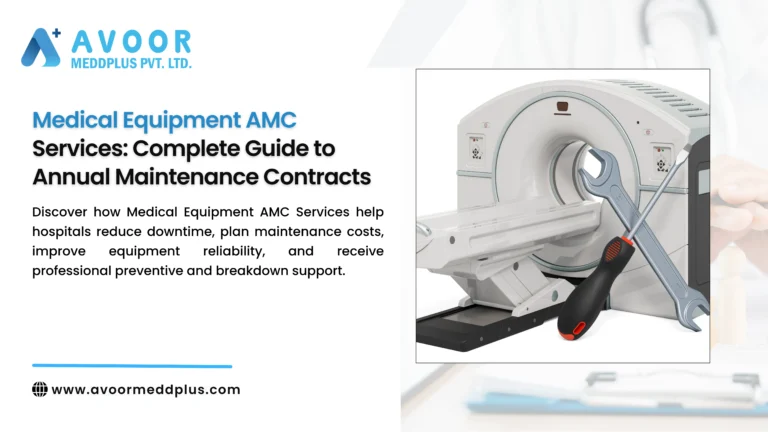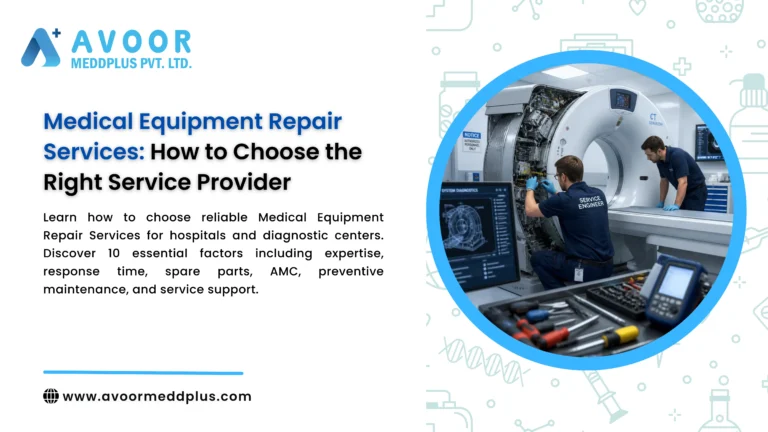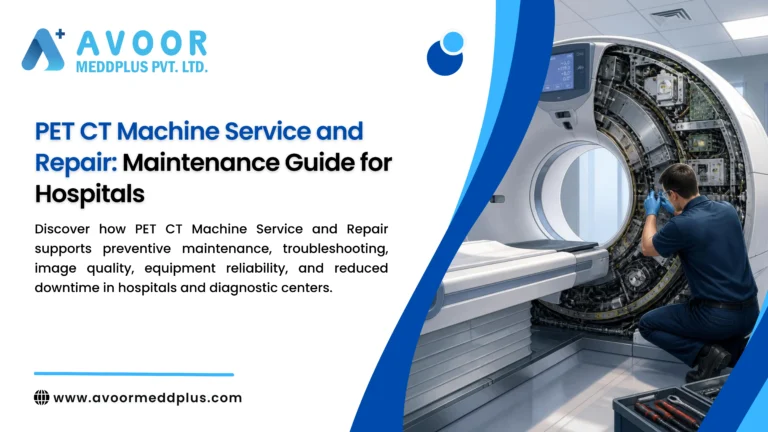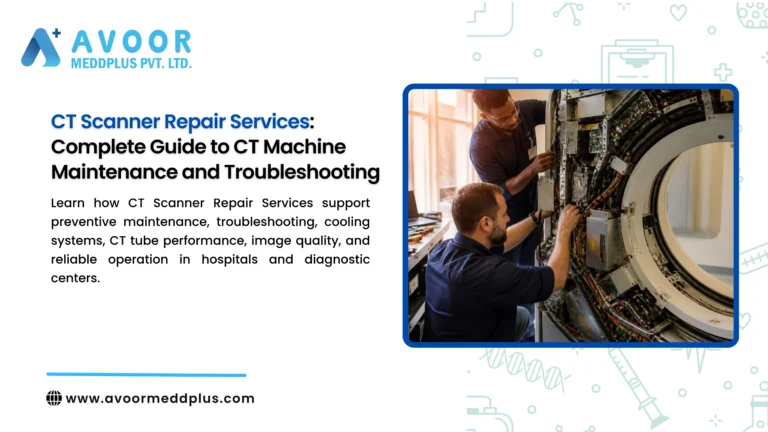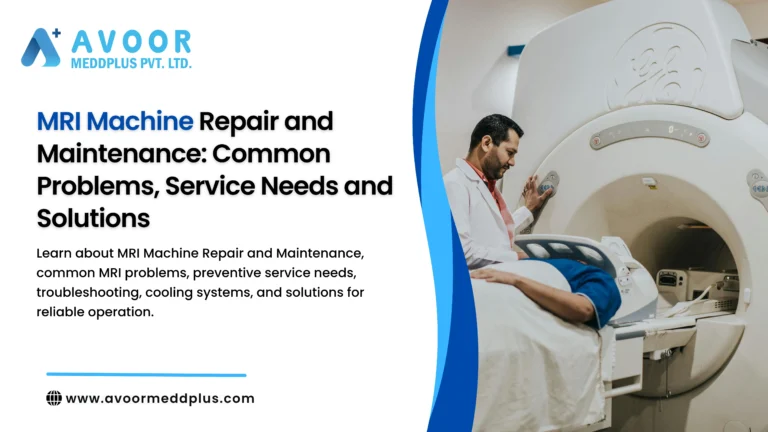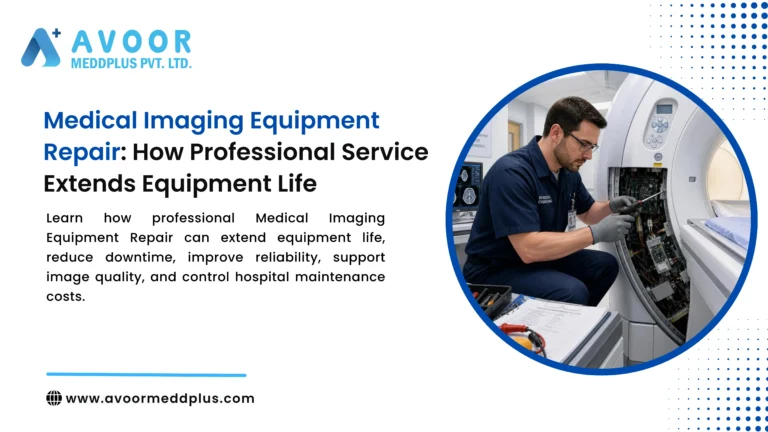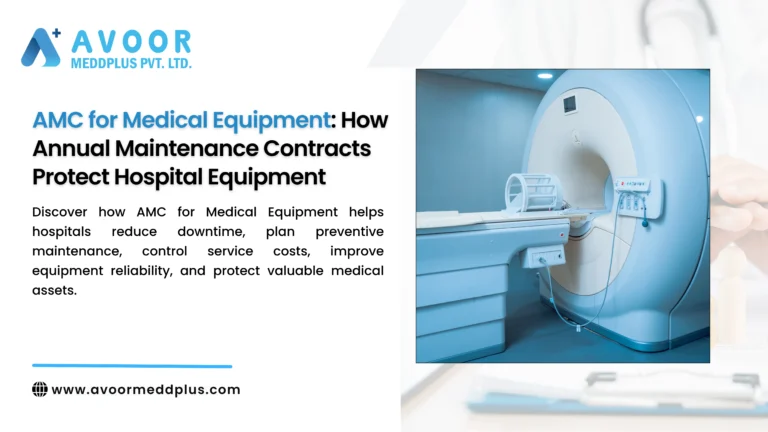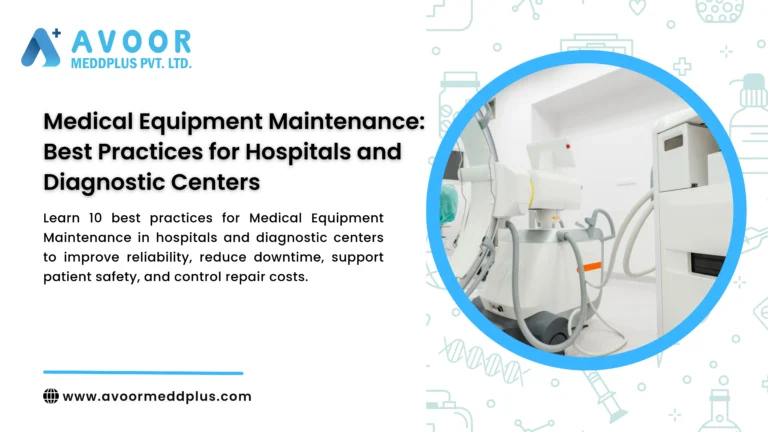

Medical Equipment Maintenance is essential for hospitals and diagnostic centers that depend on reliable equipment for everyday patient care. From CT scanners, MRI systems, PET/CT and SPECT/CT equipment to X-ray systems, C-Arms, ultrasound machines, patient monitors, and laboratory equipment, healthcare facilities operate a wide range of sophisticated technologies.
When equipment is properly maintained, healthcare organizations can identify developing problems earlier, improve equipment availability, and plan repairs more effectively.
Poor maintenance, on the other hand, can contribute to unexpected breakdowns, operational interruptions, higher repair costs, and delays in diagnostic services.
A strong maintenance program should therefore combine preventive maintenance, performance testing, calibration, corrective repair, documentation, environmental monitoring, and professional technical support.
This guide explains the best practices hospitals and diagnostic centers can use to build a more reliable medical equipment maintenance program.
Table of Contents
- What Is Medical Equipment Maintenance?
- Why Medical Equipment Maintenance Is Important
- 10 Best Practices for Medical Equipment Maintenance
- Preventive vs Corrective Maintenance
- Maintenance for Medical Imaging Equipment
- Medical Equipment Maintenance Checklist
- Common Maintenance Mistakes to Avoid
- AMC and CAMC for Medical Equipment
- When to Call a Professional Service Provider
- How Avoor Meddplus Can Help
- Frequently Asked Questions
- Conclusion
What Is Medical Equipment Maintenance?
Understanding Medical Equipment Maintenance
Medical Equipment Maintenance refers to the activities performed to keep healthcare equipment operating safely, reliably, and within its intended performance specifications.
Depending on the equipment, maintenance may include:
- Preventive inspections
- Functional testing
- Electrical safety testing
- Calibration
- Performance verification
- Cleaning and environmental checks
- Error-log analysis
- Software and system checks
- Mechanical inspection
- Component replacement
- Corrective repair
- Quality-control testing
The maintenance requirements of a CT scanner, MRI system, ultrasound machine, patient monitor, or laboratory analyzer can be very different.
Therefore, maintenance programs should be based on the manufacturer’s service requirements, applicable regulations, equipment risk, usage, and facility procedures.
Why Medical Equipment Maintenance Is Important
1. Reduces Unexpected Equipment Downtime
Equipment failures can interrupt clinical workflows.
For example, if a CT scanner becomes unavailable unexpectedly, scheduled examinations may need to be delayed, rescheduled, or transferred to another facility.
Preventive maintenance helps identify certain developing issues before they become major failures.
2. Supports Patient Safety
Medical equipment is used directly or indirectly in patient diagnosis, monitoring, treatment, and care.
Regular testing and maintenance can help identify equipment conditions that may require correction before the device is returned to routine clinical use.
3. Protects Equipment Investment
Modern medical equipment can represent a substantial capital investment.
Proper maintenance helps healthcare facilities manage equipment throughout its useful service life and potentially reduce avoidable component failures.
4. Improves Equipment Reliability
A structured maintenance program provides a systematic way to monitor equipment condition instead of waiting for failures to occur.
5. Helps Control Repair Costs
A developing fault may sometimes be easier and less disruptive to address when identified early.
This does not mean preventive maintenance eliminates major repairs, but it can improve maintenance planning and reduce avoidable emergency interventions.
10 Best Practices for Medical Equipment Maintenance
1. Create an Equipment Inventory
The first step in an effective Medical Equipment Maintenance program is knowing exactly what equipment the facility operates.
An equipment inventory should ideally include:
- Equipment name
- Manufacturer
- Model
- Serial number
- Installation date
- Department
- Location
- Service status
- Maintenance frequency
- Warranty information
- Service-contract details
High-risk and high-value equipment should receive appropriate priority.
2. Follow Manufacturer Maintenance Requirements
Manufacturers provide specific maintenance and inspection recommendations for their equipment.
These may include:
- Service intervals
- Calibration requirements
- Performance checks
- Component inspections
- Software requirements
- Replacement intervals
- Safety procedures
Generic maintenance checklists should not replace manufacturer-specific instructions.
For complex systems such as CT, MRI, PET/CT, and SPECT/CT, manufacturer service documentation is particularly important.
3. Implement Preventive Maintenance
What Is Preventive Maintenance?
Preventive maintenance involves scheduled activities designed to identify and address equipment problems before they result in unexpected failure.
Depending on the device, preventive maintenance may include:
- Visual inspection
- Functional testing
- Electrical safety checks
- Mechanical inspection
- Calibration
- Cleaning
- Cooling-system inspection
- Performance testing
- Error-log review
The frequency should be determined according to equipment requirements, risk, workload, and applicable guidance.
4. Monitor Equipment Error Codes
Recurring error messages can provide valuable information about equipment condition.
Maintenance teams should record:
- Error code
- Date and time
- Equipment status
- Frequency
- Operating conditions
- Corrective action
For example, repeated CT tube temperature warnings may warrant investigation of the tube, cooling system, workload, or other relevant factors.
Likewise, recurring communication errors in an imaging system may indicate an issue involving electronics, networking, software, or another subsystem.
Error codes should not simply be cleared repeatedly without investigating recurring faults.
5. Maintain Accurate Service Records
Documentation is an important part of professional equipment maintenance.
A service history can include:
- Preventive maintenance dates
- Repairs
- Error codes
- Calibration results
- Component replacements
- Technician observations
- Equipment downtime
- Recommendations
- Next service date
Good records allow maintenance teams to identify recurring failures and make better replacement or budgeting decisions.
Medical Equipment Maintenance for Imaging Systems
CT Scanner Maintenance
CT scanners contain multiple complex systems, including:
- X-ray tube
- Detectors
- High-voltage systems
- Gantry
- Patient table
- Cooling systems
- Data acquisition electronics
- Computers
Preventive maintenance should address the applicable mechanical, electrical, thermal, imaging, and software systems.
Read our related guide on [CT Scanner Repair and Maintenance] as an internal WordPress link.
MRI Maintenance
MRI systems require specialized maintenance because they incorporate magnetic, RF, gradient, electronic, cooling, and computing systems.
Maintenance must be performed by appropriately trained personnel following manufacturer and facility safety procedures.
PET/CT Maintenance
PET/CT systems combine PET and CT technologies.
Maintenance may include:
- Detector performance
- Calibration
- CT subsystem checks
- Cooling-system inspection
- Image-quality verification
- Electronics diagnostics
- Mechanical inspection
Read our related article on [PET/CT Repair and Maintenance].
SPECT/CT Maintenance
SPECT/CT systems combine nuclear medicine imaging and CT technology.
Because multiple subsystems are integrated, maintenance should address both the nuclear medicine and CT components.
6. Monitor Environmental Conditions
Environmental conditions can significantly affect some medical equipment.
Depending on the equipment, facilities may need to monitor:
- Temperature
- Humidity
- HVAC performance
- Airflow
- Dust
- Cooling
- Electrical power quality
High temperatures can increase thermal stress on electronic components.
Poor airflow or cooling can also contribute to equipment overheating.
For sensitive imaging systems, environmental conditions should remain within the manufacturer’s specified operating range.
7. Perform Calibration and Performance Testing
Calibration and performance testing help determine whether equipment continues to operate within applicable specifications.
Depending on the equipment, testing may evaluate:
- Accuracy
- Image quality
- Electrical performance
- Measurement performance
- Radiation output
- Detector response
- Mechanical positioning
- Patient-monitoring accuracy
The exact tests and acceptance criteria vary by equipment type.
Testing should be performed by appropriately qualified personnel using suitable procedures and equipment.
8. Train Equipment Operators
Maintenance is not only the responsibility of biomedical engineers or service technicians.
Equipment operators can contribute significantly by recognizing early warning signs.
Operators should know how to:
- Use equipment according to approved procedures
- Perform permitted basic checks
- Recognize abnormal behavior
- Record error messages
- Report faults
- Follow equipment shutdown procedures
- Escalate safety concerns
Operators should not perform unauthorized repairs or open equipment cabinets.
9. Track Equipment Downtime
Tracking downtime helps facilities understand equipment reliability.
Useful measurements can include:
- Number of failures
- Total downtime
- Average repair duration
- Recurring faults
- Emergency service calls
- Component replacement frequency
For high-value imaging equipment, downtime analysis can help management determine whether continued repair, a maintenance contract, refurbishment, or equipment replacement should be considered.
10. Use Professional Technical Support
Complex medical equipment requires specialized technical expertise.
Professional service providers can support:
- Preventive maintenance
- Corrective repairs
- Fault diagnosis
- Electronic troubleshooting
- PCB repair
- Calibration support
- Spare-parts sourcing
- AMC and CAMC services
- Installation and commissioning
The objective should be to identify the root cause of a failure rather than simply replacing components based on symptoms.
Preventive vs Corrective Maintenance
Preventive Maintenance
Preventive maintenance is planned in advance.
Examples include:
- Scheduled inspection
- Calibration
- Performance testing
- Cooling-system checks
- Component inspection
- Electrical safety testing
Main objective:
Prevent or identify potential failures before they cause significant disruption.
Corrective Maintenance
Corrective maintenance occurs after a fault has been identified.
Examples include:
- Replacing a failed component
- Repairing a circuit board
- Correcting a mechanical problem
- Resolving a communication fault
- Repairing a cooling-system issue
Main objective:
Restore equipment to appropriate operating condition after a fault occurs.
A reliable healthcare maintenance strategy generally requires both approaches.
Medical Equipment Maintenance Checklist
Equipment Management
- Maintain an updated equipment inventory
- Record manufacturer and model
- Record service history
- Track warranty status
- Track AMC/CAMC coverage
- Identify high-risk equipment
Preventive Maintenance
- Follow manufacturer maintenance schedules
- Perform required inspections
- Complete functional testing
- Perform calibration where applicable
- Check electrical safety
- Inspect mechanical components
Imaging Equipment
- Review error logs
- Check image quality
- Inspect cooling systems
- Review calibration results
- Monitor equipment performance
- Investigate recurring faults
Documentation
- Record every service visit
- Document replaced components
- Record equipment downtime
- Track recurring failures
- Record recommendations
- Schedule the next maintenance
Common Medical Equipment Maintenance Mistakes
Ignoring Recurring Error Messages
Repeated warnings may indicate a developing problem.
Ignoring them can allow the fault to become more disruptive.
Delaying Preventive Maintenance
Skipping scheduled maintenance may increase the likelihood of unexpected equipment problems.
Using Unqualified Technicians
Complex medical equipment requires appropriate technical training and access to relevant service information.
Poor Documentation
Without accurate service records, it becomes difficult to identify recurring failures.
Ignoring Environmental Conditions
Temperature, humidity, cooling, and power conditions can affect sensitive equipment.
Replacing Parts Without Proper Diagnosis
Replacing components without identifying the underlying cause can result in unnecessary costs and repeated failures.
Medical Equipment AMC and CAMC
Hospitals and diagnostic centers may use Annual Maintenance Contracts (AMC) or Comprehensive Annual Maintenance Contracts (CAMC) to manage ongoing service requirements.
AMC
An AMC generally provides defined preventive and corrective maintenance support according to the contract.
CAMC
A CAMC can provide broader coverage depending on the agreement, including specified parts and labor.
Before signing a maintenance contract, facilities should clarify:
- Preventive maintenance frequency
- Response time
- Emergency support
- Parts coverage
- Labor coverage
- Calibration support
- Software support
- Exclusions
- Reporting requirements
Contract terms should be matched to the equipment’s age, workload, criticality, and expected service requirements.
When to Call a Professional Medical Equipment Service Provider
Professional technical support should be requested when:
- Equipment repeatedly displays errors
- Image quality changes unexpectedly
- Calibration repeatedly fails
- Equipment overheats
- The system shuts down unexpectedly
- Mechanical movement becomes abnormal
- Electrical safety concerns arise
- Communication errors persist
- Equipment becomes unavailable
- A safety-related problem is suspected
Do not attempt unauthorized repairs on medical equipment.
Why Choose Avoor Meddplus Pvt Ltd?
Avoor Meddplus Pvt Ltd provides professional Medical Equipment Maintenance and technical support for hospitals, diagnostic centers, and healthcare facilities.
Our service capabilities include:
- Medical Equipment Repair
- Preventive Maintenance
- CT Scanner Repair
- MRI Maintenance
- PET/CT Service
- SPECT/CT Service
- X-Ray Equipment Support
- C-Arm Service
- Medical Equipment PCB Repair
- Electronic Fault Diagnosis
- Calibration Support
- AMC Services
- CAMC Services
- Spare Parts Support
- Installation and Commissioning
Our approach focuses on preventive maintenance, systematic troubleshooting, and root-cause diagnosis.
For healthcare organizations managing critical medical equipment, a structured service strategy can help improve reliability, reduce avoidable downtime, and support long-term equipment planning.
Frequently Asked Questions
What is Medical Equipment Maintenance?
Medical Equipment Maintenance includes preventive inspection, testing, calibration, servicing, troubleshooting, repair, and other activities required to keep healthcare equipment operating appropriately.
How often should medical equipment be maintained?
The frequency depends on the equipment type, manufacturer recommendations, workload, risk, age, operating environment, and applicable requirements.
What is preventive maintenance in a hospital?
Preventive maintenance involves scheduled inspections and servicing intended to identify potential problems before they result in unexpected equipment failure.
Why is medical equipment maintenance important?
It helps healthcare facilities manage equipment reliability, support patient safety, reduce unexpected downtime, plan repairs, and protect equipment investments.
What equipment requires preventive maintenance?
Almost all clinical and diagnostic equipment may require some form of preventive maintenance. The specific requirements vary significantly between devices.
Can preventive maintenance reduce equipment downtime?
Preventive maintenance can help identify developing problems and improve maintenance planning. It cannot eliminate all failures, but it can reduce certain avoidable interruptions.
What is the difference between AMC and CAMC?
An AMC provides maintenance and service coverage according to defined contract terms. CAMC generally provides broader comprehensive coverage, potentially including specified spare parts and labor.
Can medical equipment PCB boards be repaired?
Depending on the equipment, PCB condition, component availability, manufacturer requirements, and technical feasibility, specialized PCB diagnosis and repair may be possible.
When should a hospital replace equipment instead of repairing it?
Replacement decisions depend on equipment age, repair frequency, parts availability, manufacturer support, clinical requirements, operating costs, safety considerations, and total cost of ownership.
Conclusion
Medical Equipment Maintenance is a fundamental part of effective healthcare equipment management.
Hospitals and diagnostic centers depend on sophisticated equipment every day, and unexpected failures can disrupt patient services and operational workflows.
A strong maintenance program should include:
- Equipment inventory
- Preventive maintenance
- Corrective repair
- Calibration
- Performance testing
- Environmental monitoring
- Error-log analysis
- Operator training
- Accurate service documentation
- Professional technical support
The objective is not simply to repair equipment after it breaks. A proactive approach helps healthcare facilities understand equipment condition, identify developing problems, plan maintenance, and make better long-term investment decisions.
For high-value equipment such as CT, MRI, PET/CT, SPECT/CT, X-ray, and other diagnostic systems, professional maintenance can play an important role in supporting equipment reliability and availability.
Need Medical Equipment Maintenance Support?
Avoor Meddplus Pvt Ltd provides professional medical equipment repair, preventive maintenance, technical diagnostics, AMC/CAMC services, spare-parts support, and installation assistance.