Introduction
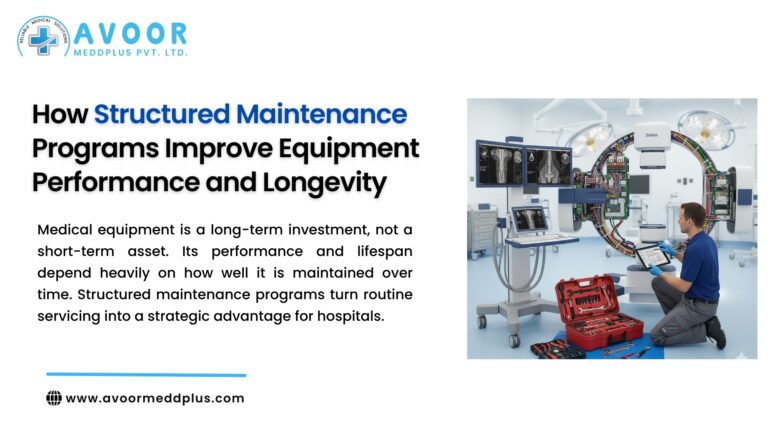
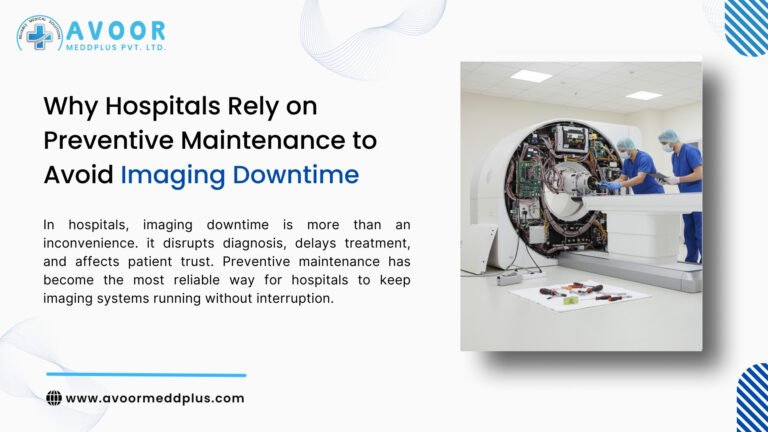
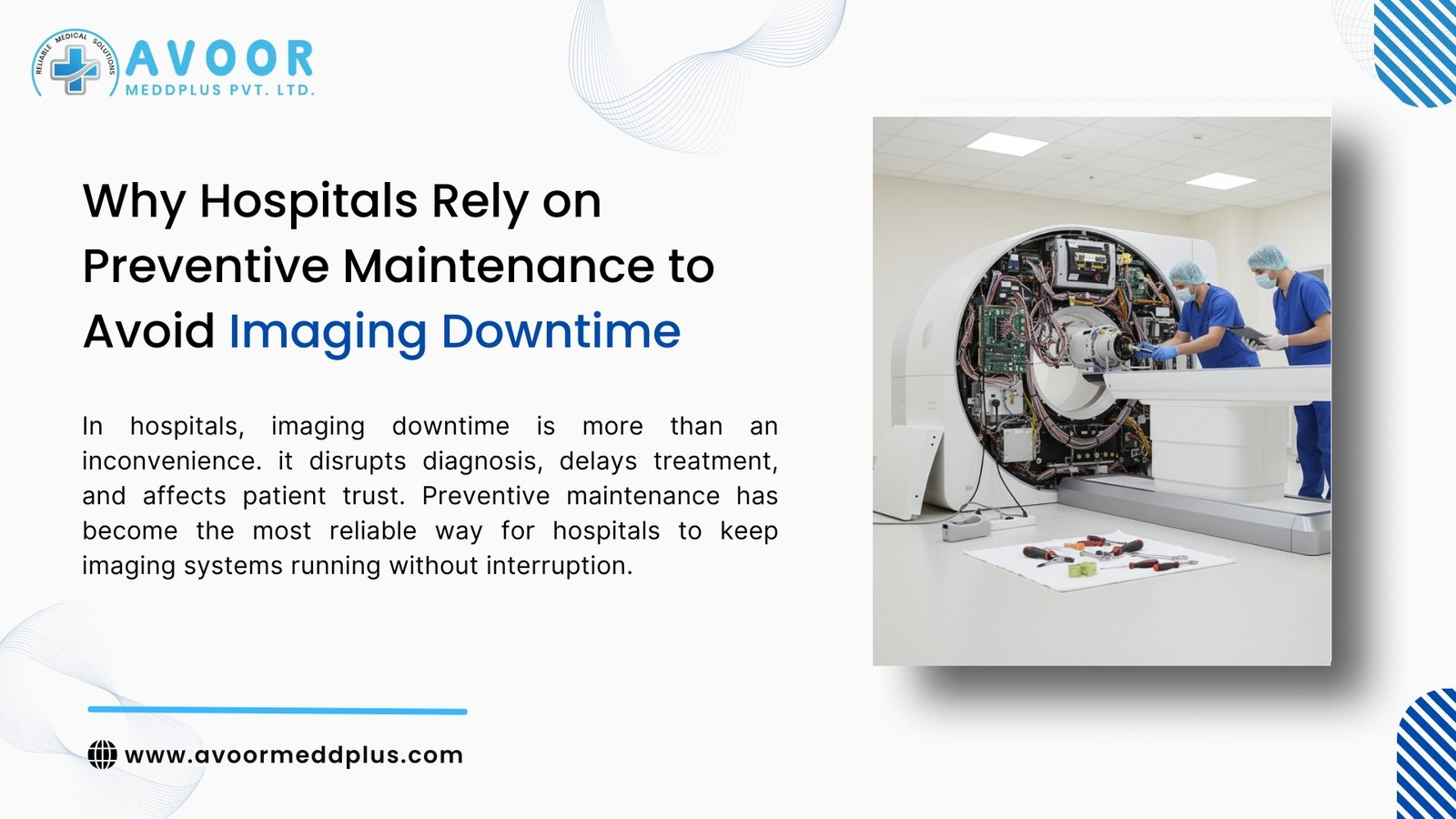
In today’s fast-paced healthcare environment, imaging systems are central to diagnosis, treatment planning, and emergency care. CT, PET/CT, DR, C-ARM, SPECT/CT, and mammography equipment operate continuously to support clinicians and patients. Any unexpected breakdown can immediately disrupt clinical workflows. This is why preventive maintenance avoid imaging downtime has become a strategic priority for hospitals.
Rather than waiting for failures to occur, hospitals now rely on structured preventive maintenance programs to ensure uptime, safety, and diagnostic accuracy. At Avoor Meddplus, preventive maintenance is designed to detect issues early, stabilize performance, and keep imaging systems available when they are needed most.
1. Preventive Maintenance Avoid Imaging Downtime by Detecting Issues Early
One of the primary reasons hospitals rely on preventive maintenance is early fault detection. Imaging systems rarely fail suddenly without warning. Small indicators such as temperature fluctuations, calibration drift, or intermittent errors often appear first.
Preventive maintenance helps by:
- Identifying worn components before failure
- Detecting power and cooling irregularities
- Catching calibration drift early
- Reviewing system logs and alerts
By addressing these early signs, hospitals significantly reduce the risk of sudden downtime during peak clinical hours.
2. The High Cost of Imaging Downtime in Hospitals
Imaging downtime is more than a technical inconvenience. It has direct financial, operational, and clinical consequences.
Downtime often leads to:
- Cancelled or rescheduled patient appointments
- Delays in diagnosis and treatment
- Increased patient waiting time
- Idle radiologists and technicians
- Revenue loss from unused imaging capacity
Preventive maintenance avoids imaging downtime by keeping systems stable and predictable, allowing hospitals to maintain consistent patient flow and operational efficiency.
3. Preventive Maintenance Supports Diagnostic Accuracy
Imaging systems that are not maintained regularly may continue operating but produce inaccurate results. Calibration drift, detector instability, or misalignment can reduce image quality without triggering an immediate breakdown.
Preventive maintenance ensures:
- Consistent image clarity
- Accurate radiation output
- Reliable detector performance
- Stable software and reconstruction accuracy
Hospitals rely on preventive maintenance not only to avoid downtime, but also to protect diagnostic accuracy and clinical confidence.
4. 5 Key Reasons Hospitals Depend on Preventive Maintenance
1️⃣ Reduces Emergency Breakdowns
Preventive maintenance replaces unpredictable emergency repairs with planned service. Hospitals experience fewer sudden failures and less disruption to clinical schedules.
2️⃣ Extends Equipment Lifespan
Imaging systems are major capital investments. Regular maintenance reduces stress on critical components such as tubes, detectors, power boards, and cooling systems, extending equipment life by several years.
3️⃣ Improves Scheduling and Workflow
Planned maintenance can be scheduled during low-usage hours, unlike emergency repairs that disrupt daily operations. This allows hospitals to manage workloads efficiently.
4️⃣ Ensures Regulatory Compliance
Hospitals must meet safety and performance requirements set by regulatory bodies. Preventive maintenance supports compliance through documented inspections, calibration reports, and safety tests.
5️⃣ Controls Long-Term Maintenance Costs
Preventive maintenance reduces expensive emergency repairs, repeated part replacements, and extended downtime. Hospitals gain predictable maintenance costs and better budget control.
5. Preventive Maintenance vs Reactive Maintenance
| Aspect | Preventive Maintenance | Reactive Maintenance |
|---|---|---|
| Downtime | Minimal | High |
| Cost | Planned & predictable | Sudden & expensive |
| Safety | Proactively managed | Risk-prone |
| Image Quality | Consistent | Variable |
| Equipment Life | Extended | Reduced |
This comparison clearly shows why hospitals prefer preventive maintenance to avoid imaging downtime instead of relying solely on reactive repairs.
6. How Preventive Maintenance Works Across Imaging Modalities
CT & PET/CT Systems
- Gantry and detector calibration
- Tube and cooling system checks
- Dose accuracy verification
DR & CR Systems
- Flat-panel detector calibration
- Exposure linearity testing
- Image uniformity checks
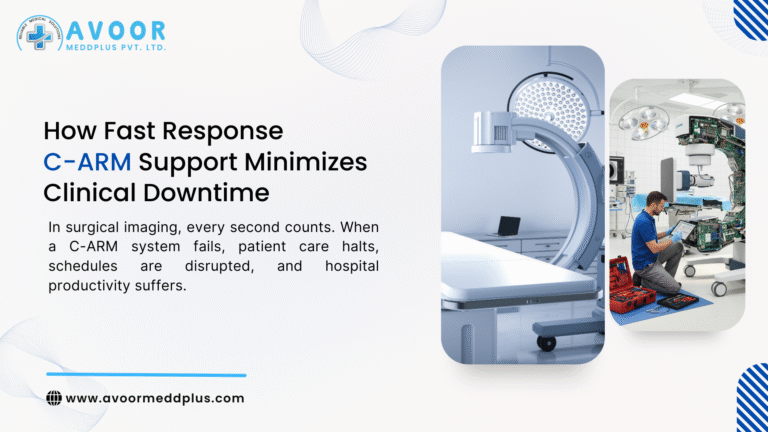
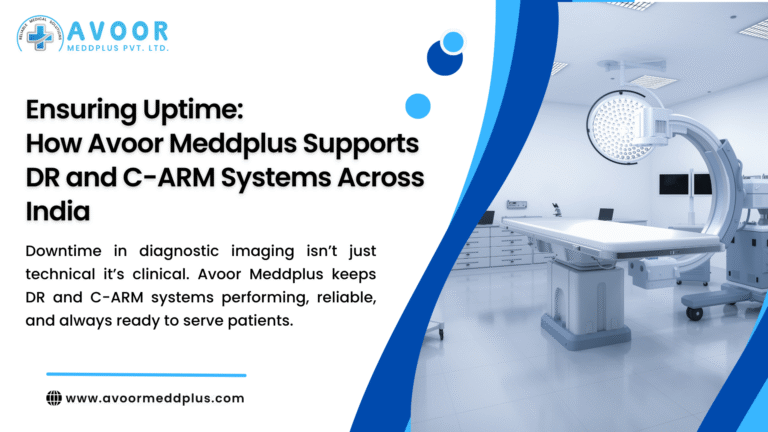
C-ARM Systems
- Fluoroscopy output accuracy
- Radiation dose control
- Mechanical stability checks
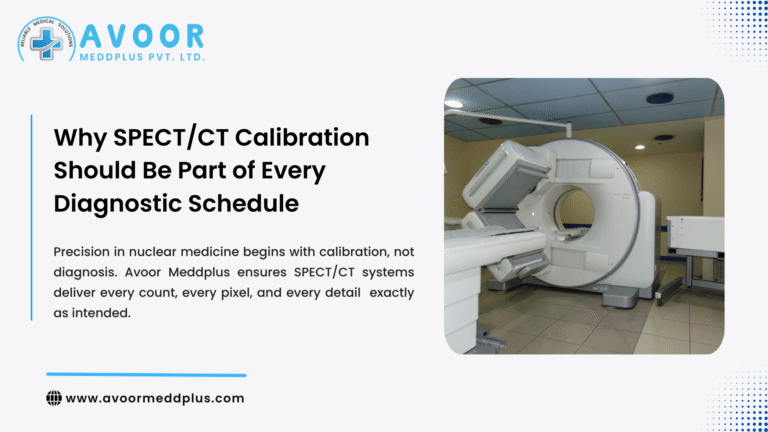
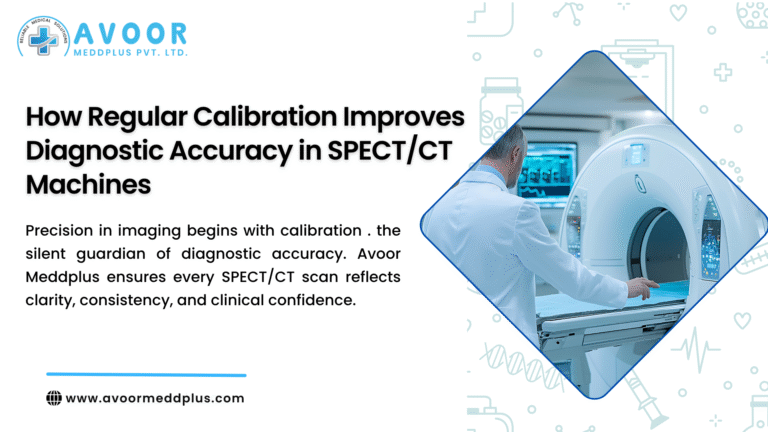
SPECT/CT & Nuclear Medicine
- Energy peaking
- Uniformity correction
- Fusion alignment accuracy
Each modality requires specialized preventive maintenance to ensure reliable performance and minimal downtime.
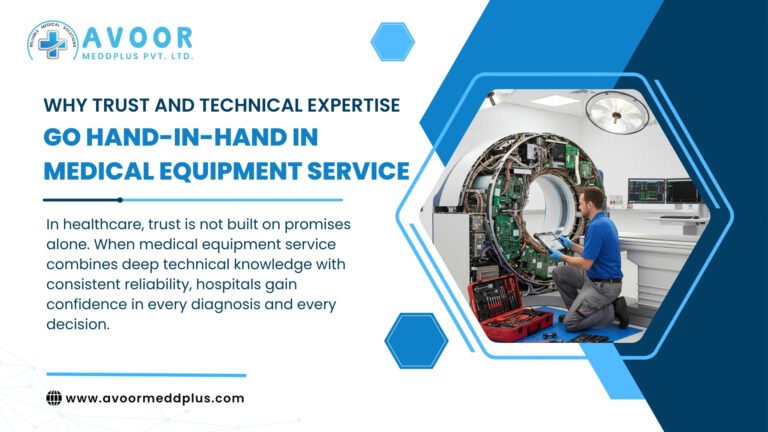
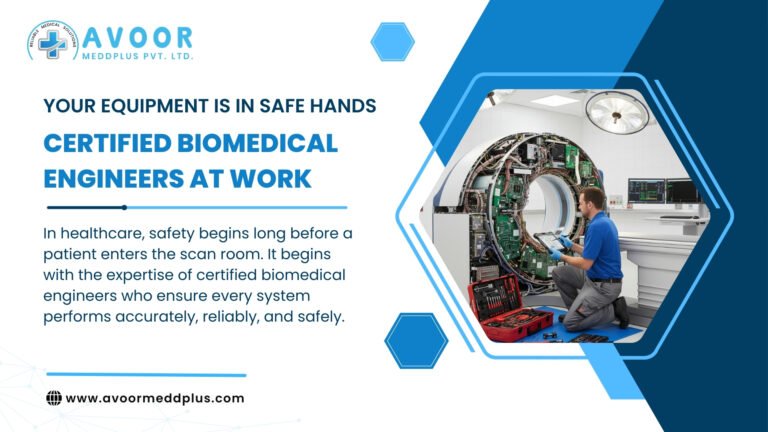
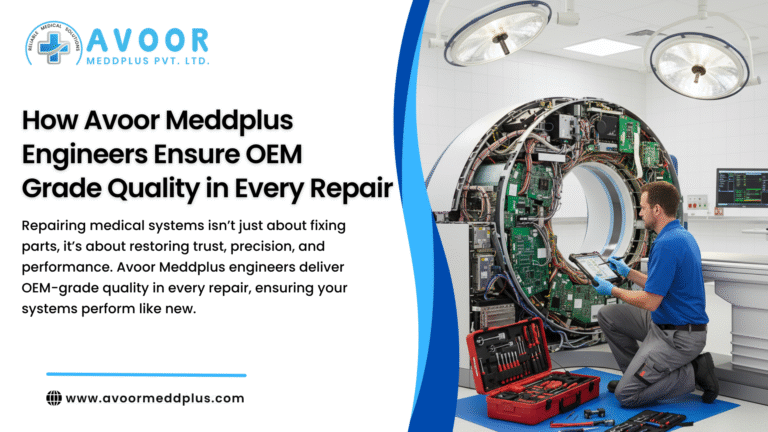
7. Role of Biomedical Engineers in Preventive Maintenance
Certified biomedical engineers play a crucial role in preventive maintenance programs. Their expertise allows them to:
- Interpret early warning signs
- Perform precise calibration
- Ensure electrical and radiation safety
- Maintain accurate service documentation
Hospitals rely on skilled engineers to ensure preventive maintenance is effective, not just routine.
8. How Avoor Meddplus Helps Hospitals Avoid Imaging Downtime
Avoor Meddplus supports hospitals with comprehensive preventive maintenance services that include:
- OEM-grade calibration and validation
- Scheduled preventive maintenance visits
- Early fault detection and predictive analysis
- PCB-level repair expertise
- Fast response support when required
- Compliance-ready documentation
- Nationwide service coverage
This structured approach ensures imaging systems remain stable, accurate, and available for uninterrupted patient care.
Conclusion
Imaging systems are essential to modern healthcare, and their downtime can disrupt every level of hospital operations. This is why preventive maintenance avoid imaging downtime has become a core strategy for hospitals seeking reliability, accuracy, and cost control.
Through early fault detection, consistent calibration, regulatory compliance, and expert engineering support, preventive maintenance transforms imaging equipment from a potential risk into a dependable clinical asset. With trusted service partners like Avoor Meddplus, hospitals can minimize downtime, protect diagnostic accuracy, and deliver uninterrupted patient care every day.