Introduction
Accurate diagnosis is the foundation of effective medical treatment. From early disease detection to treatment planning and follow-up, clinicians rely heavily on diagnostic equipment to deliver precise and reliable results. However, even the most advanced imaging systems cannot maintain accuracy on their own. This is where trusted medical equipment maintenance diagnostic accuracy becomes critical.
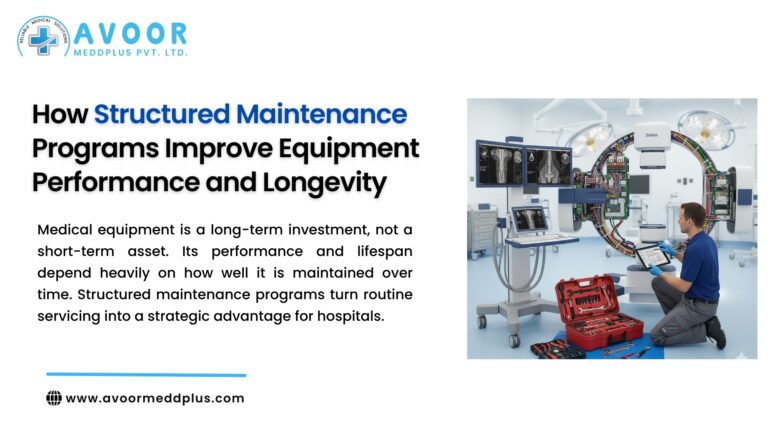
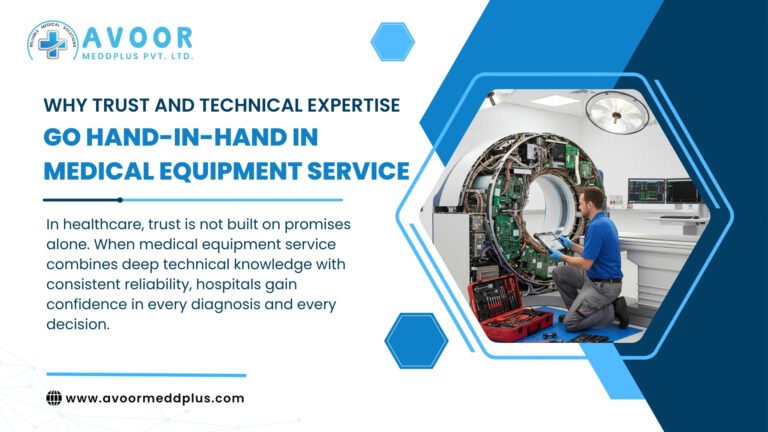
Trusted maintenance ensures that imaging systems such as CT, PET/CT, DR, C-ARM, SPECT/CT, and mammography continue to perform at OEM-specified levels. At Avoor Meddplus, preventive maintenance, expert calibration, and certified biomedical engineering support work together to protect diagnostic accuracy and clinical confidence.
This blog explains how trusted medical equipment maintenance directly improves diagnostic accuracy and why hospitals cannot afford to compromise on it.
1. Trusted Medical Equipment Maintenance Diagnostic Accuracy Starts with Precision
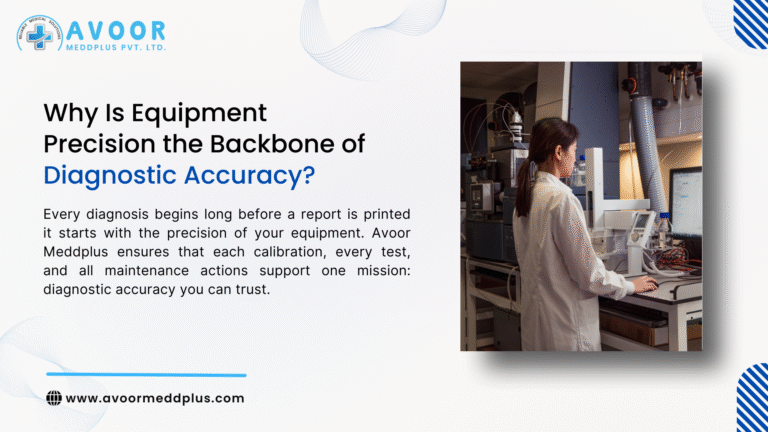
Diagnostic accuracy depends on precision. Imaging systems use complex combinations of detectors, power supplies, software algorithms, and mechanical alignment. Even minor deviations can distort images or measurements.
Trusted medical equipment maintenance diagnostic accuracy ensures:
- Correct detector alignment
- Stable radiation output
- Accurate exposure parameters
- Reliable software performance
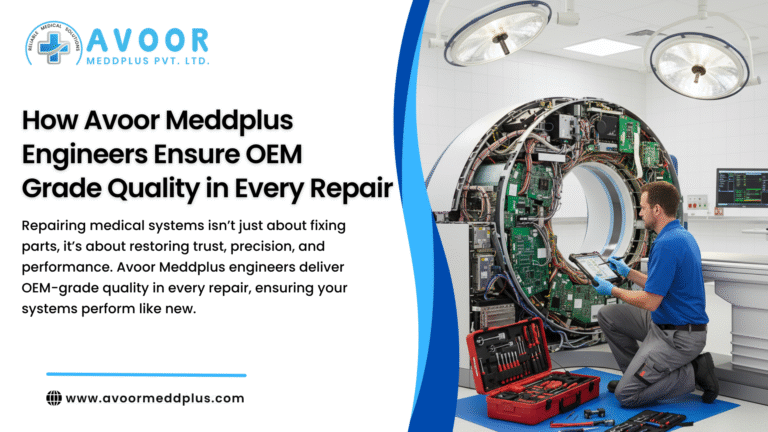
When maintenance is handled by experienced professionals using OEM-grade procedures, equipment continues to produce clinically reliable images without drift or inconsistency.
2. Preventive Maintenance Prevents Diagnostic Errors
Preventive maintenance is the most effective way to protect diagnostic accuracy. Instead of reacting to breakdowns, trusted maintenance focuses on early detection of performance issues.
Common problems identified during preventive maintenance include:
- Calibration drift
- Detector non-uniformity
- Overheating components
- Power instability
- Mechanical misalignment
By addressing these issues early, preventive maintenance eliminates errors that could otherwise lead to misdiagnosis or repeat scans.
3. 5 Proven Ways Trusted Maintenance Improves Diagnostic Accuracy
1️⃣ OEM-Grade Calibration and Validation
Calibration ensures that imaging output matches real anatomical and physiological values. Trusted maintenance follows OEM-recommended calibration protocols for:
- CT slice thickness and HU accuracy
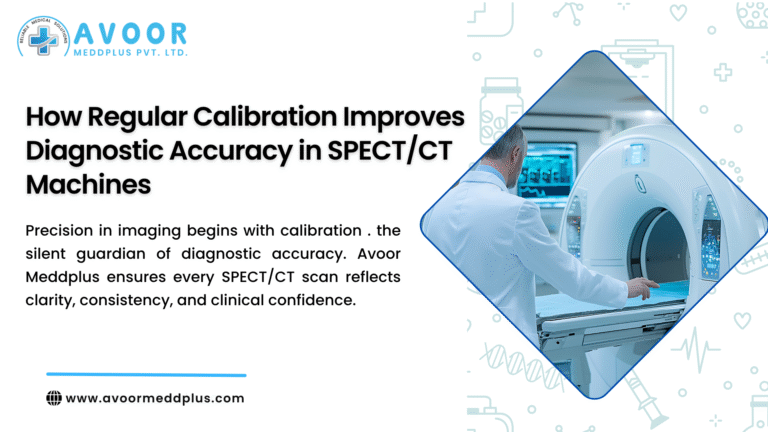
- PET/CT and SPECT/CT alignment
- DR and mammography detector uniformity
- C-ARM fluoroscopy output
OEM-grade calibration is essential for maintaining consistent diagnostic accuracy over time.
2️⃣ Consistent Image Quality Across All Scans
Inconsistent maintenance often results in fluctuating image quality. One scan may appear normal while the next shows noise or artifacts.
Trusted medical equipment maintenance diagnostic accuracy ensures:
- Uniform image clarity
- Stable contrast and resolution
- Reduced artifacts
- Reliable image reconstruction
This consistency helps radiologists interpret images with confidence.
3️⃣ Reduced Repeat Scans and Radiation Exposure
Poorly maintained equipment often requires repeat scans due to unclear or inaccurate images. This increases radiation exposure and wastes clinical time.
Trusted maintenance reduces repeat scans by:
- Maintaining calibration accuracy
- Ensuring stable detector performance
- Preventing image distortion
Lower repeat rates directly improve patient safety and workflow efficiency.
4️⃣ Compliance with Safety and Quality Standards
Diagnostic accuracy is closely tied to compliance. Regulatory bodies require imaging systems to meet strict performance and safety criteria.
Trusted maintenance supports compliance by providing:
- Regular performance testing
- Radiation output verification
- Calibration certificates
- Preventive maintenance documentation
Compliance not only protects facilities during audits but also ensures consistent diagnostic reliability.
5️⃣ Faster Clinical Decision-Making
When imaging systems are reliable, clinicians can make decisions faster. Trusted maintenance ensures equipment uptime and accuracy, enabling:
- Faster reporting
- Reduced patient waiting time
- Improved treatment planning
- Higher clinician confidence
Accurate imaging directly improves patient outcomes.
4. Role of Trusted Maintenance Across Imaging Modalities
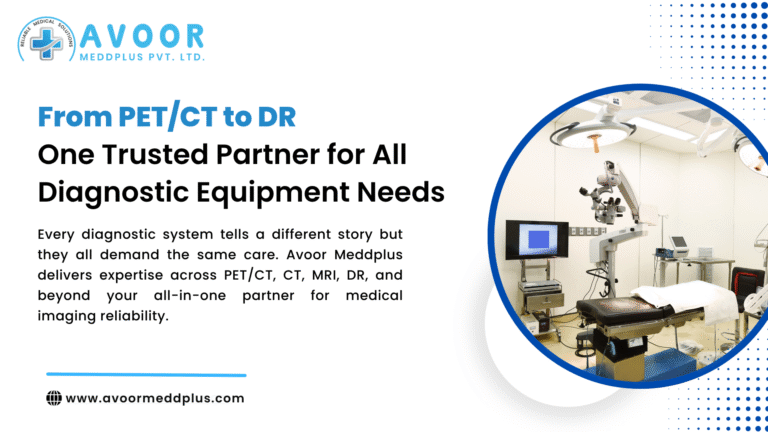
Trusted medical equipment maintenance diagnostic accuracy applies to all imaging systems:
CT & PET/CT
- Gantry alignment
- Detector calibration
- Dose accuracy
- Fusion alignment
DR & CR
- Flat-panel calibration
- Exposure linearity
- Image uniformity
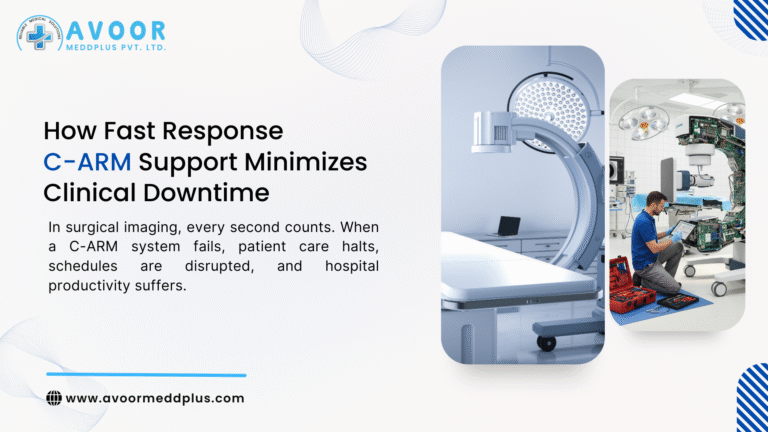
C-ARM
- Fluoroscopy brightness and contrast
- Radiation dose control
- Mechanical stability
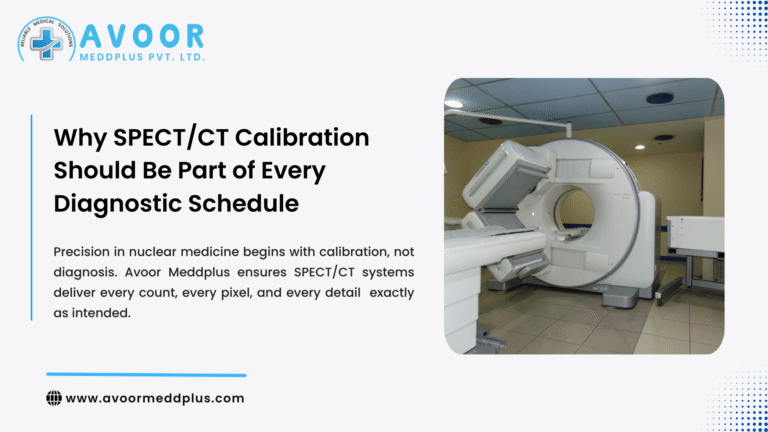
SPECT/CT & Nuclear Medicine
- Energy peaking
- COR calibration
- Uniformity correction
- Fusion accuracy
Each modality requires specialized expertise to maintain diagnostic precision.
5. Impact of Poor Maintenance on Diagnostic Accuracy
When maintenance is inconsistent or unreliable, diagnostic accuracy suffers. Common consequences include:
- False positives or negatives
- Poor lesion localization
- Inaccurate measurements
- Delayed diagnosis
- Reduced clinician trust
These risks highlight why trusted maintenance is not optional but essential for quality healthcare delivery.
6. How Trusted Partners Strengthen Diagnostic Confidence
Hospitals benefit significantly when they work with a trusted maintenance partner. Such partners provide:
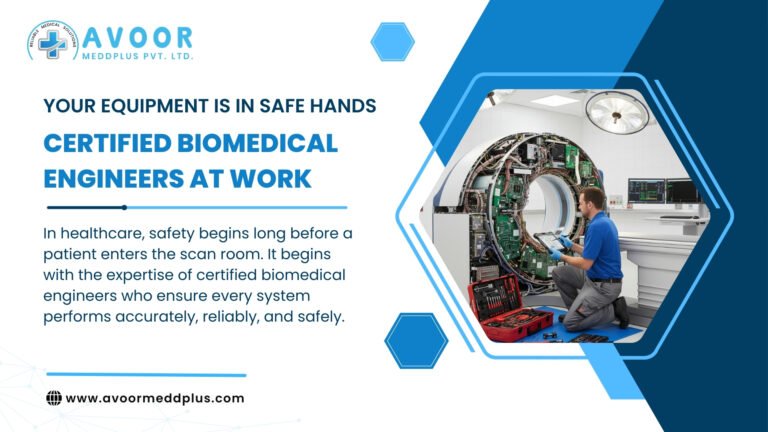
- Certified biomedical engineers
- OEM-grade tools and procedures
- Preventive maintenance programs
- Fast response during breakdowns
- Detailed documentation
Trusted partners act as an extension of hospital biomedical teams, ensuring continuous diagnostic accuracy.
7. How Avoor Meddplus Delivers Trusted Medical Equipment Maintenance
Avoor Meddplus supports hospitals and diagnostic centers with:
- Preventive maintenance for all imaging modalities
- OEM-grade calibration and validation
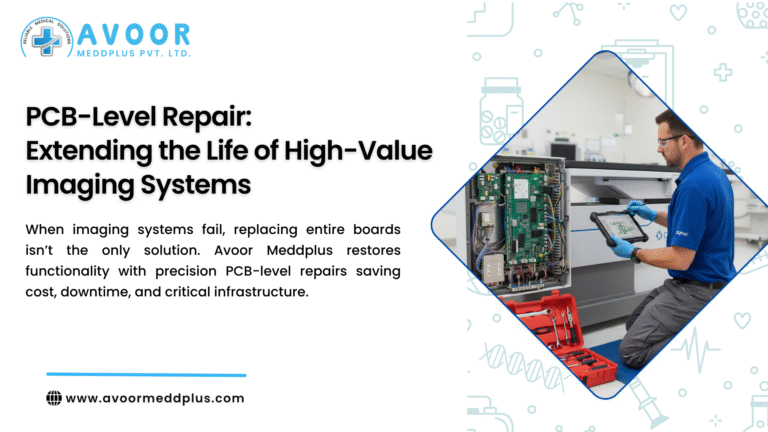
- PCB-level repair expertise
- Fast response technical support
- Compliance-ready documentation
- Nationwide service coverage
Through structured processes and expert engineering, Avoor Meddplus ensures trusted medical equipment maintenance diagnostic accuracy across every system.
Conclusion
Diagnostic accuracy depends not only on advanced technology but also on how well that technology is maintained. Trusted medical equipment maintenance diagnostic accuracy ensures consistent image quality, regulatory compliance, reduced repeat scans, and confident clinical decision-making.
By investing in preventive maintenance and partnering with experienced service providers like Avoor Meddplus, hospitals protect patient safety, improve outcomes, and maintain the highest diagnostic standards.